Doctor Who: Healthy Competition – A History of Big Finish (Part 2)
Feature by Gustaff Behr.
The BBC announced that Doctor Who was returning to television with a new Doctor, a new companion, a new TARDIS, and an entirely new creative vision. For fans, it was the best possible news: Doctor Who was back.
For Big Finish, however, the revival presented a unique challenge. Since 1999, the company had effectively become the franchise’s primary source of new Doctor Who stories. Suddenly, there was a television production team creating its own mythology, introducing new companions and villains, and expanding the Whoniverse in directions Big Finish couldn’t follow. Their licence only covered the Classic Series, meaning everything introduced by the revived show was off-limits.
At first, this wasn’t a crippling limitation. The greater concern was uncertainty. No one knew which classic Doctors, companions, monsters, or recurring characters Russell T Davies intended to resurrect. Any of them could suddenly become unavailable if the television series claimed exclusive use of that part of the mythology.
As a result, 2004 and the first half of 2005 marked the end of one chapter and the beginning of another. For one final stretch, Big Finish still enjoyed the freedom to expand the Classic Series on its own terms, without having to navigate around an active television production. Once Doctor Who returned to BBC One, that creative landscape would change forever.
…And they made the most of it.
A New Era
 As it turned out, Russell T Davies did Big Finish an enormous favour by wiping out the Time Lords in the revived series. Since Gallifrey was now inaccessible to television storytelling outside of flashbacks and exposition, Big Finish suddenly found itself with a largely uncontested playground.
The result was Gallifrey (14 seasons, 50 episodes), one of the company’s most successful and enduring spin-offs. The seeds had already been planted in the 40th-anniversary special, “Zagreus”, which effectively served as a backdoor pilot for the range. The series followed Romana II as she attempted to navigate the political, social, and temporal headaches that came with being President of Gallifrey, supported by her loyal friend and bodyguard Leela. K-9 Mark I and Mark II provided technical assistance, comic relief, and a surprising amount of bickering.
A major supporting figure was Irving Braxiatel. While Gallifrey presented him as a powerful and influential member of Time Lord society, fans of Bernice Summerfield already knew him as the curator of the Braxiatel Collection, the sprawling museum and archive where Benny had spent years working.
Big Finish also launched UNIT (1 season, 5 episodes) during this period. Why the series ended so quickly is difficult to say. It is possible that the revived television series’ increasing use of UNIT made the organisation more difficult for Big Finish to utilise. It is equally possible that audience interest simply wasn’t strong enough to justify continuing the range. Whatever the reason, UNIT became one of the company’s shortest-lived spin-offs, disappearing almost as quickly as it arrived.
To this day, what was and wasn’t on the table for Big Finish to use is still unclear. Cyberman (2 seasons, 8 episodes) was allowed to run its course, while the appearance of Sarah Jane Smith in Series 2’s “School Reunion” led to her spin-off, Sarah Jane Smith, being wound down. As a result, the audio incarnation of Sarah Jane’s investigative life ended, with her final episode, “Dreamland”, ending on a cliffhanger.
Further Experimentation is Required
One of the biggest advantages of an audio medium is that the audience can’t see the actors’ ages, which means stories do not need to be told in strict chronological order. While Doctor Who had occasionally dabbled with out-of-sequence adventures on television, Big Finish quickly realised just how much freedom this gave them.

One of the earliest examples was the Cybermen trilogy, a cross-Doctor storyline that would ultimately become a blueprint for how Big Finish handled continuity in later years. On the surface, the trilogy consisted of “The Harvest” (2004), “The Reaping” (2006), and “The Gathering” (2006). Chronologically, however, the order is almost the exact opposite. “The Reaping” serves as the true starting point, followed by “The Gathering”, with “The Harvest” occurring last despite being released first. As a result, characters referred to events that audiences had not yet heard, while later releases retroactively filled in missing pieces of the puzzle. In some cases, those future events may not even have been fully planned when the earlier stories were written.
This storytelling technique would become one of Big Finish’s favourite tricks. As the company’s continuity grew larger and more interconnected, it became increasingly common for stories to reference adventures that had not yet been released. A good example is Harry Sullivan. In “UNIT: Nemesis” (2021), a young Harry is suddenly serving with UNIT in the 2010s, despite originating from the 1980s. The explanation for how he arrived there would not be told until “The Dominant Species” (2024), while his eventual return to his proper time period would not be explored until “With the Angels” (2025).
An audio medium also means spin-offs could contain more blood, gore and violence and still be considered PG. I, Davros (1 season, 4 episodes) was a miniseries that did just that. It stands as one of Big Finish’s most critically acclaimed productions. In many respects, it approaches a level of tonal seriousness and character-driven drama that would not become mainstream in televised Doctor Who until much later, with productions like Torchwood: Children of Earth.
Within the Monthly Range itself, 2007 marked a noticeable structural shift in storytelling. Big Finish began experimenting with shorter formats, including three-part narratives supplemented by additional one-off episodes that were loosely connected to the other three. At the same time, the company also introduced anthology-style releases for the Fifth, Sixth, and Seventh Doctors. Instead of a single full-length adventure, a Monthly Range slot would sometimes contain four separate 30-minute stories tied together by a through-line.
Nowhere is this sense of structural change more evident than in Big Finish’s decision to remove the Eighth Doctor from the Monthly Range and give him a dedicated spin-off series: The Eighth Doctor Adventures (4 seasons, 34 stories).
Clearly inspired by the more fast-paced storytelling style of the New Series, this range eventually spanned multiple series beyond its initial run and formally repositioned Paul McGann’s Doctor as a bridge between Classic and New Who. The early years of The Eighth Doctor Adventures are particularly notable for pushing the Doctor into darker, more emotionally volatile territory, similar to how the TV Series was pushing the Ninth and Tenth incarnations.
 Much like the TV Series’ use of ‘Bad Wolf’, ‘Torchwood’ and ‘Vote Saxon’, this series was also defined by a stronger sense of an overarching narrative arc, with long-form continuity playing a more prominent role than in the Monthly Range.
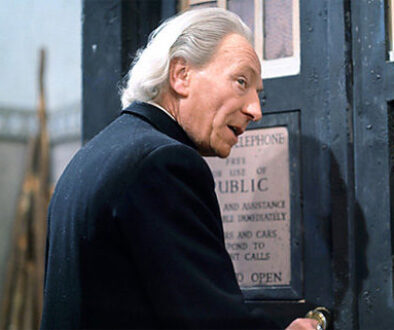
Alongside this, Big Finish also developed the Companion Chronicles (17 seasons, 114 stories), a spin-off range initially conceived as a series of “talking books” focusing on companions from the early eras of Doctor Who, primarily those associated with the First through Fourth Doctors, many of whose actors were unavailable because they had died. While that original concept remained the foundation of the series, most entries evolved beyond simple monologues into structured two-character dramas.
This spin-off allowed Big Finish to effectively double its output, add four more Doctors to its catalogue and produce cheaper stories.
In retrospect, these developments served multiple purposes. On a practical level, shorter formats allowed Big Finish to work with a wider range of writers on more contained scripts, increasing flexibility within a growing production schedule. On a broader industry level, they also reflected the influence of the revived television series, which had shifted Doctor Who towards shorter, 45-minute episodic storytelling rather than longer-form serial narratives.