Doctor Who: Overtaking the Competition – A History of Big Finish (Part 3)
Feature by Gustaff Behr.
2009 marked ten years of putting out Doctor Who content for Big Finish, but by 2010, the company had reached a cumulative output of nearly 300 Doctor Who (and spin-off) stories, surpassing the total number of televised Doctor Who and related spin-off stories produced since the show’s inception in 1963. It was a staggering volume of material, but the early 2010s would only accelerate that output further, positioning the company to become even more popular than ever before, especially during the later 2010s. But today, we’re looking at the early 2010s, starting with…
Diamonds in Unlikely Places
One of the most successful spin-offs to emerge around this time was Jago & Litefoot (14 seasons, 56 episodes, 4 specials). On paper, it was an unlikely proposition: a full series built around two supporting characters from a single Fourth Doctor story, “The Talons of Weng-Chiang” (1977), who had barely shared any meaningful screen time together. The idea of centring an entire range on them would have seemed, at best, highly experimental.
However, Professor George Litefoot (Trevor Baxter) and Henry Gordon Jago (Christopher Benjamin) proved to be an unexpectedly strong pairing. Litefoot, a Victorian pathologist, and Jago, a flamboyant theatre impresario, had a really weird (good weird) natural dynamic that far exceeded their brief original appearance. Before the full spin-off launched, Big Finish tested the concept with “The Mahogany Murderers” (2009) as part of the Companion Chronicles range.
 Set in Victorian London, Jago & Litefoot followed the duo as they investigated a steady stream of supernatural and science-fiction mysteries, blending gothic horror, detective fiction, and (almost always) alien phenomena. The tone leaned heavily into atmospheric storytelling, with recurring supporting characters such as Ellie Higson (Lisa Bowerman), a barmaid at the Red Tavern, and Inspector Quick of the Metropolitan Police helping to anchor the setting. Over time, the series became one of Big Finish’s most consistently well-received spin-offs, often cited alongside later successes such as The War Master range in terms of quality and popularity.
The success of the series also led to further crossovers, with Jago and Litefoot eventually meeting the Fourth Doctor on multiple occasions, before later being incorporated as companions into Sixth Doctor stories.
Alongside these spin-offs were Short Trips (14 seasons, 116 stories, 19 specials), a range originally rooted in prose anthologies dating back to Big Finish’s acquisition of the rights in 2002. It was later revived in audio form. Structurally, Short Trips represented one of the most minimalist formats in the company’s catalogue. Entries featured a single narrator delivering the entire story. This simplicity made the range highly cost-effective while still allowing considerable creative freedom, particularly for more experimental or character-focused narratives that would not necessarily suit full production treatment.
While the format can feel comparatively basic alongside Big Finish’s more elaborate ranges, it has had a notable long-term impact in one specific area: the Paul Spragg Memorial Short Trip Opportunity. Established in 2016 in memory of Paul Spragg, the initiative is an annual competition that invites new writers to submit stories for potential production. Each year, one winning entry is selected and professionally recorded for release by Big Finish.
So far, the initiative has resulted in ten winning stories being produced, alongside five runner-up submissions receiving official release. In this way, Short Trips has become an important entry point for new writers within the Doctor Who Universe, functioning less as a flagship range and more as a creative incubator that continually refreshes the company’s pool of talent, something that the television series failed at from time to time.
The Age of Box Sets
After more than a decade of monthly instalments, Big Finish started a slow migration away from traditional monthly releases, towards box set collections, starting with Bernice Summerfield’s “Epoch”. While Gallifrey and Jago & Litefoot had always been structured around box set formats, this change in Bernice Summerfield marked a broader shift in Big Finish’s publishing strategy that would spill over into the Doctor ranges, like the Eighth Doctor Adventures, which continued to take inspiration from the television series.
After concluding four seasons with Lucie Miller, the 8DAs transitioned away from their earlier 2 × 25 min episodic structure into a full box-set format (4 seasons, 16 box sets, 64 stories) of 4 × 1 hr stories per set.
This new era began with “Dark Eyes”, an ambitious, heavily serialised arc designed to reposition the Eighth Doctor within a darker trajectory, edging him closer to the events that would eventually lead into the Time War. At the time, however, Big Finish still did not have access to New Series continuity elements, meaning the Time War itself could still not be directly referenced and had to be approached only in implication and obvious foreshadowing.

The Eighth Doctor wasn’t the only incarnation touched by the new box set format, though. While “Dominion” is technically listed as a UNIT release, it is more commonly discussed in the context of the Seventh Doctor Adventures (7DAs), and so it fits more naturally within that strand of Big Finish’s output.
At the same time, the company’s access to the Master was still extremely limited. Geoffrey Beevers remained the only incarnation regularly available, with Anthony Ainley having passed away in 2004 without ever recording material for the range. Meanwhile, Eric Roberts was seemingly unavailable or uninterested in a role reprisal (for now). Voice casting alternatives were not yet standard practice, which meant that newer Doctor pairings, particularly the Seventh and Eighth Doctors, had very limited opportunities to interact with the character in any conventional sense.
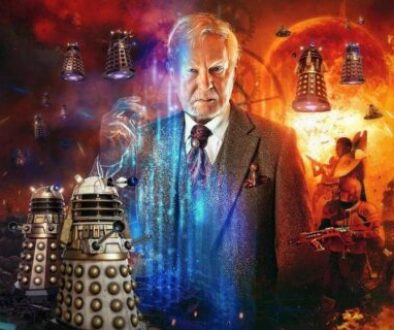
Big Finish sidestepped this by introducing an entirely new incarnation of the Master, played by Alex MacQueen. Rather than attempting to replace existing versions, the story established him as a distinct regeneration, tied to the implication from the revived series that the Master had been resurrected by the Time Lords in preparation for the Time War. Since Big Finish could not directly reference the Time War, MacQueen’s origins were left deliberately ambiguous at first, but later on, it was heavily implied that he is the beginning of the Master’s second regeneration cycle, granted under Time Lord intervention in anticipation of a war with the Daleks. After his debut, MacQueen’s Master became a recurring antagonist for both the Seventh and Eighth Doctors.
The Empire Gets a GOAT
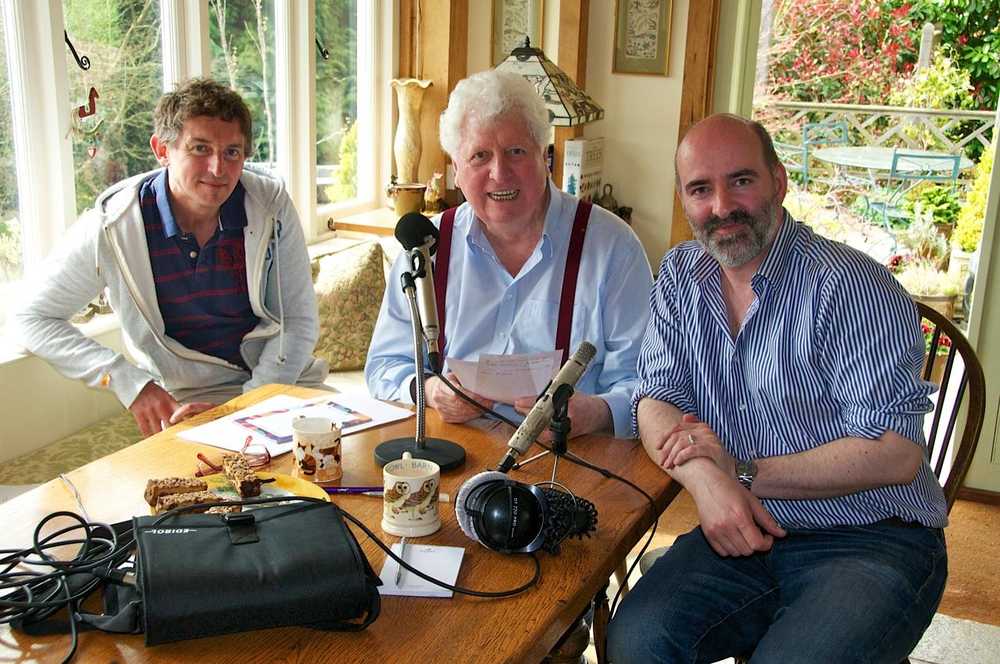
Tom Baker finally agreed to reprise his role as the Fourth Doctor in 2011, first appearing in 2012’s Lost Stories box set, and then in his own spin-off, the Fourth Doctor Adventures (15 box sets, 79 stories, 4 specials). Much like the first 8DAs, the 4DAs would be composed of 2 × 25-minute stories, ranging from 7–8 stories per season.
The company also launched several spin-offs just as the television series was getting rid of companion shows. Counter-Measures (4 seasons, 16 episodes) felt like Big Finish attempting to recapture the success of Jago & Litefoot but filtered through a very different genre lens. Instead of Victorian gothic mystery, this title leaned into 1960s espionage and science fiction, building its identity around Cold War paranoia, institutional secrecy, and quasi-military scientific investigation.
The Counter-Measures team itself originated in the television serial “Remembrance of the Daleks”, where they appeared alongside the Seventh Doctor as the Intrusion Counter-Measures Group (ICMG). In audio form, however, the concept is significantly expanded, transforming them into a recurring investigative unit operating in 1960s London.
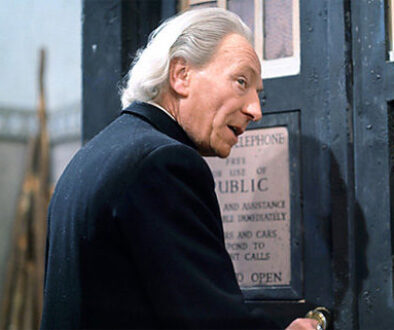
After testing alternative voice casting with William Russell, Frazer Hines, and Tim Treloar in 2013’s “The Light at the End”, Big Finish realised they could now create full-cast audio dramas with the First, Second and Third Doctors. For the former two, The Early Adventures (7 seasons, 24 stories) was created. For the latter, we’d have to wait a little longer.
One Fateful Day
2015 marked one of the most significant turning points in Big Finish’s history, triggered by what initially seemed like an ordinary licensing update: the company had finally gained permission to use characters from the revived television series. This moment fundamentally redefined what the company could do, but at the time, its scale wasn’t immediately grasped outside dedicated fan circles.
Up until this point, Big Finish had been restricted to the first eight Doctors and their associated continuities. Any connection to the modern series was limited to implications only. That boundary evaporated overnight.
 One of the first major announcements was Torchwood: The Monthly Range (10 seasons, 100 episodes), a full-scale continuation of the television series in audio form. John Barrowman returned as Captain Jack Harkness alongside other members of the original cast, with each episode typically structured as a full-cast production featuring one or more core team members taking the helm.
Following this came The Diary of River Song (12 seasons, 45 episodes), which expanded River Song’s story beyond her final television appearance in “The Husbands of River Song”. While initially focused on events after her time with the Doctor, the range quickly broadened into earlier points in her personal history, allowing encounters with multiple incarnations of the Doctor, including several from the classic era.
Next was The War Doctor Adventures (1 season, 12 episodes), bringing Sir John Hurt’s incarnation of the Doctor back into the fold. Positioned within the previously untouchable territory of the Time War, this range represented another major expansion of the Doctor Who sandbox.
Rounding out the initial wave was UNIT: The New Series (12 seasons, 44 episodes), effectively repositioning UNIT as a fully modernised ongoing drama. Centred on Kate Stewart (Jemma Redgrave) and Osgood (Ingrid Oliver), the series focused on contemporary extraterrestrial threats and the organisation’s evolving role in the 2010s. In contrast to some horrible earlier television portrayals, this version of UNIT leaned heavily into long-form arc storytelling and institutional character development, presenting a more consistent and capable depiction of the organisation.
Starting off with multi-story box set releases, eventually productions began to favour larger, self-contained releases built around single major stories that could run for several hours, effectively mirroring the multi-episode serial structure of classic television Doctor Who.