Doctor Who: A New Social Climate – A History of Big Finish (Part 5)
Feature by Gustaff Behr.
- Read part one of the series here.
- Read part two of the series here.
- Read part three of the series here.
- Read part four of the series here.
By 2017, some fans felt that Doctor Who had begun to lose some of the momentum it had enjoyed throughout much of the revived era. The series entered a period of significant creative and cultural change, coinciding with broader shifts across the entertainment industry over representation, identity, and the role of social commentary in popular media. Supporters viewed these changes as a natural evolution of a long-running franchise, while critics argued that the show increasingly prioritised messaging over storytelling.
This debate intensified during the Chris Chibnall era. Jodie Whittaker’s casting as the first female Doctor was celebrated by some as a landmark moment in the programme’s history, while others questioned the creative direction surrounding the character rather than the casting itself. Critics of the era pointed to what they saw as more overtly didactic episodes, heavy-handed exposition, inconsistent characterisation, and scripts that often felt underdeveloped.
At the same time, the television landscape itself was changing rapidly. The explosion of streaming services meant audiences had more entertainment options than ever before, making it increasingly difficult for even established franchises like Doctor Who to retain the broad cultural dominance they had once enjoyed.
Mixing Messages
The changing cultural climate was not confined to the television series; elements of it also found their way into Big Finish’s output. It was around this time that Big Finish also seemed to develop a noticeable preference for male-to-female Time Lord regenerations.
Some releases also adopted a style of ‘humour’ that certain listeners found unnecessarily antagonistic. The earliest Paternoster Gang stories, for example, featured needlessly mean, sometimes misandrist, things said about or directly to male characters.
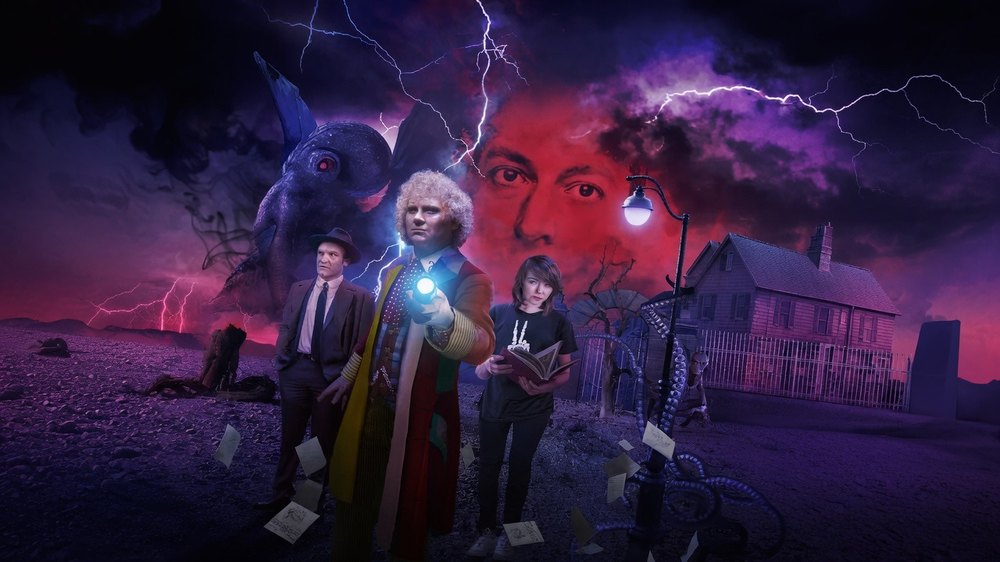
“The Lovecraft Invasion” (2020) became one of the more controversial Doctor Who stories Big Finish had produced by that point. The audio became overshadowed by controversy surrounding apparent late script revisions, as well as debate over its handling of H.P. Lovecraft’s racism. The story was originally due for release in June 2020, but Big Finish delayed the release by roughly a month, and there is strong evidence that parts of the script were rewritten and re-recorded before publication, although Big Finish itself only referred to a short delay in production.
The finished version placed significant emphasis on Lovecraft’s documented racism. His views are well established historically. The criticism therefore focused less on the decision to address the subject and more on how it was handled. Some listeners felt the dialogue repeatedly stopped the story to remind the audience that Lovecraft was racist, making the message feel heavy-handed and leaving less room for the audience to draw its own conclusions.
The result is arguably a more one-dimensional portrayal of Lovecraft, however, with the story largely ignoring other well-documented aspects of his life like his social isolation, anxieties, mental health struggles, and significant changes in his political views later in life in favour of repeatedly emphasising his bigotry.
This proved to be a relatively short-lived phase for Big Finish. Whether this was simply a natural creative shift, influenced in some way by the wider criticism Doctor Who was receiving at the time, or something in between, we’ll probably never know.
The Bottom of the Barrel
Another complaint sometimes levelled at Big Finish is that, in their quest for new content, they occasionally “scrape the bottom of the barrel”. If that criticism has an origin point, 2018 is probably it.
The Seventh Doctor: The New Adventures (1 box set, 4 stories), Lady Christina (2 series, 7 stories), Class: The Audio Adventures (4 volumes and 1 special, 13 stories), and Tales from New Earth (1 series, 4 stories) all debuted in 2018 and, as the story counts might suggest, none of them got very far.
What’s particularly interesting is that three of the four ranges suffer from essentially the same problem: they are built around characters who, fairly or unfairly, struggled to justify their existence as lead characters. The Seventh Doctor set was different, but its reliance on novel-only companions Roz and Chris made it a similarly niche proposition.
 Remember Lady Christina de Souza? The glamorous thief from that one Tenth Doctor episode who spent most of her screen time acting like an entitled adrenaline junkie? Or Chris Cwej and Roz Forrester, characters primarily known to readers of the Virgin New Adventures novels? How about Novice Hame from those two wildly beloved New Earth stories everyone constantly talks about?
No?
Exactly.
Even Big Finish seemed aware of the issue. Tales from New Earth might have been trying to boost interest by including the Tenth Doctor, although notably not David Tennant himself. Meanwhile, Class was based on a television spin-off that struggled so badly onscreen that the BBC declined to bring it back for a second series.
To be fair, obscurity alone is not a death sentence. Jago & Litefoot, The War Master and Counter-Measures had already demonstrated that Big Finish could take minor characters and build excellent titles around them. The difference is that those ranges discovered untapped potential in their casts. These 2018 releases felt like they existed because the characters were available rather than because there was a compelling reason to build an entire series around them.
Thankfully, Big Finish seemed to become more selective with the next wave of spin-offs. In the following years, the Empire became much more selective about which characters could realistically sustain a series of their own.
A Return to Form
Alongside and after these experiments came a quartet of ranges built around characters with strong fan followings: Jenny: The Doctor’s Daughter (3 series, 12 stories), Missy (4 series, 14 stories), Rose Tyler (3 series, 10 stories), and The Paternoster Gang (8 box sets, 24 stories). Unlike some earlier experiments, each of these series arrived with a distinct tone and purpose.
Rose Tyler was a depressing story, filled with constant tragedy. Set before the events of “Turn Left“, it followed Rose travelling between dying parallel universes to find the Doctor and warn him about the coming reality collapse from Series 4.
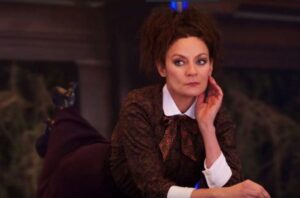 At the opposite end of the spectrum was Missy. The range embraced Michelle Gomez’s unique blend of chaos, cruelty, and comedy and set the series before her encounter with the Twelfth Doctor, focusing on her wreaking havoc across the universe for her own amusement. The tone is often closer to a dark comedy than a traditional Doctor Who adventure, making it a natural companion piece to The War Master while demonstrating just how differently two Master-led series could be.
Meanwhile, fans had spent years pleading for both a Jenny return and a dedicated Paternoster Gang spin-off. Neither seemed particularly likely on television. By this point, Doctor Who itself was producing fewer episodes per year than during the Russell T Davies and Steven Moffat eras, making expansion into multiple television titles increasingly unrealistic.
Jenny: The Doctor’s Daughter provided something viewers had never received onscreen: the chance to see Georgia Tennant’s character develop beyond her single appearance. The series effectively functions as a coming-of-age story for the newly-created daughter of the Doctor, following Jenny as she travels the universe, makes mistakes, learns difficult lessons, and gradually grows into her own identity.
The Paternoster Gang proved equally successful. Following the death of Trevor Baxter in 2017, Jago & Litefoot could no longer continue in its original form. So naturally Madame Vastra, Jenny Flint, and Strax inherited the role of Big Finish’s primary Victorian investigators.
However, all these titles also highlighted a growing (but not exactly new) structural issue for Big Finish: the availability of high-demand actors. These spin-offs were increasingly dependent on actors with busy television and film careers. As a result, output became more sporadic, with gaps between releases dictated less by narrative planning and more by scheduling constraints. The Tenth Doctor’s Big Finish appearances stretched across numerous box sets and specials over the following decade, while Jenny spanned 3 series between 2018 and 2024 and Missy ran for 4 series between 2019 and 2024. Performers such as Michelle Gomez, David Tennant, Billie Piper, and Eric Roberts also had busy television and film careers in the United States or elsewhere, meaning that even the most successful ranges were ultimately shaped by actor availability as much as by creative direction.
Unfortunately, this problem has only gotten worse since that time…