Doctor Who: A New Gold Standard – A History of Big Finish (Part 4)
Feature by Gustaff Behr.
- Read part one of the series here.
- Read part two of the series here.
- Read part three of the series here.
By the latter half of the 2010s, Big Finish was firing on all cylinders. The company now had access to multiple incarnations of the Doctor, dozens of companions, and, unlike the television series, virtually no restrictions on which characters could meet one another. Combined with an annual output that dwarfed that of the television series (80-100 stories vs 10-13 episodes), the company found itself in an enviable position. It could tell more stories, explore more corners of the universe, and take more creative risks than the television flagship series ever had the time or budget to attempt.
More importantly, much of it was genuinely good. Supported by a stable of talented writers who understood both the strengths and weaknesses of Doctor Who, Big Finish consistently delivered stories that expanded characters, repaired neglected eras, and occasionally surpassed the source material that inspired them.
By this point, it was no longer unusual to hear fans describe Big Finish as the gold standard for Doctor Who storytelling. Whether that reputation was entirely deserved is open to debate, but there is no denying that the company had evolved from a niche audio producer into one of the most important creative forces in the franchise.
Overextending
There were a few missteps along the way.
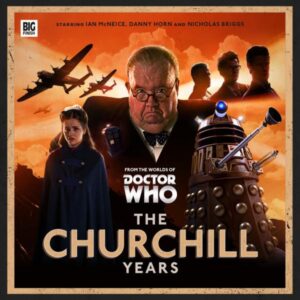
One such misstep, in my opinion at least, was The Churchill Years (2 seasons, 8 stories), centred on Ian McNeice’s portrayal of Winston Churchill. The premise itself was solid enough, building on the implication from “Victory of the Daleks” that Churchill had encountered the Doctor on multiple occasions prior to that story.
The range revisited several of these alleged encounters, placing Churchill alongside the Ninth, Tenth, and Eleventh Doctors across different points in his life. However, the execution quickly ran into an unavoidable structural limitation. While the stories are framed around meetings with modern-era Doctors, the original actors for those incarnations, Christopher Eccleston, David Tennant, and Matt Smith, were not involved in the productions.
Due to the limited availability of said actors and encouraged by the modest success of earlier partial voice-impressionist casting experiments with actors such as William Russell, Frazer Hines, Jon Culshaw and Tim Treloar, Big Finish rolled the dice with The Doctor Chronicles (12 seasons, 43 stories). This new range tried to bring full-scale audio adventures of the Ninth, Tenth, Eleventh, and later Twelfth Doctors into production without requiring the original television actors to be present.
In its earliest anthologies, each story featured a narrator performing the voice and perspective of the Doctor, supported by one additional actor who appeared in scenes, echoing a structure like The Companion Chronicles. Subsequent releases like The Tenth Doctor Chronicles, The Eleventh Doctor Chronicles, and The Twelfth Doctor Chronicles shifted this approach towards Jacob Dudman, who provided vocal narration and character performance for all three later Doctors across their respective anthologies.
Mixing Doctors, Continuities and Eras
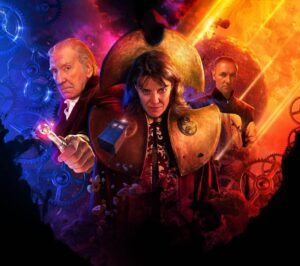 The relatively muted reception to the first two volumes of the relaunched series The New Adventures of Bernice Summerfield might have influenced the direction the range took thereafter. Those early box sets reunited Benny with the Seventh Doctor and Ace but, for me at least, never seemed to generate quite the same enthusiasm as some of Big Finish’s other releases.
Whatever the reason, the series underwent something of a soft reboot with its third volume. Rather than continuing to focus on this team, Big Finish paired Bernice with David Warner’s Unbound Doctor, the alternate incarnation first introduced in the Unbound range many years ago. In hindsight, this proved to be an inspired decision.
Warner brought a very different energy to the role. His Doctor was older, wearier, and often more openly cynical than most incarnations of the Doctor, while still retaining the intelligence and compassion that defined the character. The success of this partnership was such that it quickly became the defining version of The New Adventures of Bernice Summerfield. For several years, the Unbound Doctor and Benny effectively operated as their own Doctor-Companion team.
The Tenth Doctor Adventures (9 box sets, 27 stories) did actually feature David Tennant, alongside Catherine Tate as Donna Noble and eventually Billie Piper as Rose Tyler.
It was also around this time that what became informally known as Big Finish’s “dartboard of crossovers” era began to take shape. The company increasingly leaned into unexpected character pairings and unconventional meetings between Doctors, companions, and villains, often treating combinations that would never have occurred on television as creative prompts.
And nowhere is this concept more on display than Classic Doctors, New Monsters (5 seasons, 20 stories), a range that paired Classic Doctors with adversaries from New Who. The result was an unusual but often effective collision of eras, allowing older Doctors to encounter threats such as the Silence, Weeping Angels, and other post-2005 creations.
Franchises Within Franchises
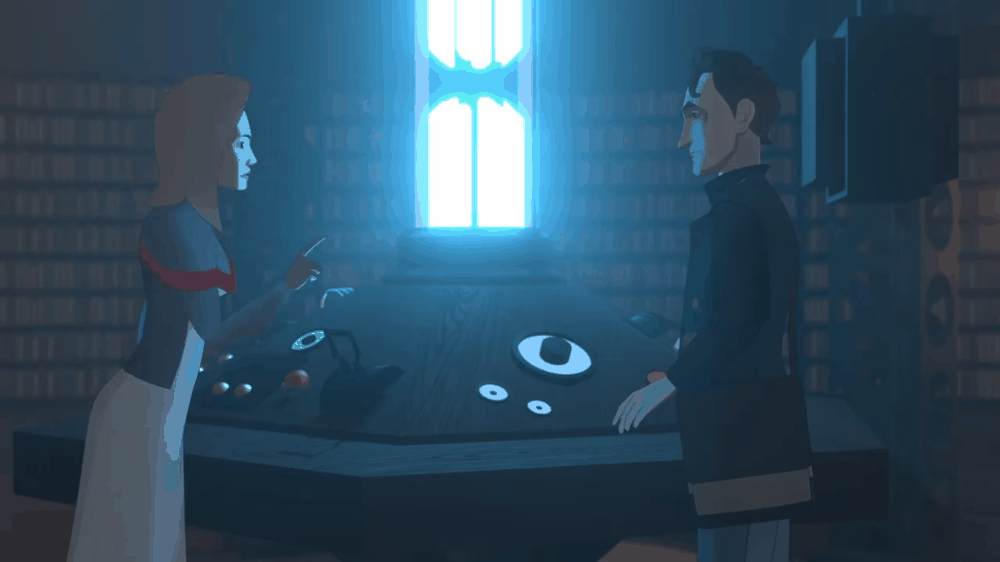
Big Finish reached a point where its Torchwood output alone could sustain multiple parallel spin-offs, effectively treating the franchise as its own audio ecosystem. Three distinct titles were created in quick succession: Torchwood: The Story Continues (3 seasons, 9 box sets, 36 stories), Torchwood One (5 seasons, 15 stories), and The Lives of Captain Jack (3 seasons, 10 stories).
Each series carved out a different corner of Torchwood continuity. The Story Continues acted as an audio-original continuation of the post-Miracle Day era, effectively Series 5 to 7. It centred on Jack and Gwen attempting to rebuild Torchwood in the aftermath of the Miracle Day disaster and forming a new team to defend the 21st century.
Torchwood One shifted the focus backwards to 2005, exploring the operations of the original London-based institute under Yvonne Hartman. This version of Torchwood was far more institutional and politically driven, operating under the banner of ‘for Queen and Country’. Ianto Jones also appears as a main character.
Finally, The Lives of Captain Jack focused more directly on character-driven storytelling, with John Barrowman revisiting key moments from Jack Harkness’s personal timeline. One of the more notable highlights is his meeting with the Sixth Doctor. Dartboard of crossovers!
It was also around this time that Big Finish began to significantly expand its use of the Eighth Doctor in the Time War. Plans for the range had already been announced alongside John Hurt’s War Doctor stories. This led to a second spin-off title, The Eighth Doctor: The Time War (8 seasons, 30 stories), structured as a long-form exploration of the Doctor’s involvement in the early stages of the Time War.
Gallifrey also relaunched as Gallifrey: Time War, creating another Time War corner of the franchise.
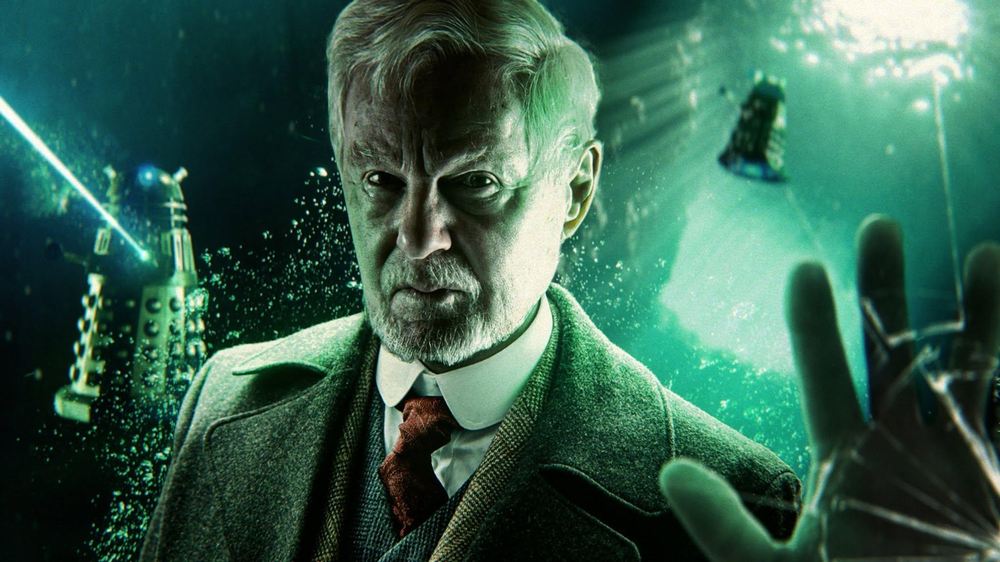
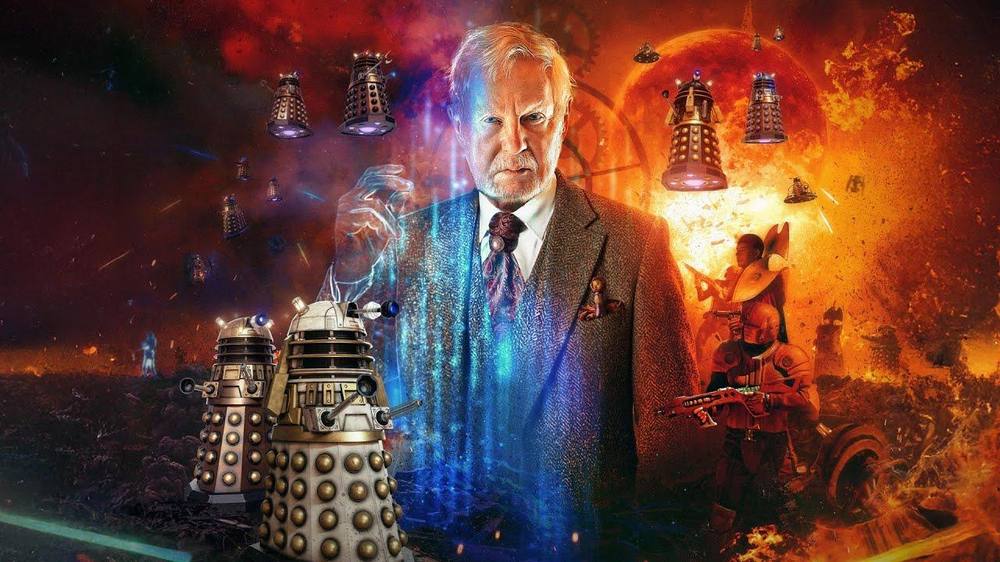
But arguably the most successful and defining output to emerge from Big Finish’s Time War expansion was The War Master (12 seasons, 48 stories), centred on Sir Derek Jacobi’s incarnation of the Master. The series reframes what was once a brief on-screen incarnation, focusing on the Master’s efforts to win the Time War before going into hiding.
Perhaps even more importantly, The War Master is also the first Big Finish spin-off to place the Master as its central protagonist. Across its run, each story follows his schemes from a close perspective, charting how he navigates, exploits, and destabilises the Time War for personal gain. The focus is darker, with more emphasis on the Master as an active architect of chaos, with many stories structured around his manipulation of events and the unfortunate consequences for those caught in his orbit.
Expect lots of bad endings for everyone else.
This approach has had a major impact on how Jacobi’s incarnation is perceived today. An incarnation who was only briefly revealed in “Utopia” is expanded into one of the most complex and fully realised versions of the Master, with the audio format providing space to explore motivations and behaviours that television had no opportunity to develop.
In retrospect, it has significantly recontextualised that original appearance, transforming what was once a brief on-screen incarnation into the foundation for one of Big Finish’s most critically acclaimed character-focused ranges.