Doctor Who Has 5 Ways Forward, But None of Them Are Easy

Feature article by Martin Elwood.
If Doctor Who is to continue, whoever takes it on next will face a bigger problem than simply relaunching the show. They will have to decide what they are relaunching from. The last few years have left the series with tangled mythology, blurred rules and some very awkward questions.
The neatest solution was probably the one the show has already missed. A Christmas special could have picked up from the Billie Piper cliffhanger, resolved the regeneration problem and handed the programme to a new creative team cleanly. That would have been the obvious bridge. Now that bridge has collapsed. That leaves the next team deciding how much of someone else’s mess to carry forward.
So how do you fix it?
Option One: Reboot The Whole Show
The bluntest answer is a full reboot.
A full reboot means a proper reset. Start again. New First Doctor. New TARDIS. New rules. The works. The show begins from number one in a new continuity, free from the existing regeneration chain. No bi-generation. No continuity accounting. No awkward questions about why one Doctor became another, then another, then possibly Billie Piper.
From a production point of view, this must be tempting. A clean restart lets the BBC and any new production company sell Doctor Who as a true beginning rather than another attempt to patch the roof. It gives casual viewers permission to tune in without needing a flowchart and sixty-plus years of homework. It also draws a thick line under the current mess.
That is the appeal, but it is also the problem.
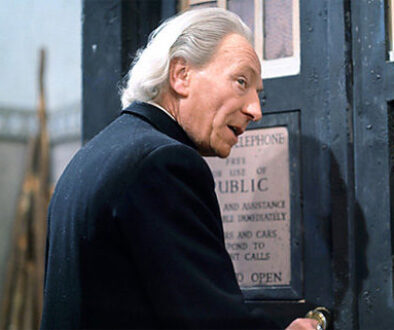
Doctor Who has survived for more than six decades because it can regenerate without fully restarting. That is the genius of the format. The Doctor changes, the tone changes, the companions change, the production team changes, but the thread continues. William Hartnell still leads to Patrick Troughton. Tom Baker still leads to Peter Davison. Christopher Eccleston still leads to David Tennant. The show bends. It does not usually snap.
A hard reboot would snap it. Some fans would accept that. Some might even welcome it. But many would hate it, because continuity is part of the strange emotional contract of Doctor Who. Even when fans complain about canon, they still want the show to feel connected to itself.
A reboot might be the easiest answer on paper. It might also be the answer that makes the programme feel least like Doctor Who. If you get a reboot wrong, you risk turning a wounded franchise into a finished one.
Option Two: Retcon Back To Capaldi
The most controversial answer is also the one that would please a significant chunk of alienated fans: go back to the end of the Capaldi era and treat everything after that as a corrupted timeline, a Matrix trap, a Toymaker consequence, a splinter universe, or some other piece of Time Lord weirdness.
It sounds extreme, but the logic is obvious. If Jodie Whittaker’s Doctor was divisive, the plotlines around her were just as divisive. The Timeless Child changed the Doctor’s origin, damaged huge pieces of the programme’s mythology and presided over a major loss of audience confidence. The RTD/Gatwa era then failed to repair that damage. Instead, it doubled down on the Timeless Child and added fresh complications: bi-generation and the continued existence of Tennant’s Fourteenth Doctor, more tinkering with the Doctor’s family history through Susan and Poppy, and the dangling Pantheon of Discord plotline.
If you wanted to identify the last relatively stable point in modern Doctor Who, the end of the Capaldi era is an obvious place to look.
Peter Capaldi’s final episode left the show in a recognisable state. The Doctor was still recognisably the Doctor. Regeneration still broadly meant what it had always meant. The Time Lords and Gallifrey were battered, but still usable pieces of the mythology. The show had problems, but it had not become unmanageable.
A retcon from that point would be brutal, but clean. The appeal is clear. It would allow a new team to restore the Doctor as a wandering Time Lord, rebuild the mythology and win back fans who checked out because they felt the programme had stopped respecting its own foundations.
It would also trigger a war.
There would be accusations of erasure. There would be arguments about Jodie Whittaker, Ncuti Gatwa, representation, canon, culture war politics and whether the BBC was pandering to angry fans. The twelve people who loved these eras would be furious. Hey, it’s Gatwa’s joke, not mine!
The bigger problem is that a retcon starts the next era by looking backwards. It makes the first job of the new Doctor Who correction rather than adventure. That may satisfy some fans, but it is a grim foundation for a relaunch.
Option Three: Pretend Nothing Happened
The most likely option is probably the least dramatic one. Just move on.
Start the next series with a new Doctor, a new companion and a new status quo. Do not explain the Billie Piper cliffhanger. Do not hint that it matters. Do not spend the first episode trying to untangle loose ends from a previous production era.
There is a strong case for this. Casual viewers will not care as much as fans think they will, especially if there is a long gap before the show returns. Most people will want to know whether the new Doctor works, whether the companion is likeable and whether the story is any good. They will not be demanding a forensic explanation of a cliffhanger from years earlier.
In practical terms, this is the simplest route. It frees the new team from opening their era by servicing someone else’s ending. It is also the laziest route.
This would be continuity management by abandonment. It would take the Billie Piper ending, place it quietly in a drawer, and hope nobody asks too many questions. That might work for a while, but Doctor Who has been doing this too often. The show keeps introducing huge ideas, then wandering away from them. Each one might be survivable on its own. Together, they create the feeling that modern Doctor Who is careless with consequence.
Ignoring the Billie cliffhanger may be sensible. It may even be necessary. But it would also confirm a bad habit. The show cannot keep asking fans to invest in big moments, then act as if it is unreasonable when they expect those moments to mean something.
Option Four: Make The Mess The Story
There is a more ambitious version of the fix: turn the chaos itself into the plot.
The next era could open with the Doctor’s timeline broken. Faces are bleeding into each other. Memories do not line up. The Billie cliffhanger, the Timeless Child, Flux, bi-generation etc. are no longer separate problems. They are symptoms of one larger rupture. The first series could become a story about putting the Doctor back together.
This has some appeal. It would avoid pretending the mess does not exist. It would give the new team a way to acknowledge recent continuity while clearing the decks. Done well, it could make years of confusion feel intentional, or at least useful. Doctor Who is flexible enough to absorb almost any explanation involving time, memory, myth and reality breaking under pressure.
This option is dangerous because it gives continuity the steering wheel. The first job of a new era should be to make people excited about watching Doctor Who again. If episode one is built around explaining messy past plotlines and why the previous era did not resolve itself, then the show has already narrowed its audience. Continuity repair is catnip for fans and poison for everyone else.
This option could work as a background arc. It could not work as the front door. The next era needs mystery, energy and momentum before it needs lore surgery.
Option Five: A Soft Reboot With A Time Jump
The better version of moving on is a soft reboot with a time jump.
Do not fully reboot. Do not retcon everything. Do not spend the opening episode explaining the Billie cliffhanger. Do not pretend the mess never happened either. Instead, jump forward.
The show returns with a new Doctor already travelling. A new companion meets them in a strong, simple, accessible first episode. The tone is confident. The stakes are clear. The Doctor is recognisably the Doctor again: strange, funny, dangerous, alien and wounded, but no longer buried under a pile of mythology. This might sound familiar, because RTD did something similar with “Rose” in 2005.
The difference between this and simply ignoring the problem is responsibility. The Billie cliffhanger is not erased. It becomes part of the Doctor’s recent past. Something happened. Something the Doctor does not want to talk about.
That gives the new era distance without denial. The first episode can be about monsters, danger, wonder and character, while small references across the series can suggest that the previous regeneration was unstable, that the Doctor’s timeline suffered damage, or that the last face was part of a crisis that has now passed.
That approach gives the show two things at once: a clean entry point for casual viewers and a signal to fans that the previous ending has not simply been forgotten. It also lets the new production team define Doctor Who on its own terms. The first episode should not be about why the last era failed. It should be about why the next one might work.
Adventure first. Explanation second. Character first. Canon later.
The Best Way Out
A full reboot is too severe. A Capaldi-era retcon is probably too explosive. Pretending nothing happened is easy, but makes the show look careless. Making the mess the story is clever, but too inward-looking for a relaunch.
The best answer, in my opinion, is a soft reboot with a time jump. Start fresh. Acknowledge just enough. Explain later, if explanation is needed. Give viewers a strong new Doctor, a strong new companion and a first episode that makes them want to follow.
The next team, if there is one, should not erase Doctor Who. They should open the TARDIS doors and make it feel alive again.