Why RTD2 is the Greatest Doctor Who Era of All Time
Doctor Who feature article by Simon Graves.
Last week, I explained why Billie Piper was the greatest Doctor of all time.
This week, it feels only right to give full praise to the man who brought that stunning idea to life.
Russell T Davies returned to Doctor Who, looked at a programme wobbling under lore, backlash, brand confusion and audience fatigue, and made the brave decision to add more lore, more brand confusion and more audience fatigue.
Naturally, this makes RTD2 the greatest era in Doctor Who history. But wait, there’s more!
5. He Learned Everything from the Chibnall Era
The Chibnall era was famously beloved for its universally loved Doctor, many richly defined companions, natural dialogue, subtle moral lessons, and the universally adored decision to make the Doctor’s mysterious past much less mysterious and William Hartnell much less first. It certainly did not cause a massive backlash, shatter the fanbase, or become one of those exciting turning points where people started saying, “Actually, I might just watch something else.”
RTD saw Chibnall’s triumphs, wiped away a tear of professional admiration, and understood the assignment: do more of that.
Regeneration had worked for decades as one of television’s cleanest ideas. One Doctor dies, another Doctor arrives, everyone cries, the new actor says something odd, and the show continues. Beautiful. Simple. Dangerously accessible.
So RTD gave us bi-generation. This was perfect because traditional regeneration still had one terrible flaw: consequence. A Doctor left, and the audience had to miss them. A face disappeared, and the new one had to win us over without the old one sitting in a garden waiting to be used again. There was grief. Finality. Risk. All the tedious emotional architecture that had kept the programme alive for 60 years.
RTD fixed this. Better still, he removed danger. Between the Timeless Child suggesting the Doctor may have more regenerations than common sense, and bi-generation suggesting death can now produce a bonus Doctor, why worry? The Doctor is no longer a hero in peril. He is a video game character with unlimited lives and a multiplayer mode.
This is wonderful for tension. If the Doctor dies, perhaps he regenerates. If he regenerates, perhaps he splits. If he splits, perhaps one Doctor goes adventuring while another stays home recovering from plot exhaustion. The stakes have never been lower.
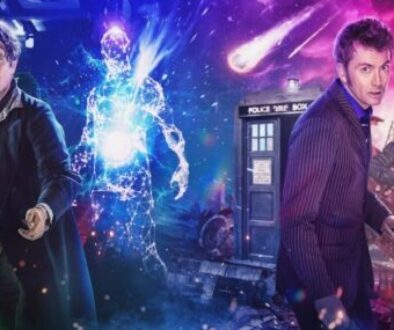
It also did Ncuti Gatwa an enormous favour. Previous new Doctors had to step into the spotlight alone, with the old one gone and the audience forced to move on. Fifteen got to begin his era while Fourteen remained alive, beloved and available, like an emergency Tennant stored behind glass.
Why let grief happen when you can franchise it? Why ask the new Doctor to own the future when the previous one is still alive? RTD didn’t even need to bring Fourteen back. That was the genius. Every time Earth faced extinction, the audience could now quietly wonder whether Fourteen was in the garden, watching the sky burn from a deckchair, and deciding this was Fifteen’s problem.
And then there was Susan. The Doctor’s granddaughter. One of the oldest names in the show. A character with weight, history and emotional danger.
Naturally, RTD2 moved toward this sacred piece of mythology with the grace of a man pushing a pram through a minefield. Poppy, the Space Baby from an episode everyone loved and definitely did not immediately place in a mental quarantine zone, drifted toward the Doctor’s family tree with terrifying confidence.
This was legacy storytelling at its finest. The Doctor had worked perfectly well as a mysterious figure for 60 years, which was obviously a problem. Mystery leaves space for imagination, and imagination is risky because viewers might fill the gaps with something better. So RTD took the mystery, added gods, added a baby, and left everyone staring at canon like it had just leaked through the ceiling.
4. He Spent Money Wisely
The Disney deal promised polish, scale, reach and the possibility that Doctor Who might finally stop looking like Cardiff had been asked to impersonate space with 40 minutes’ notice.
RTD used this incredible opportunity wisely. He opened with Space Babies.
This was perfect. A lesser showrunner might have launched the new era with a clean, gripping adventure designed to welcome global audiences. RTD understood that viewers needed a sterner test. A space station. A monster made of snot. And talking babies delivering dialogue with the haunted confidence of an insurance advert.
This was expensive nonsense, the purest kind. Cheap nonsense would have been too easy. The babies had money on them. The snot had texture. The corridors gleamed. You could feel the international streaming ambition shining off every surface while the episode asked adults across the world to emotionally invest in nasal discharge.
And from there, the era continued spending beautifully. A new Doctor so vital to the relaunch that the reduced eight-episode season still treated him as optional. Bigger sets. More UNIT. More cast members to stand around monitors, hold tablets, repeat exposition and prove that payroll can be a visual effect. Sutekh and Omega used to be men in suits. Boring! Get rid. Give us giant CGI gods instead!
It was Doctor Who with the resources to be anything, bravely choosing to remain itself in the most financially alarming way possible.
The results were magnificent. The show went from global relaunch to tender process in record time, with the general sense that somebody at the BBC had started touching the walls to check for structural damage.
Most people who blew through that kind of money and left the brand so excitingly refreshed that everyone began discussing tenders would face consequences. RTD achieved something far more impressive. He was invited back for another Christmas special, then somehow even that vanished into the same mist as the future of the show.
That is career resilience. Ordinary people fail and get fired. Russell T Davies converts institutional damage into forward momentum, stepping gracefully toward the next project without the burden of thinking too hard about what he left behind him.
3. He Turned Hypocrisy Into a Superpower
Great showrunners have principles. Russell T Davies had something better: principles that could leave the room when the scene required a cool image.
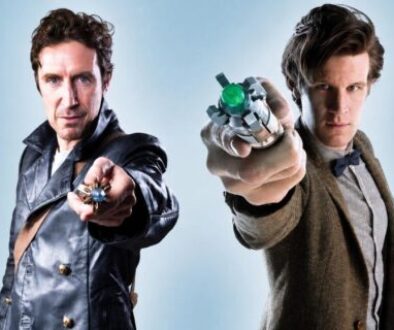
Take the sonic screwdriver. For decades, the main clue seemed to be in the name. It looked like a strange little screwdriver, or at least a wand, a torch maybe, a glowing stick, anything with the basic moral innocence of a thing designed to open doors. Then RTD looked at it and saw what lesser minds had somehow missed for 60 years.
Shock! It was actually a gun all along.
At last, someone had the courage to protect children from the terrifying firearms imagery of a buzzing space tool. Nobody else had noticed it was basically a weapon, but that is why RTD is a visionary. He sees danger where others see merchandise.
So the sonic had to change. In came the new design, a chunky, cheap TV remote with all the alien elegance of something you might find down the side of a Travelodge sofa. Safe. Responsible. Unthreatening. The Doctor no longer carried a suspicious tube. He carried what looked like a device for switching HDMI inputs during a school assembly. Wonderful.
Then Gatwa’s Doctor blasted Skeleton Baby Omega in the face with a ray gun. Repeatedly.
The children were spared the dangerous sight of a screwdriver-shaped screwdriver, then treated to the Doctor firing energy at someone’s head, which is apparently fine because the music was triumphant enough.
This was RTD2 at its purest. Moral certainty with range. Principles that could stand firm for interviews, then politely step aside when the finale needed a cool blast to the face. Guns were bad, unless the finale needed gun imagery. Violence was troubling, unless the shot looked dramatic. The sonic could not resemble a weapon, so it became a remote control, and the Doctor simply moved the shooting elsewhere.
A lesser writer would chase consistency. RTD transcended it. He turned contradiction into a production style.
2. He Used Subtext with Tremendous Restraint
Russell T Davies has never met a theme he did not want to march into the centre of the room, give a badge, and ask to explain itself.
Subtlety is risky. Viewers might miss something. They might think for themselves. Terrifying. They might leave the episode believing the story was about aliens, when it was actually about capitalism, racism, identity, faith, abandonment, war, media, colonialism, fandom, nationalism, or whichever culture-war nerve the script had decided to play like a church organ.
RTD2 fixed this by making everything very, very clear.
Characters did not simply feel things. They announced them with trembling sincerity. Monsters were metaphors wearing teeth. Endings became ceremonies in which everyone gathered around the theme and waited for it to glow.
The era loved emotion so much it occasionally forgot to check whether the plot had also arrived. This hardly mattered because emotion is easier to film. Tears every five minutes can cover many structural issues. A speech can patch a hole in reality. A Murray Gold crescendo can lift almost anything, including narrative furniture that has not been properly assembled.
Everything meant something, and if it did not, someone would soon explain what it meant while looking directly into another character’s unresolved childhood.
That was the beauty of the sledgehammer approach. No ambiguity. No danger. No chance of two viewers having different interpretations. The audience could relax, because the programme had already done the thinking for them and was now reading the answer aloud.
Doctor Who once used monsters to suggest ideas. RTD2 improved this by removing the uncertainty and simply beating the audience to death with the idea itself.
1. He Would Change Nothing
And here we reach his greatest achievement: humility.
After the brave lore rewrites, the character-building Disney money bonfire, the visionary sidelining of his lead, the moral gymnastics, the canon spillages, the amazingly-received finales, the historic ratings minimalism, the bold liberation of Christmas Day from Doctor Who, and the small matter of returning to save the show so effectively that it ended up cancelled with paperwork, RTD was asked what he would change.
“Nothing.”
Perfect!
A smaller man might have reflected. He might have asked whether opening a global relaunch with Space Babies was unfairly brave, placing adults, children and Disney executives under levels of creative stress they had not earned. He might have wondered whether seeing the Timeless Child backlash and then adding bi-generation was almost too generous, giving audiences not one controversial regeneration rewrite to enjoy, but two.
He might have considered whether a new Doctor should be selfishly allowed to lead his own era, rather than benefiting from the inspirational knowledge that David Tennant was still alive in Donna’s garden whenever Earth faced extinction. He might even have questioned whether turning the sonic screwdriver into a TV remote for moral reasons, then having the Doctor shoot Omega in the face, was hypocrisy, rather than the much rarer achievement of ethical flexibility.
RTD rose above all that.
Nothing.
That is true resilience. Not the boring kind where someone learns, grows or adapts. The proper kind, where a man stands in the crater, admires the symmetry and asks whether everyone noticed the lighting.
That is the final achievement of RTD2. Absolute certainty, floating serenely above the consequences.