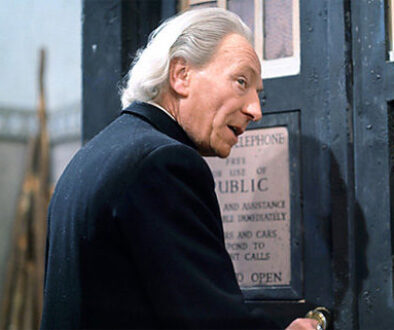
The 5 Greatest Strengths of Series 9
Guest contributor Harpal Khambay explores what made this year’s run great.
After months of waiting, and weeks of watching, Series 9 is now over. We’ve travelled from Skaro to Gallifrey, and in that time there have been divisive episodes and ones that have been loved by the fandom. In these two articles, I will countdown my top five strengths and weaknesses of Series 9, starting today with the strengths.
5. Clara’s Development
 It’s no secret that Clara is my favourite companion, and I find her quite unique. This quality continued throughout Series 9, as she evolved into the Doctor. My love for her mainly stems from Series 8, in which we saw glimpses of her emotion and anger. This continued throughout Series 9, making her character seem believable. It made such sense, that after Danny, Clara would begin to cut her ties with Earth, as there was nothing left for her. Her family perhaps, but it seemed she wasn’t as close to them as Rose was with Jackie, for example. She was already becoming addicted to TARDIS life, and her continued character arc this year made such sense because of this one fact. We also learnt new things about her, including her relations with Jane Austen… “Take that how you like.” Don’t worry Clara, we all have. Clara’s subtle development was mirrored in the stories of the series, particularly ‘Face the Raven.’ Clara’s ‘final’ hour appeared to be her strongest, and it really showcased her development which was different to any other companion. If you think of Series 7 Clara and current Clara, it is easy to track her evolving character, which seems to have a companion end like no other. But more on that next time…
4. The Music

Series 9 presented a mixture of stories, and was successful in its dark and dramatic ones. Murray Gold adapted successfully to the challenges Moffat threw at him, and continuously proved that he is still full of ideas. Episodes 1, 2, 3 and 11 stand out the most. Gold seems solely responsible for creating the atmosphere in every story, from ‘The Girl Who Died’ to ‘Heaven Sent’. ‘Heaven Sent,’ in my view, is Moffat and Gold’s latest success, as it succeeded in being a claustrophobic and tense piece of television, as it was supposed to be, thanks to the both of them.

3. The Acting
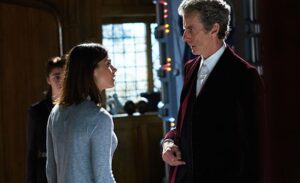 I found all actors in Series 9 to be phenomenal. Capaldi and Coleman made a fantastic pair, as their chemistry allows the story to be carried on their shoulders. Their relationship, as characters, pushed them to the extremes of hatred and love, and it would not be so raw if it were not for them. There have also been incredibly talented guest stars, who have brought emotional and real performances. From Ashildr to Cass, and Kate to Missy, the guest characters have succeeded in giving each story a new perspective and viewpoint.
2. The Return of Two-Parters
 Moffat’s approach to two-parters, in my opinion, is totally correct and logical. He has frequently said, that he would only write such stories if the story NEEDED to be written in this format. With this approach, the first and second half of all stories this year have been equally exciting and important. In the RTD era, it was common for the first half of a story to drag, and be there solely for the purpose of building the foundations for the second half. Moffat’s approach allows more ideas to be explored in each tale, which also gives the guest cast more time to shine and become beloved by the fan base. I feel episodes 1 and 2, and 7 and 8 were the most effective two parters this year, as there was consistent pace, drama and storytelling.
1. Most of the Story Writing

All my points culminate to this one thing. The writing this year has been intricate, detailed and most of all, AMBITIOUS. Skaro! Ghosts! Immortals! ‘HEAVEN SENT’! This year has really pushed the boundaries in terms of scale, on all levels. I can find no major weakness in writing this year, and feel no episode of Series 9 will go down as one of the worst ever. There have been some weaknesses, certainly, but more on that next time… see, you can tell I really love two-parters!
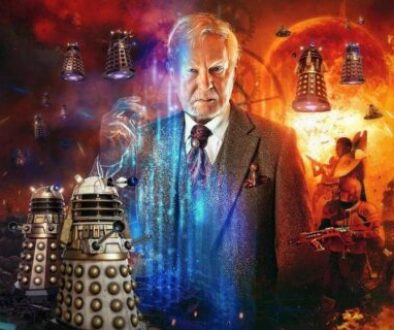
This year’s writing has been captivating, and the first 5 minutes of ‘The Magician’s Apprentice’ certainly proves this. Lots of writing this year has also allowed us to delve deeper into past stories, and expand on them. Davros is key here, and hearing the Doctor and Davros converse again was electrifying. Especially because we got to hear almost all the Doctors’ voices in one scene. ‘Under the Lake’ had a wonderful classic feel, and we finally got to have a classic TARDIS in ‘Hell Bent’! I think this is a success of the Moffat era in general. He seems much more in touch with the classic era than RTD was.
I also really enjoy ‘Sleep No More’; I can hear some of you gasping, but I found it to be unique in its style and ideas. Other unique ideas included episodes 3 and 4, and ‘Face the Raven.’ The story of the episode has grown on me, and the reason I love it is because I find it aesthetically beautiful, and very poetic.
In summary, the writing this year has been consistent to a high level, unlike last year, I feel. This quality has allowed breadth across all stories, and new ideas and themes to be explored.
Thank you for reading part one of my list, I hope you enjoyed it. In my next article I will look at the weaknesses of Series 9…