Macho Sci-Fi? Doctor Who Was Already Far Beyond That

Feature by Tom Leland.
Russell T Davies recently claimed in an interview that his aim with his second era of Doctor Who was to move the show away from what he called “very straight, very masculine, very testosterone-y” science fiction. According to him, this is where Doctor Who needed to “fill a space”. But with all due respect, that’s nonsense.
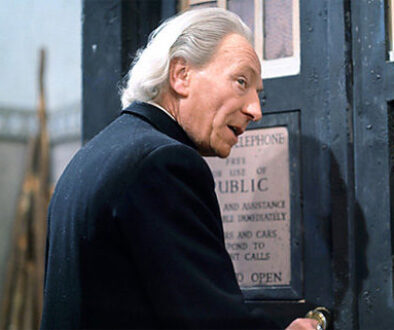
Doctor Who was never part of the testosterone-fuelled crowd to begin with. That’s what made it so special. The Doctor has always been a different kind of hero, someone who uses intelligence, compassion and wit over brute force. Even during the classic era, when media was filled with muscle-bound action men, the Doctor stood apart. He was eccentric, clever and curious, not a soldier or a macho hero. There was nothing “very masculine” about him in the traditional sense, and thank goodness for that.
Each incarnation brought their own quirks and oddities, but the core remained the same, the Doctor was the thinker in the room, not the fighter. Jon Pertwee’s era did lean a little more into action, with his Doctor occasionally engaging in hand-to-hand combat and driving fast cars, but even then, he fought only when necessary and always with style, not aggression. His martial arts weren’t about domination but self-defence and control, often delivered with a wink rather than a snarl.
The Doctor was still defined more by intellect and moral conviction than by physical prowess. He disarmed enemies with words, not weapons, and won people over with curiosity, compassion and an unshakable belief in doing what was right. That refusal to fit the standard heroic mould is what gave the character his timeless appeal, not a soldier, not a saviour, but something altogether stranger and more inspiring.
Up until the 1996 TV movie, the Doctor was not even a romantic figure. He was distant from human attachments, uninterested in relationships in the way most heroes were. He travelled with companions, but there was rarely a hint of anything more. It was RTD himself who shifted this dynamic the most when he rebooted the show in 2005, particularly with the Tenth Doctor and Rose. That was a massive change. So it’s strange now to hear RTD talking about moving the show away from being “too straight” when he was the one who made the Doctor most traditionally heterosexual in the first place!
This idea that RTD is rescuing the show from some kind of hyper-masculine rut just doesn’t hold water. If anything, it feels like he’s fighting a straw man. The charm of Doctor Who has always been that it wasn’t like other sci-fi. It didn’t need to try and fit into whatever mould was fashionable at the time.
What’s even more baffling is that RTD is making this shift while claiming it’s necessary to set Doctor Who apart from other major sci-fi franchises. Has he even seen what Star Wars and Star Trek have been doing over the last decade?
When Disney took over Star Wars, they made a clear and deliberate shift. The sequel trilogy was anchored around a female lead, Rey, and the messaging around the films leaned heavily into “The Force is female” as a promotional mantra. Every press interview, every panel, every marketing push focused on how different this was going to be, how progressive. The old legacy characters were either sidelined or rewritten, and the tone of the entire series shifted.
Star Trek, too, has taken a similar path. Discovery introduced a female captain of colour, and while the media framed this as a revolutionary moment, they ignored the fact that Star Trek had long been one of the most diverse franchises in sci-fi. From Uhura to Sulu, and later Deep Space Nine’s Sisko and Voyager’s Janeway, Star Trek was inclusive and female led way before it was fashionable.
In other words, RTD isn’t boldly going where no one has gone before. He’s following a well-trodden path that, frankly, has already shown itself to be rocky ground. And unfortunately, Doctor Who is suffering for it now too.
The truth is, Doctor Who didn’t need “fixing”. It didn’t need rescuing from some imagined problem. It was already unique. Already inclusive in its own strange, brilliant way. What it needed was strong writing, compelling stories, and a Doctor who felt like the same alien genius we’ve loved for decades.
Let the Doctor be the Doctor. That’s all we’ve ever needed.