One Dead Disney Deal Later, Doctor Who Trundles On: But Will the BBC Learn Anything from Past Failings?
Feature by Dominic Parkes.
After months of uncertainty, Doctor Who has been handed another lifeline. The BBC has officially announced this week that the show will return at Christmas 2026, with a special once again written by Russell T Davies. To some, this might sound like a reassuring continuation, but look beneath the headlines, and it feels more like damage control.
The Messy Disney Divorce: Budget Cuts Incoming?
The most significant development lies not in the Christmas return itself, but in what surrounds it. Disney+ has formally withdrawn from its partnership with the BBC. Few fans were surprised by that news, as the writing had been on the wall for a while. Yet it is incredible to think that just a few years ago, this transatlantic alliance was hailed as the beginning of an epic new era: global distribution, blockbuster-scale funding, and the potential to reposition Doctor Who as a major international sci-fi contender.
Now that experiment is already over. To be clear, Disney does not walk away from something it believes has long-term value. Its exit suggests the show failed to meet internal expectations, either creatively, commercially, or both. If the world’s biggest entertainment conglomerate has deemed Doctor Who an investment not worth pursuing, that should concern even the most optimistic fan.
Without Disney’s backing and with no new streaming partner, a substantial reduction in budget is inevitable. The past two series, bolstered by international funding, at least boasted high-end visuals, cinematic direction, and more expensive marketing pushes. Whether or not the storytelling matched the scale, the production values at least signalled ambition.
Doctor Who may now be forced back to shoestring budgets. Budget limitations can encourage creativity, but the low-budget charm that once defined Doctor Who is unlikely to satisfy modern audiences. In an era of high-concept sci-fi shows such as Stranger Things, production value is part of the storytelling contract. It is a sad fact, but lose that quality and you risk losing even more viewers.
Russell T Davies Back (Again and Again)
Russell T Davies’ return in 2023 was supposed to revitalise Doctor Who, not just creatively, but culturally. His first era, from 2005 to 2010, resurrected the show with wit, emotional depth, and a modern sensibility. Fans and critics alike expected his second act to be just as strong. Instead, we were served a version of Doctor Who that was self-indulgent and creatively insular. Davies’ writing showed rare moments of his old charm, but those flashes were buried beneath layers of sentimentality, laboured political sermonising, and an inconsistent tone that never quite settled into anything confident.
The BBC now appears to be doubling down on the same approach. Is that wise? If Davies remains in creative control beyond 2026, the corporation must confront a difficult question: is comfort really the same as vision? Under Davies’s leadership, Doctor Who has already consumed over £100 million in Disney co-funding, delivered the lowest ratings in its modern history, and lost its biggest international partner. However much the blame is shared, Davies was the creative figurehead, and it is fair to ask whether he should continue to be trusted with the future of the show.
If the upcoming Christmas special does not mark the end of Davies’ second era and the beginning of something genuinely new, then I fear the cycle of mediocrity will simply continue. Doctor Who will remain caught in its own echo chamber.
I don’t believe that, for all his legacy and past success, Davies is the bold architect Doctor Who needs right now. He might simply be the last man standing because no one else has been allowed to try. That, more than any monster or villain, may be the real threat to the show’s future. The only acceptable outcome in my mind would be for Davies to tie up his loose ends with this Christmas special and hand the reins to a new showrunner with a clean slate. And the BBC needs to be bold enough to ensure that outcome.
Who is the Next Doctor?
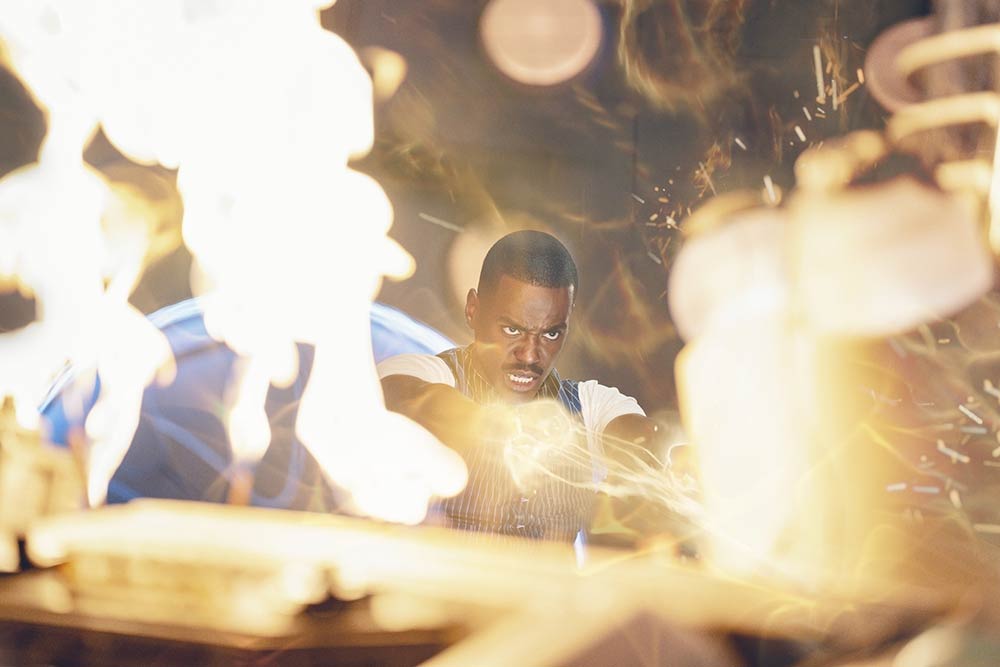
Another major question is who the Doctor even is at this point. Ncuti Gatwa’s abrupt departure after just two series, regenerating in “The Reality War”, left everyone wondering what exactly comes next. His time as the Doctor concluded like a half-told story. Despite official statements framing his exit as amicable and pre-planned, the brevity of his run and the unresolved arcs suggest a narrative that had to be hastily restructured behind the scenes. Fans never quite got to see what Gatwa’s Doctor could become.
Then came the twist. In a surprise regeneration sequence, Billie Piper appeared, not just returning, but seemingly taking the mantle of the Doctor. Or not. The credits coyly introduced her but without confirming her as the next incarnation. So far, the BBC has still offered no clarity, and Davies and Piper herself have been deliberately evasive in interviews. Was this a genuine casting move or a short-term narrative gamble?
If Piper is confirmed as the next Doctor, it is a provocative decision and one that risks confusing rather than energising the show’s momentum. Yes, her name carries some weight with fans of a certain age, but does returning to a face from 2005 push the show forward or sink it further into its own mythology? For a series already obsessed with its past, it is dangerously close to creative inertia. The other major concern is whether Piper could realistically commit to the demands of playing the Time Lord full-time. As a sought-after actress commanding higher pay elsewhere, she may be unwilling to spend nine or ten months filming in Wales.
The most pragmatic solution would be for Piper to feature in the special as a short-term or symbolic incarnation, before introducing the real new Doctor. The show’s credibility now depends on clarity and consistency rather than more gimmickry.
No More Time for Messing Around
Let’s be honest, Doctor Who has endured two very shaky eras in a row. Chris Chibnall’s tenure fractured the fanbase with divisive lore changes, a polarising Doctor and poor writing. Davies’s much-heralded return somehow shrank the audience further, despite a more promising start.
The BBC continues to insist that the Doctor is “not going anywhere.” But perhaps the more honest question is: where is it going? Right now, nothing is confirmed beyond the Christmas special, only vague notions of further series. There is no clear new lead, and no announced showrunner if Davies steps away. A Christmas special in 2026 feels more like a placeholder while the BBC decides what happens next.
This moment is not just another transition; it is a test of Doctor Who’s long-term viability. The show’s core idea remains as limitless as ever; that engine still works. But it needs fuel in the form of new creatives and the courage to take risks rather than retreat into familiar patterns that are no longer working.
If the BBC truly wants Doctor Who to thrive rather than simply exist, it must demonstrate that it has learnt from the failures of both the Chibnall and Davies’s second eras. The show needs to rediscover its sense of purpose and imagination. Only then will it earn the right to regenerate once more.