Doctor Who: “The Reality War” Is a Narrative Mess – 2nd Opinion, Take 1
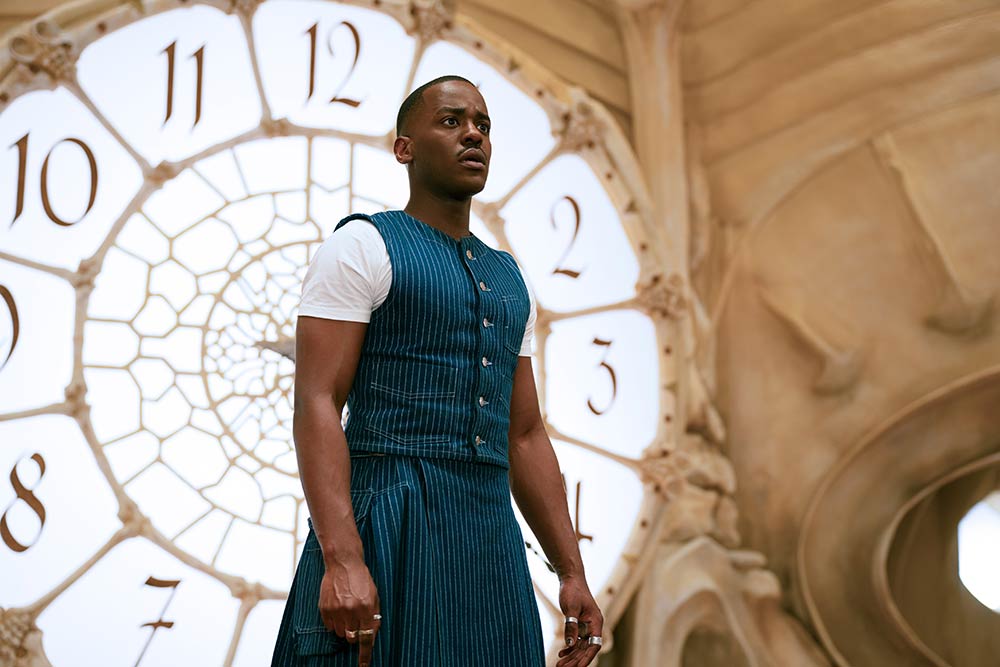
Gustaff Behr reviews the Series 15 finale.
Ever since Doctor Who: “Wish World” aired, some fans were rightly concerned that “The Reality War” wouldn’t have enough time to tie up every dangling plot thread. In response, defenders of the show kept reassuring others that the extended 67-minute runtime would fix all that. Well, so much for that, then! Because all that extra time was squandered.
The Rani’s master plan, complete with Omega, Conrad, and the reality-destroying stakes, is abruptly resolved by the 40-minute mark. The remaining 27 minutes are devoted almost entirely to the Doctor trying to restore Poppy to existence in the new reality. This subplot, confusing and emotionally undercooked, dominates the finale’s back half and could easily have warranted an entire episode of its own to properly explore. Instead, it hijacks the climax and epilogue, pushing the actual resolution of major story arcs, and characters like Omega, the Rani, Rogue, Susan, and even Ruby herself, to the margins entirely.
Because the episode rushes to resolve the bulk of its story within the first 40 minutes, it ends up speedrunning through crucial moments. It undoes last week’s cliffhanger in under the first minute of runtime. Major developments are crammed in with barely any breathing room. For instance, Susan Triad somehow manages to whip up a fully functioning Zero Room, capable of surviving the rest of all reality, in under an hour. The Doctor has to hurriedly brief UNIT on who Omega even is, complete with a crash course in Gallifreyan mythos. Other characters, like Kate Stewart and Mel, also contribute their own quick bursts of exposition regarding the Rani and Omega’s pasts.
In fact, the scenes explaining Omega take up more time than the villain himself ever spends onscreen. And while the script tries to juggle all of this, it simply drops the ball on its ensemble. Too many characters are present purely for fanservice and spectacle. Rose Noble does absolutely nothing. Shirley and Mel’s grand entrance leads nowhere. Belinda, the incumbent companion for Series 15, spends half the episode standing around doing nothing. She is literally locked away inside a box with Poppy until the A-plot is resolved.
Even Omega, hyped up as the ultimate threat, barely staggers out of his containment before being unceremoniously defeated. His total screen time amounts to around three minutes, just long enough to devour the new, more interesting, Rani and see Mrs. Flood exit from the story in the very same scene. What was the point of bringing him back? It’s the story equivalent of throwing action figures at each other while someone offscreen reads Wikipedia summaries of plot developments.
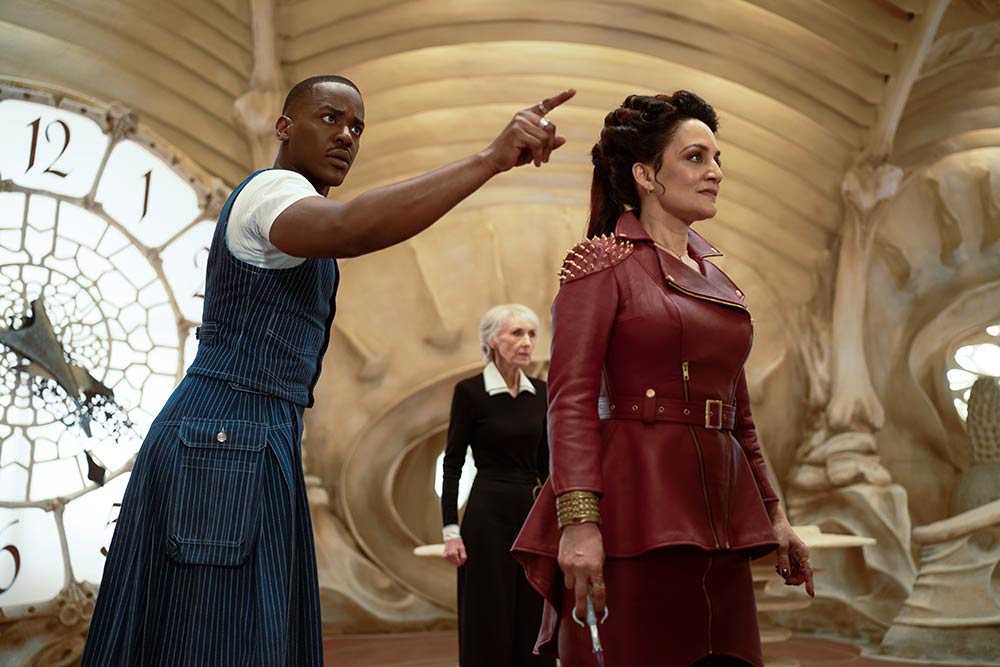
Speaking of the Rani, I was both right and wrong about her being sidelined. Yes, she gets immediately eaten, but before that, she’s mostly relegated to bland exposition dumps for the Doctor and UNIT. Ironically, her plan to repopulate the Time Lords using Omega is exactly the kind of unhinged brilliance we’d expect from her, but it’s just rushed and stripped of any dramatic impact. And her driving motivation, the Master’s gene bomb that wiped out Gallifrey, is mentioned in passing.
That could’ve been a phenomenal Doctor-lite episode, Russell. Instead, we’re left wondering: if she knew the attack was coming, how did she still end up sterile? And the Doctor? She wasn’t even on Gallifrey when it happened. She didn’t find out until long after the fact. So how was she affected?
We’re told the Master’s gene bomb razed Gallifrey and killed every Time Lord present, using targeted genetic annihilation to wipe out Gallifreyan biology. If that was the case, those caught in the blast should be dead. Those who weren’t, like the Doctor, should be unaffected. At most, partial exposure might lead to mutation or damage, but only with direct or lingering contact. That’s why the idea that both the Rani and the Doctor became sterile feels like it collapses under scrutiny. The Rani anticipated the attack and survived, suggesting limited exposure. The Doctor wasn’t even there. Was the TARDIS contaminated? Was the effect airborne, planet-wide, or retroactive through Gallifreyan DNA across space and time? Nothing is explained. And the logic doesn’t hold. A bomb meant to kill shouldn’t leave you sterile if you survived, and a bomb meant to sterilise shouldn’t kill at all. Having it do both, with no direct exposure, is pure narrative spaghetti, convenient but incoherent.
Also, why doesn’t regeneration fix this? It literally heals any injury. Not everything needs to be explained, but everything needs to be explainable.
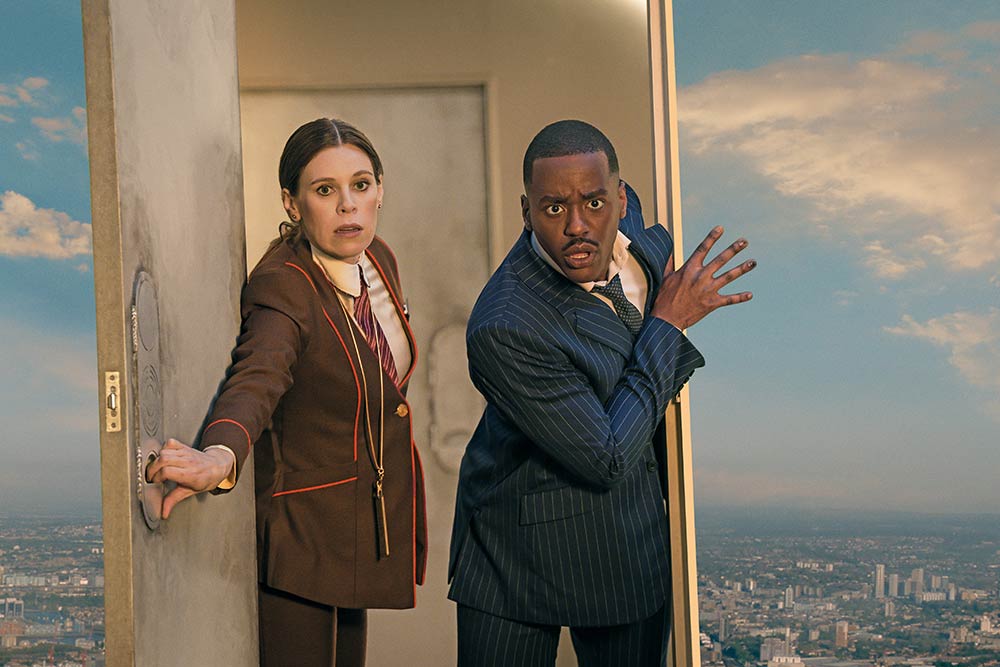
It’s not all doom and gloom though. Take Anita for instance. Anita, oh my Anita. I was willing to forgive the episode for instantly undoing last week’s cliffhanger the moment she stepped back on screen. It was genuinely great to have her return. And then … she’s made to hold the door open? How is it possible that the most emotionally developed and compelling character in this entire era contributes more than Belinda, Shirley, and Mel combined and yet still feels utterly wasted? You bring back this powerhouse of a character just to make her the glorified doorstopper.
Through all this ‘plot’, at least you have Ruby Sunday. A static character with little to no development, yet still consistent, emotionally grounded, and underserved. She’s a real legend in this episode. Facing Conrad, she doesn’t lash out or demand vengeance. She shows mercy. That’s genuine development considering her earlier appearances. Credit where it’s due. Still, her wish for him to ‘be happy’ is so vague it easily could’ve let Conrad rewrite reality again.
But more positives. The scenes with Ruby alone remembering Poppy are genuinely heartbreaking and quietly brilliant. Millie Gibson delivers one of the strongest performances of the era, and it completely eclipses every other emotional beat the story tries to land. Ruby’s reminder to the Doctor about the importance of memory gives the episode its only real emotional anchor. And yet, she’s denied a proper farewell, and Belinda is sidelined in her own finale. Ruby contributes as much to the plot as the Doctor himself, and then gets treated like the third wheel in a TARDIS she helped save.
But at least the episode has the long-awaited reunion between the Doctor and his granddaughter Susan, forty years in the making. Their reunion on 22nd Earth immediately eclipsed the silly plotline with Poppy and gave us one of the most beautiful, heartfelt interactions about family in the show’s history. Wait, that didn’t happen?
Susan’s “return” is limited to vague, cryptic flashes in the TARDIS? … Right. Totally normal to tease one of the most important unresolved character threads in Doctor Who history only to toss it aside like clutter. But hey, at least we got the long-promised Doctor and Rogue reunion and a passionate kiss after all that teasing? Oh … that didn’t happen either?
Weird. Could’ve sworn RTD teed up these emotional threads like he intended to actually follow through on them.
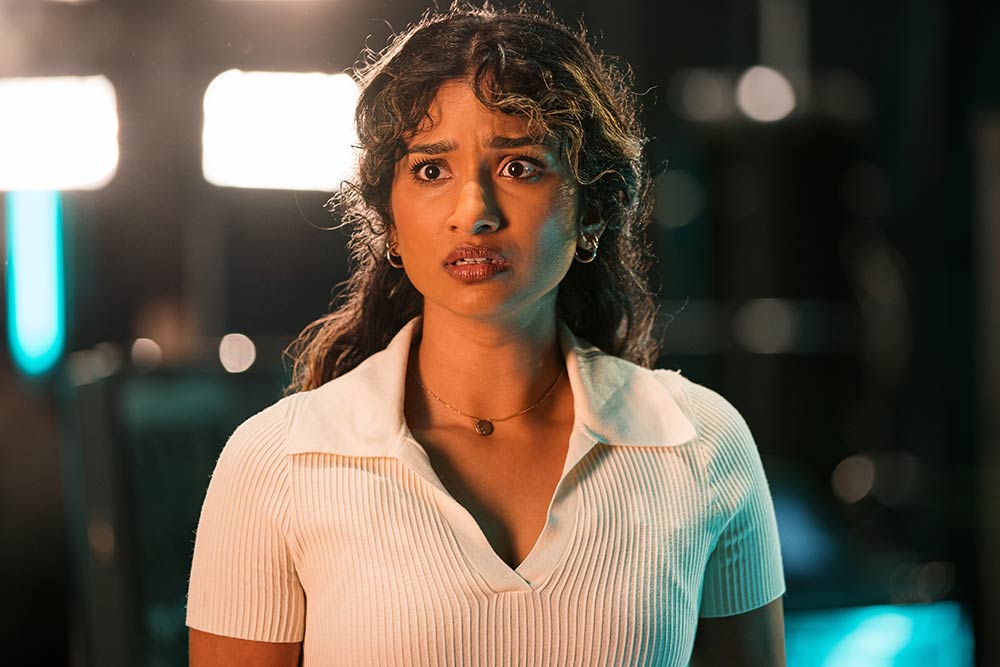
Jokes aside, nobody suffers more in this script than Belinda Chandra. I’ve also never felt more gaslit as a Doctor Who fan than I was watching the back half of this episode. I had to go back to make sure her motivation was to return to Earth for work, not to be a mother. It’s like even the plot realised how weak her story was so it rewrote it. The truth? The story gaslit its own continuity, undermining what little groundwork had been laid for Belinda and sacrificing her arc on the altar of rushed sentimentality.
She’s sidelined for most of the episode, relegated to standing around or staying in the kitchen zero room while others get on with the story. When she finally ‘returns’, gone is the grounded urgency that once drove her to return home on May 24th. Now it’s retroactively about raising Poppy, a child she couldn’t even remember existed until minutes ago. And the story expects her, and us, to accept that with a smile?
There’s no moment of confusion, fear, or even basic questioning from her. Compare this to “The Almost People,” where Amy wakes up and screams in horror upon realising she’s suddenly pregnant, because that’s how normal people react to a surprise like that. It’s horrifying.
But here? Belinda just goes full “tradwife” without missing a beat. The episode sidesteps what should’ve been a psychologically rich, possibly even horrifying twist in favour of tidy sentimentality. It’s not just a disservice to her, it’s a betrayal.
Worse still, this horrible ending completely ignores everything the show just spent “Wish World” condemning. Conrad’s misogynistic rubbish about women being stuck at home raising babies was shown as toxic and awful. Yet here, Belinda suddenly becomes exactly that: a single mum forced to raise a kid she didn’t even know she had, and it’s treated like some warm, heartwarming happy ending. The story had to rewrite reality so that she would consider this normal. This is her Wish World, folks, and it’s worse than her position in the previous episode.
Oh my god. That is really messed up. Like on so many levels, that is messed up. But “representation”, right?
Almost there, Gustaff, you can do it. Just a few more words. I should probably say something nice about Ncuti’s performance. He saved the day and somehow didn’t cry. I can’t be completely sure though. I skimmed through most of his final scenes with Belinda because … well, see above.
But the rest of his performance? I genuinely enjoyed it. He absolutely felt like the Doctor from start to finish. He didn’t back down, he conveyed the full spectrum of emotions, not just tears, and his scenes leading UNIT in the charge, confronting the Rani, defeating Omega, also accidentally gaslighting Ruby, then slowly confronting the horror of Poppy’s erasure … honestly, beautiful stuff. It really proves Ncuti Gatwa has the range to handle complex, layered material, not just throw out “honey” and “babes” every other line.
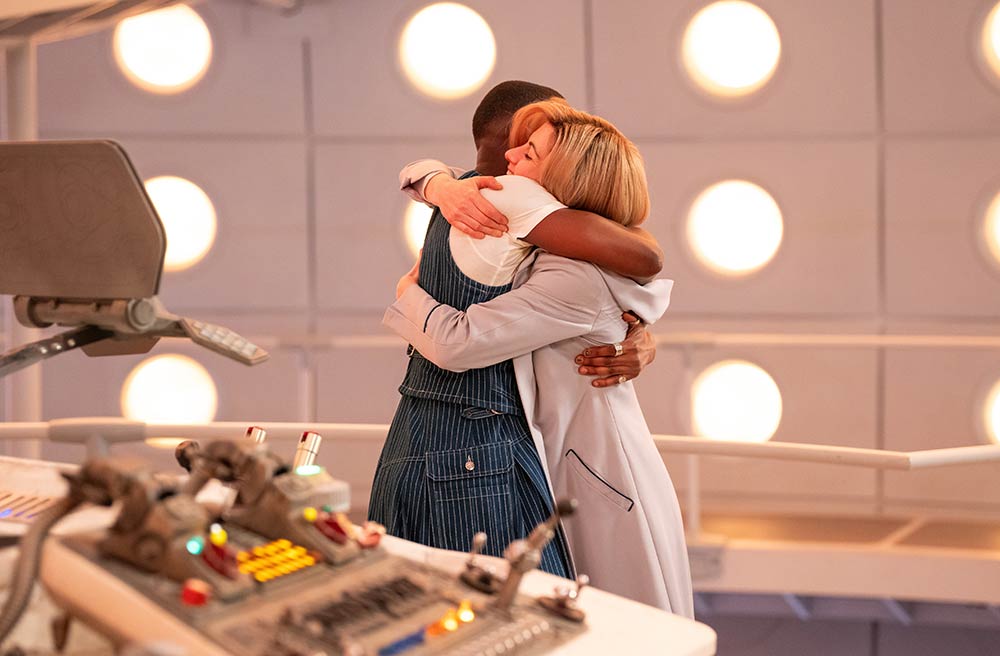
And it was truly nice to see Jodie Whittaker again. It says a lot that guest Doctors keep getting better material than the lead does in their own era. Jo Martin’s Doctor, introduced as a surprise twist, managed to walk away with some of the strongest writing of the Chibnall years. And now, Jodie gets a moment where she steals the show from the Fifteenth Doctor. That scene between her and the Fifteenth Doctor actually gave her space to breathe, reflect, and feel like the Doctor in a way her own episodes rarely allowed. It’s scenes like that that make me believe Big Finish will do for her what they did for Colin Baker: give her the stories she deserved all along. That moment? That’s what a good page of dialogue looks like.
So, with Series 15 wrapped up, I can honestly say that the last two seasons of Doctor Who felt more like Davies just wanting to lean hard on nostalgia – David Tennant, Susan Foreman, Sutekh, Omega, the Rani – along with returns of actors like Billie Piper, Jo Martin, and Jodie Whittaker, iconography, and thematic echoes from his past triumphs, but without doing the heavy lifting to make those beats feel earned. It’s not that these moments aren’t powerful in isolation, they’re just detached from a logical or satisfying buildup. The result comes across as a self-congratulatory remix tape of Davies’ own work. Instead of building something new, it feels like he’s trying to remind the audience of how great it used to be, ironically making the case for his original era’s brilliance at the expense of this one’s coherence.
As for the regeneration of the Doctor into the face and body of a previous lover/companion and being stuck like that for potentially hundreds to thousands of years … I hope you’ve thought about what sort of seriously ethical and metaphysical questions it raises. In the hands of a great writer, it could be rich, cutting-edge storytelling ripe for exploring identity, consent, grief, and the burden of immortality. But it’s in Russell T Davies’ hands now, so…