Doctor Who: “Wish World” Reveals a Disturbing Trend in RTD’s Storytelling – 2nd Opinion, Take 1
Gustaff Behr reviews the seventh episode of Series 15.
Doctor Who “Wish World” unintentionally highlights just how far Russell T Davies’ creative philosophy has curiously shifted since his original run. In The Writer’s Tale, Davies famously dismissed dream sequences as empty filler, dramatic dead weight with no lasting consequence. Yet here we are, with an entire episode built around a dream-like false reality that gets destroyed by the end, leaving little of substance behind. It’s a strange contradiction. Davies, once critical of dream logic, now leans into it, asking viewers to emotionally invest in an illusion. That tension between past and present Russell is, frankly, more compelling than much of the episode itself.
And yet, the story’s biggest issue isn’t just that it’s an illusion, it’s that it piles on even more plot in a season already brimming with unresolved threads. Everything we learn in this episode adds weight to an already overcrowded pot of mysteries that all need to be resolved in next week’s finale if this arc is going to stick the landing, a feat last season didn’t quite manage. At this point, it feels like RTD holds “mystery box” storytelling in higher regard than tight, elegant setups with satisfying payoffs.
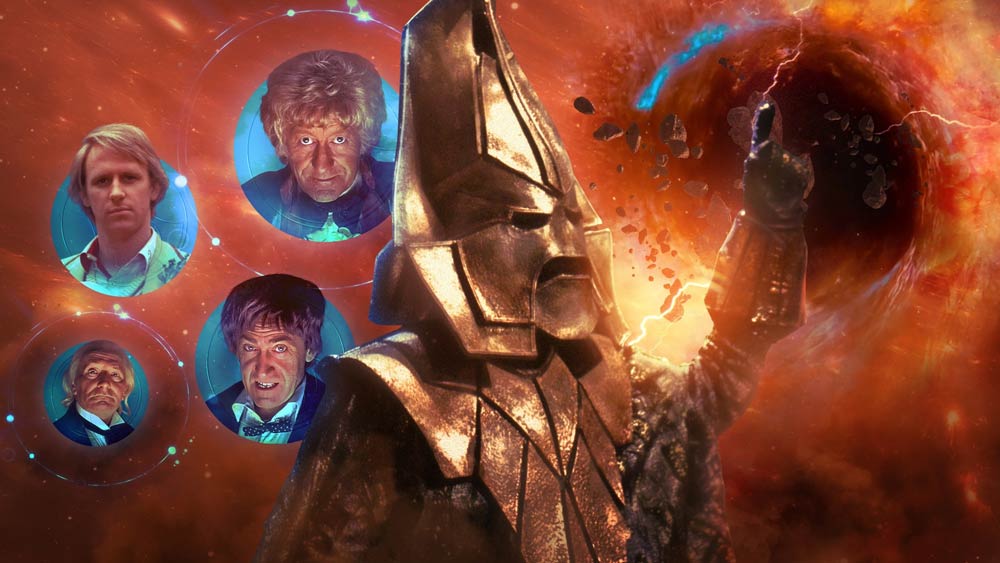
Take Omega, for instance. He’s supposedly returning, but there’s been zero buildup, no hints, no foreshadowing, not even a throwaway reference in decades. You know, Omega? That legendary Doctor Who villain who last showed up over forty years ago? The one every Disney+ subscriber could just casually look up in the Doctor Who episode library to get up to speed…oh wait.
Meanwhile, the Rani has been “built up” in the most artificial way possible, via superfluous cameos by Mrs. Flood since last season. Her identity is only revealed at the end of this season’s episode six, her plan is dumped on us in a nearly ten-minute exposition dump at the end of episode seven, and the Wish Baby, a key component of her scheme, is introduced in the pre-credits scene of that same episode. And now, she seems poised to be sidelined entirely in favor of Omega in the finale. In Russell’s defense, it must be incredibly difficult to properly foreshadow your finale when your season only has six episodes that aren’t the finale.
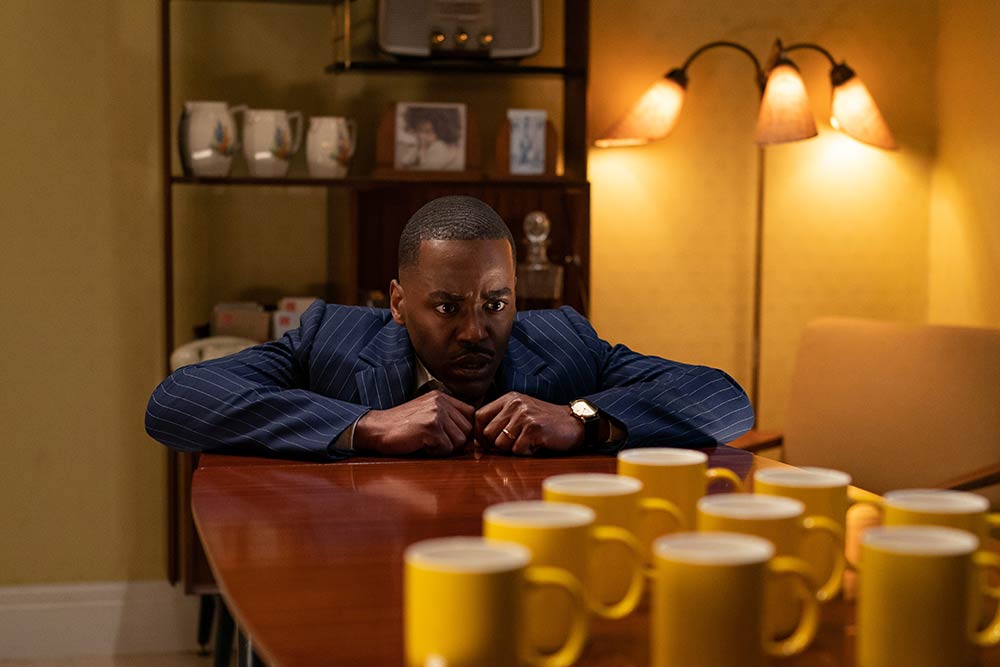
Still, I enjoyed the “John Smith” storyline Ncuti Gatwa was given in this episode. While it doesn’t quite reach the emotional heights of the Series 3 version, that’s not a fault of Gatwa’s performance. The episode is simply too crammed with plot threads for any single arc to fully breathe. Despite that, Gatwa does an excellent job conveying Smith’s growing awareness with the artificial comfort of the Wish World.
- Times the 15th Doctor has cried: 16 (across 17 episodes)
- Times he’s actually saved the day: 3 / 17
That said, his scenes with the Rani could have had a far greater emotional punch if the script had restored his memory earlier. As it stands, far too much of their interaction is him repeatedly saying things like “I don’t know who you are” or “I don’t know what you’re talking about.” Giving the Doctor even a partial recollection would’ve added texture and made those exchanges feel less like narrative wheel-spinning and more like an actual confrontation.
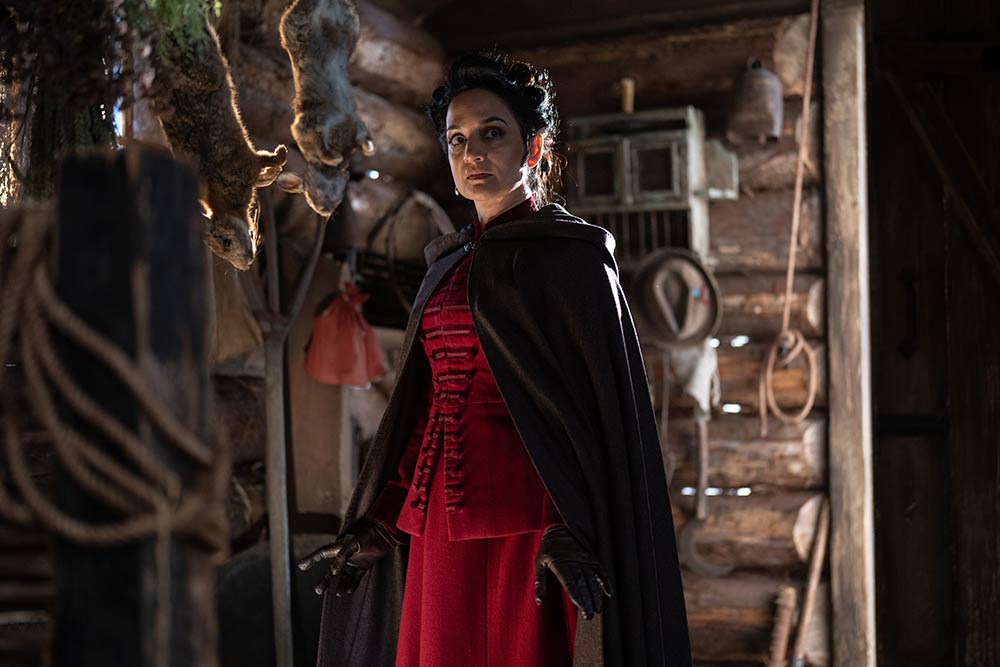
Which brings us to this week’s MVP: The Rani, specifically, this latest incarnation. She shines in every scene she’s in and almost convinces me she didn’t just spend ten minutes expositing her entire plan to the Doctor. Speaking of which, it’s one convoluted scheme, to say the least, but if I’m following correctly, it boils down to:
The Rani needed Conrad to create the Wish world so the Doctor would start doubting it because that doubt would destroy the Wish world, allowing the Rani to bring back Omega for some yet-to-be-revealed reason.
Also, at some point before the Eighth Doctor, he and Rani danced together while a city was being destroyed? And since this show has a habit of substituting the word ‘sex’ with ‘dance,’ is the episode trying to hint that the Doctor and the Rani… moving on!
I didn’t enjoy Conrad’s inclusion, as it felt like a step backward from the already baffling characterization he was given in “Lucky Day”. In that episode, he was established as antagonistic and ableist, particularly in how he treated Shirley, but his prejudice at least had boundaries. Here, however, his motivations are erratic and seemingly rewritten.
Initially, Conrad appeared to be on a crusade to expose UNIT for covering up the existence of aliens, even though he already knew aliens existed. That goal is abruptly dropped, and he morphed into a caricature of a right-wing clout chaser, though the episode never fully commits to this angle or explains what, exactly, his third-act plan entails. Then comes yet another twist: he’s just bitter that UNIT didn’t hire him. So…he partners with the Ranis? The very aliens he supposedly wanted to protect Earth from (UNIT remember)?
It’s incoherent.
To make matters worse, “Wish World” introduces a sudden streak of homophobia in Conrad that feels completely unearned. While “Lucky Day” established his intolerance toward disabled individuals, nothing indicated a broader pattern of bigotry. In fact, in this episode alone, he shows no objection to people of color (he dislikes the Doctor of course), interracial couples, or women in positions of power. That makes it all the more confusing when one of Belinda’s relatives casually mentions that Conrad believes women should stay home and raise children, a detail that contradicts what we seen on screen. It also feels weird how he would give Kate Stewart, the ‘villain’ of his story, a position of power. She’s a “diversity” hire in this world, maybe?
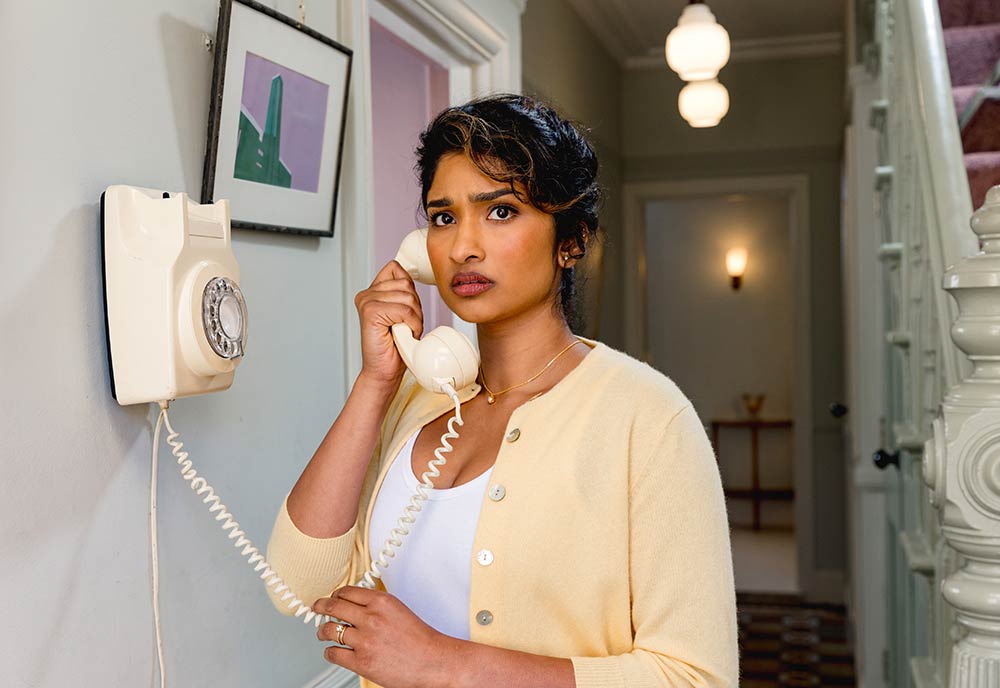
This episode delivered arguably the greatest, and most horrifying, jump scare in all of Doctor Who: waking up next to the insufferable Belinda Chandra. A moment destined to haunt viewers’ dreams, if only because it’s the only memorable thing Belinda does in the entire episode. Other than snitching on the Doctor, a task any number of the side characters could’ve accomplished, she contributes nothing. That now marks four episodes in a row where this character is either sidelined or completely absent.
Half the season, folks. And when she does get screen time, we’re treated to scenes like her running off and screaming at the sky. As cringe-inducing as it was unintentionally hilarious.
Unfortunately, Belinda’s not alone in being wasted. As much as I was excited to see Ruby Sunday again, her B-plot had absolutely no impact on the main narrative. It amounted to little more than filler, a side quest that distracted from the core story and squandered time that could’ve been used to finally develop Belinda into a character with substance. In fact, if you removed Ruby and Shirley’s entire subplot, the only real consequence would be Conrad appearing less bigoted since their involvement mostly serves to highlight his disdain for disabled people, who are otherwise the only group visibly affected in this twisted ‘Wish’ reality.
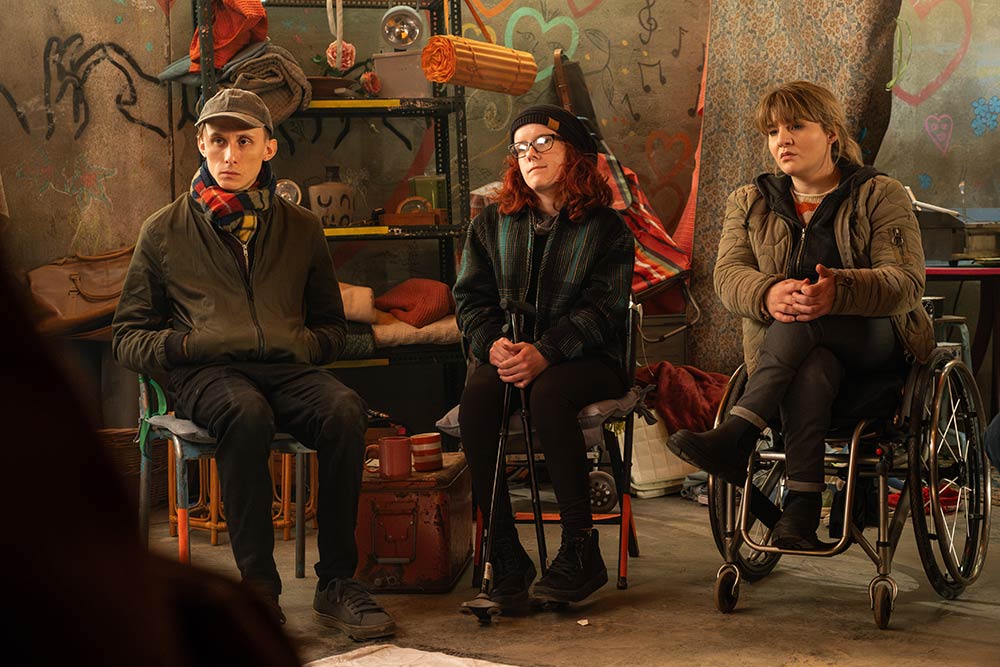
But of all the characters, I actually feel the most sympathy for Shirley, or rather for her actress, Ruth Madeley. Not just because her character is once again reduced to a prop to showcase someone else’s prejudice, but because this isn’t even the first time Doctor Who has done this to her. A little while ago, Big Finish ran a multi-box set storyline in which a bigoted scientist targeted a different disabled character played by Ruth Madeley, specifically because of her disability, culminating in, wait for it, a dystopian world where the disabled are erased. That arc was, to put it mildly, not well-received and now, here we are again: same actress, same franchise, almost the exact same storyline.
How does this keep happening? What kind of message are we meant to take from this? That disabled characters only exist to be persecuted as shorthand for societal rot? That Ruth Madeley’s entire narrative function is to suffer so others can learn empathy? It’s lazy, reductive, and frankly insulting. If this is what counts as “representation,” then the bar isn’t just low, it’s buried.
And the frustrating part is…we know you can do better, Russell. We’ve seen you do better. You didn’t just bring back Doctor Who, you pushed boundaries by introducing characters like Jack Harkness and the Torchwood team, unapologetically queer, flawed, and three-dimensional, at a time when LGBTQ+ representation on primetime TV was almost nonexistent. You showed millions of viewers what groundbreaking representation can look like, and you helped normalize queerness on television. That’s why it’s so disappointing to see you fall into the traps you once worked so hard to rise above.
Asides
This episode leaves several major plot points completely unexplained. Among them:
- How did the Rani even find the God of Wishes, a being implied to have been born the very same day she arrived, in the middle of nowhere, to a couple of random nobodies in Bavaria, 1875?
- Why did the Rani need the Doctor to use the Vindicator to make her plan work, especially when she has access to time travel herself? More importantly, how did she even know the Doctor was using it—or that he needed it?
- Why couldn’t the TARDIS reach May 24, 2025 in the first place?
- What makes the Doctor’s doubt so uniquely powerful compared to any other person’s? Why was his mind the key to destroying Wish World?
- How did Poppy get to Earth from wherever she was at the end of “Space Babies”?
- How did Rogue manage to send a message to the Doctor from the hell dimension (which, side note, looks like it was rendered on a mid-2000s desktop screensaver)?
- How did Rogue even know the Doctor was in trouble if he’s stuck in an alternate dimension with zero context for what’s happening?