Doctor Who: “Wish World” Leaves the Finale a Hell of a Lot to Fix – 2nd Opinion, Take 2
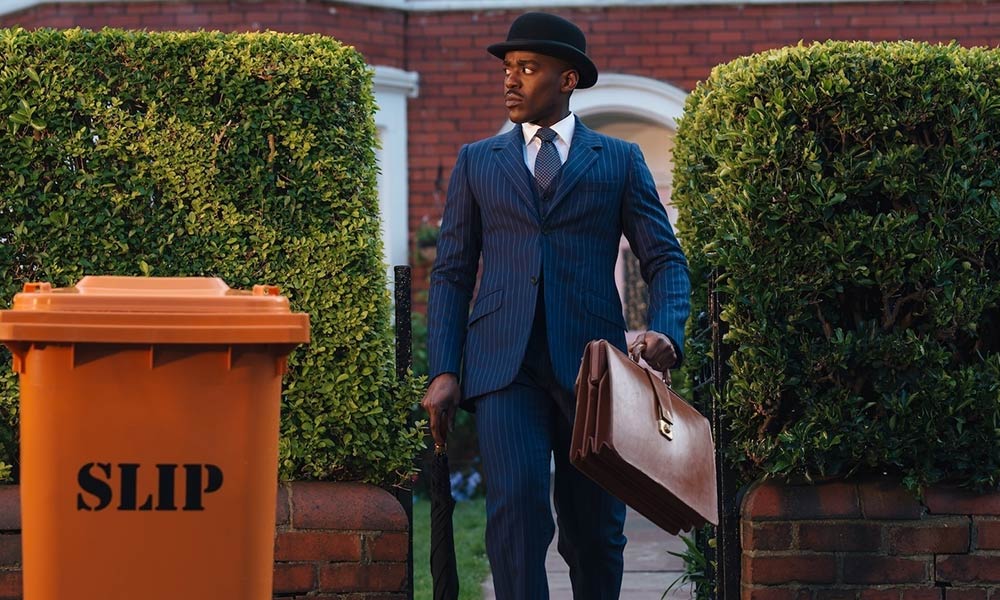
J.C. reviews the seventh episode of Series 15.
“Wish World” featured all the spectacle I’ve come to expect from the opening half of a Russell T Davies-penned Doctor Who finale. And like many of RTD’s two-parters, this episode is mostly setup for next week. Characters are moved into place, big ideas are floated, questions are raised, and it leaves a hell of a lot of work for the finale.
The concept is bold: an all too-perfect world powered by wishes and ruled by a smiling, all-knowing Conrad Clark. Doubt is a crime. Everyone wakes up cheerful. People vanish the moment they start asking questions. Although it evokes classics like The Truman Show, The Stepford Wives, and of course 1984, given that RTD has made no bones about his reverence for the Marvel Cinematic Universe, it seems likely he was most inspired by 2021’s WandaVision. The retro aesthetic, artificial family structure, and creeping existential dread all feel directly aligned.
What struck me most is how full of contradictions this world is. Conrad’s “perfect” reality plays like a warped pastiche of 1950s traditionalism: smiling families, rigid gender roles, and enforced civility. Yet the world he has created doesn’t quite ring true. Despite its authoritarian overtones, it retains visible diversity and the Doctor is a black man, married to a woman of Indian heritage. There’s no racism, no visible ethnic hierarchy. The “Unified National Insurance Team” retains female staff and is led by Kate. It’s as if RTD wanted to parody far-right ideology while still accommodating Doctor Who’s extremely progressive casting. The result feels like he is trying to have his satire and eat it too.
The people excluded from Conrad’s world are the disabled and, by strong implication, LGBT people. Same-sex attraction appears taboo, shown most clearly when Ibrahim recoils at the suggestion that one man might find another beautiful. Disabled characters are pushed to the literal margins, hidden in tent cities and cut off from wider society. The world makes space for everyone, except those who challenge the ideal. But is this good representation? I’m not so sure. When Shirley says to Ruby, “You seem very non-disabled to me”, it struck me as especially troubling. It plays into a reductive idea that disability must be visible to be valid. Rather than challenging that assumption, the scene leans into it, reinforcing a shallow understanding of inclusion.
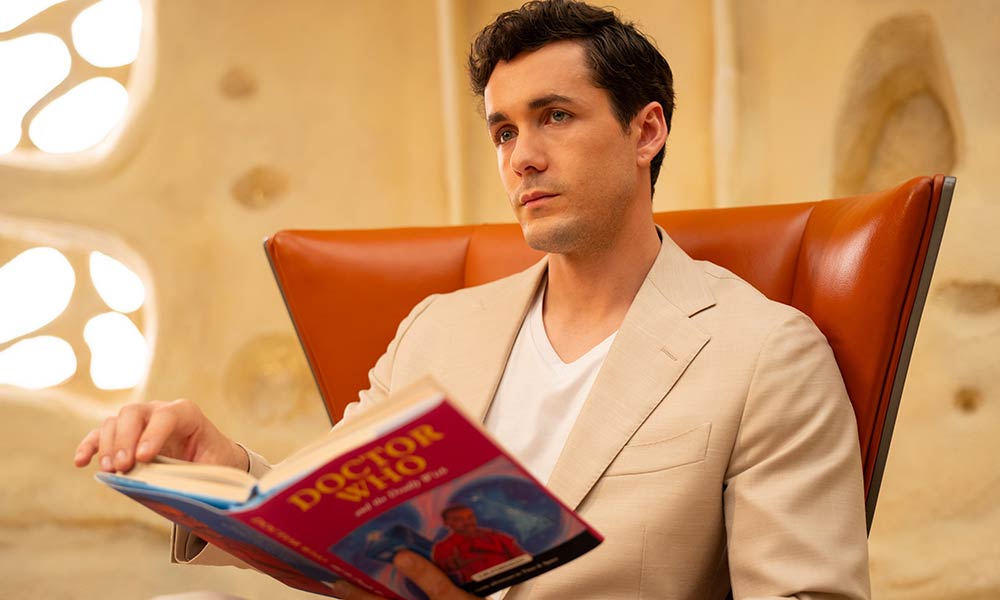
One of my main problems with Conrad’s character in “Lucky Day” was how underdeveloped he felt. As I stated, that story abandoned nuance to fast-track him into blunt villainy, but sadly “Wish World” doesn’t fix the issue. If anything, it makes it worse. The script can’t seem to decide what he actually is. Is Conrad a populist showman, a narcissist craving worship, a naive idealist, or a puppet of the Ranis? At different points, he appears to be all of them. He claims to have wished for this world, but it’s the Rani who seems to hold the real power. He talks earnestly about peace and happiness, but enforces a system that suppresses doubt and disappears anyone who questions it. He performs benevolence, but demands obedience. He’s supposedly the architect of this reality, yet often feels more like its mascot.
Most frustrating, Conrad still doesn’t come across as a person at all, but as a stand-in for RTD’s thematic target, a vague embodiment of the social media bogeyman the show wants to critique. The contradictions mount, and because the script never pins down what he actually is, the satire loses its edge. He becomes a symbol, not a character, and the result is a villain who feels conceptually interesting but dramatically hollow.
Belinda complicates things further. As a British-Indian woman cast in this world as the ideal wife and mother, her character echoes real cultural expectations. This is especially clear in the scene where her visiting relatives smile and state, “Good little girl, then good little wife, then good little mother”, a sentiment that, in this context, becomes part of Conrad’s imposed social order. But what the show overlooks is that many families, particularly within Indian communities, are perfectly content with traditional family roles, and framing those dynamics as inherently oppressive flattens what can be a personal, and culturally specific choice. It’s a recurring problem in current Doctor Who. It wants to signal that it’s taking the moral high ground, but rarely gives topics the nuance they deserve. A bigger problem still is that Belinda’s role is ultimately passive in the story. Her betrayal serves the plot more than it reveals anything meaningful about her as a character.

Ruby fares a little better. Although it’s never really explained why she is “awake” to everything while the rest of the world remains under the spell, which is frustrating, especially since this is Conrad’s fantasy, and he should have no reason to allow the person who helped bring him down the first time around to exist this freely, or at all. Ruby mostly observes and reacts. She chats to Shirley. She remembers. She warns. But she doesn’t influence much at the moment.
Ncuti Gatwa, on the other hand, delivers what I think is one of his better performances, if not his best. Perhaps, rather ironically, because for most of the episode he isn’t playing the Doctor at all. As John Smith, he is immediately more layered, more quietly troubled. There’s a restraint here I enjoyed much more. It made me wonder if this is the first time he’s been given space to actually act, rather than just play a heightened version of himself as the Doctor. And if that’s the case, isn’t that a damning indictment of how the show has used Gatwa until now? What a waste, especially if next week is his last episode.
Then there’s the Rani. Her return left me conflicted. Her opening scene, stealing a magical wish baby and turning villagers into animals, is so far removed from anything resembling science fiction that it plays out more like a fairy tale. Later on, she’s waltzing around like a discount Master, all theatrical flourishes. This isn’t the Rani I remember. Gone is the cold, brilliant scientist. In her place is more of a pantomime villain with vague powers and no real method. She’s fun, but hard to take seriously. Later, she’s reduced to non-stop exposition. Flood-Rani seems largely pointless now, as if RTD needed a sidekick for her and didn’t want to lose Anita Dobson.
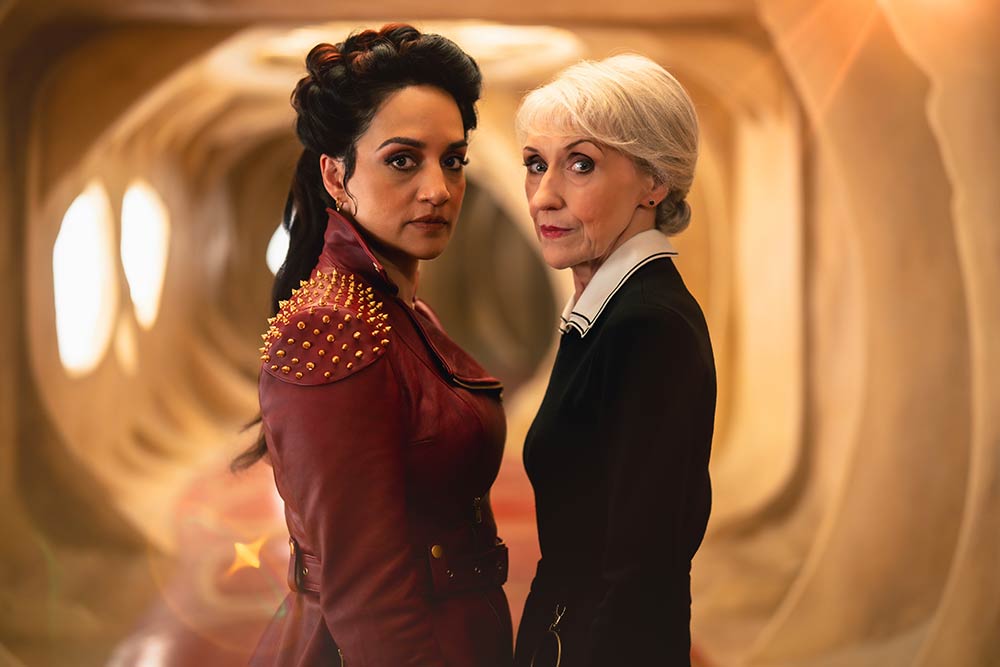
And as if that weren’t enough, the cliffhanger reveals Omega is returning, but casually dropped in with barely any ceremony. I should have felt something, but I didn’t. Two Ranis was already more than enough, and Omega feels like one twist too many. A figure that significant in Doctor Who mythology deserves his own episode, not to be slotted in as an afterthought. Younger viewers likely won’t care, long-time fans like me will probably be more concerned with his realisation, especially after the way RTD handled Sutekh last year.
The episode ends in full RTD bombast mode. The world collapses, and although it looks impressive (especially the scene with the criminally underused Mel), there’s a nagging sense of déjà vu. Another apocalypse. Another threat that it will need to be quickly resolved. And it brings into focus one of the big problems with false reality stories: what even are the stakes when nothing is real?
Ultimately, “Wish World” is not a total failure. There are ideas worth exploring, and I admire the ambition. But the execution is scattershot, the themes are messily handled, and there are far too many questions left hanging. Maybe part two will pull it all together, I sure hope so after last year’s massive disappointment. But right now, “Wish World” feels like a wish made with good intentions that didn’t quite come true.