
Doctor Who: “Lucky Day” Is Controversial for All the Wrong Reasons – 2nd Opinion, Take 2
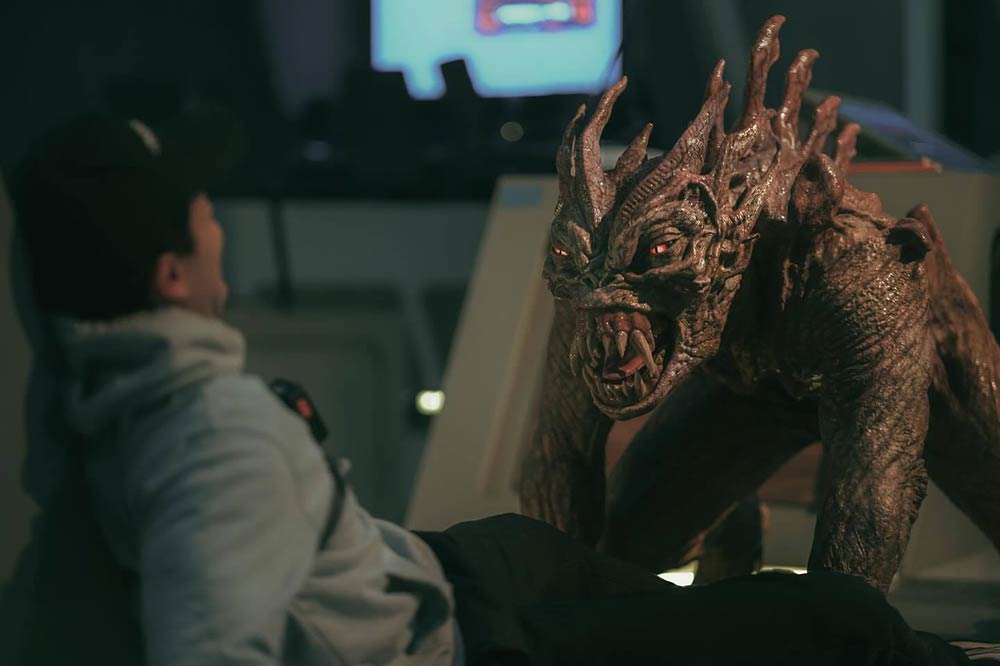
J.C. reviews the fourth episode of Series 15.
I perhaps rather naively went into Doctor Who‘s latest episode, “Lucky Day”, expecting a smaller-scale Earth invasion story, something fun, maybe a bit of a monster romp, with a UNIT twist. And for a while, that’s exactly what it seemed to be. The episode opened with romcom-meets-horror vibes (replete with clichés), catching up with Ruby Sunday as she reconnects with life after the Doctor and cautiously steps into a new relationship. It felt breezy, character-driven, grounded. But then came the twist, and suddenly, “Lucky Day” revealed its true focus: another online boogeyman, and a vehicle for more heavy-handed, if muddled, messaging.
Let’s not forget, just three episodes ago “The Robot Revolution” introduced us to Alan, Belinda’s jilted ex who turned rejection into planetary tyranny. Now, in “Lucky Day”, we get Conrad, an on-the-surface charming podcaster who eventually spins his personal bitterness into a livestreamed crusade against UNIT. When Conrad’s true intentions were revealed, I thought, oh no, we’re doing this again.
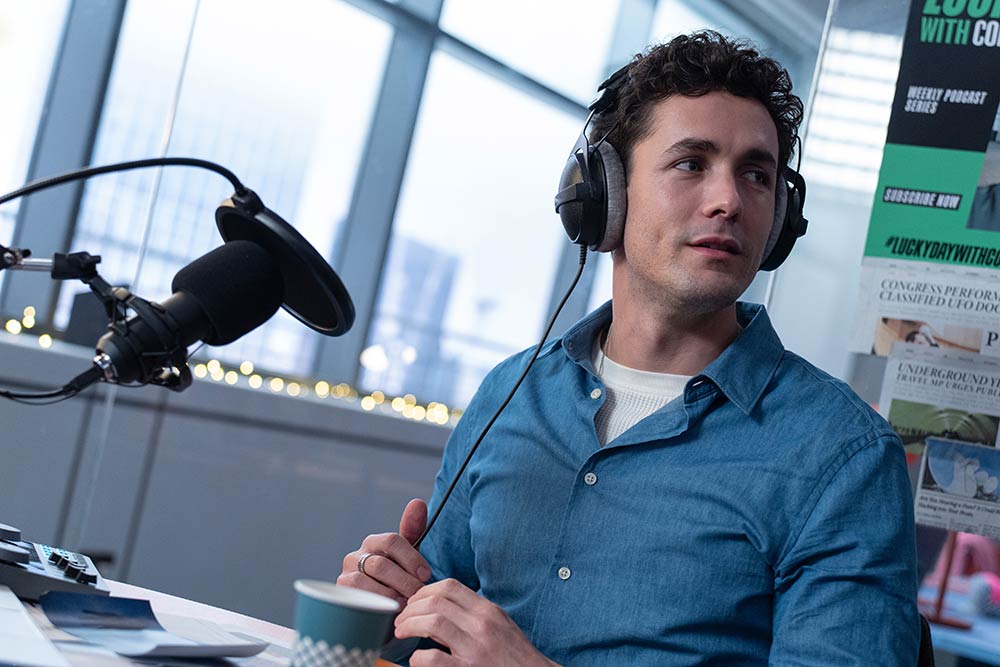
What’s most frustrating about Conrad is not that he’s implausible, but that he’s so underdeveloped as a character. We’re given the skeleton of something more complex: a lonely childhood, an abusive parental relationship, an obsession with the Doctor. But once the twist arrives, the script abandons any nuance and fast-tracks him into blunt villainy. He becomes smug, performative, and cruel, with only the briefest flicker of vulnerability when faced with actual danger. Like Alan before him, his descent lacks psychological depth; the story flips a switch instead of guiding us through it.
Crucially, Conrad’s distrust of UNIT and institutions is never seriously explored. At one point, he says to Kate, “You think you’re so superior. Up in your tower, looking down on us.” In another story, from another mouth, that line could belong to a hero, an underdog challenging unchecked power. But here, it’s weaponised as the rant of a villain. In an era of collapsing public trust in media and government, the episode had a real opportunity to examine how someone might come to believe in challenging authority, and how that belief could be twisted, manipulated, or pushed too far. Instead, the story escalates him into a gun-toting extremist, and the line between scepticism and terrorism is crossed in a heartbeat. With no attempt to make that fall believable, Conrad doesn’t feel like a person, he feels like a warning label.
It’s also worth noting that writer Pete McTighe previously came under fire for his Chibnall-era episode “Kerblam!”, a story many saw as uncritically sympathetic to corporate power. “Lucky Day” doesn’t exactly help with that perception. Once again, its underlying message reads less like a critique of disinformation and more like a warning against questioning the establishment. Trust UNIT, trust the government, trust those managing security and surveillance, and if you don’t, well, you might just be the villain too. That’s a strange place for Doctor Who to be. This is a show that has spent decades siding with the rebels, the revolutionaries, the ones who question power. But here, it seems more interested in defending the status quo.
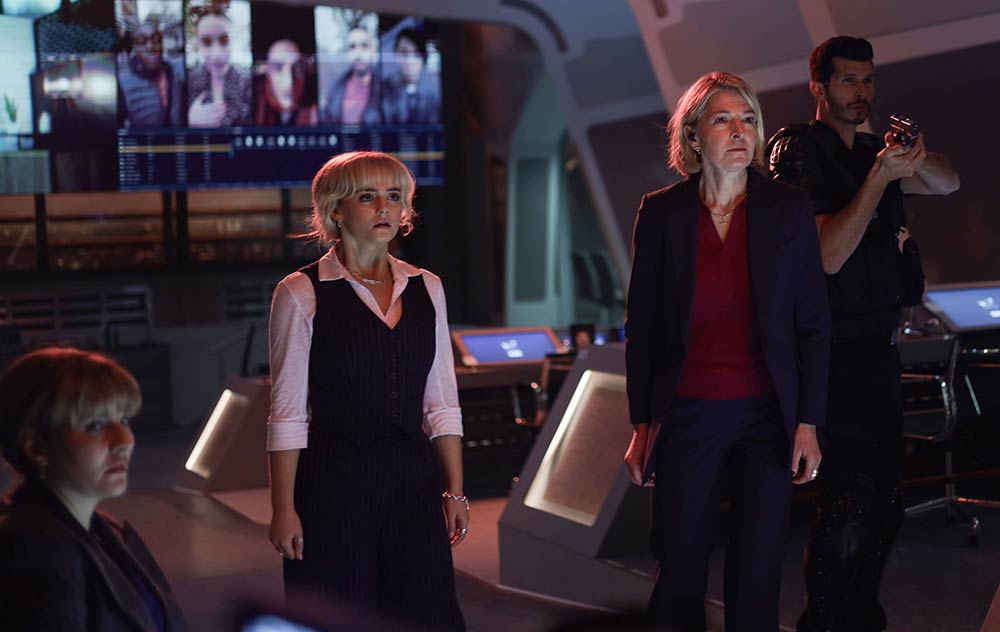
Despite its numerous flaws, “Lucky Day” does deliver a few strong character moments. It’s nice to see Ruby Sunday again after her all-too-short stint last year. Millie Gibson brings real heart, balancing humour, vulnerability, and strength. Her emotional arc, wrestling with trauma and trying to move forward, gives the episode weight. That said, Ruby’s PTSD feels surface-level. We’re told she’s hurting, but it’s not always seen as deeply as it could be. One other significant omission is the lack of development in Ruby’s relationship with her biological mother, Louise. Though present in a few scenes of the episode, Louise is simply absorbed into the trio of parental figures surrounding Ruby, with no distinct emotional or narrative progression given to their unique connection.
Team UNIT gets more focus this week, and although Shirley’s return is utterly forgettable, Jemma Redgrave is finally given a little more edge to play with as Kate Stewart. Kate crosses a clear moral line when she deliberately unleashes the Shreek, knowingly putting Conrad in mortal danger to humiliate him on a livestream. Her own team’s safety is compromised in the process, and when Ibrahim challenges her afterwards, the discomfort is allowed to linger. Most striking is Kate admitting she was glad the Doctor wasn’t there, not just because he would have stopped her, but because she didn’t want to be stopped. While I like the added darker complexity, I’m not quite sure how to feel about this… But let’s just hope she isn’t flattened back into “stock Kate” in her next appearance.

Ncuti Gatwa’s Doctor is barely present, again. Now, can I take this opportunity to say: why are we still getting Doctor-lite episodes this deep into a new era? Last year, the justification was Sex Education filming clashes, but that show is long wrapped. On top of that, we’re already down from 13 or 14 episodes to just eight or nine a year now. So what’s the excuse? Are episodes still being double-banked with “lighter” plots, or does Gatwa’s schedule demand more breaks than any previous Doctor? Either way, it’s starting to wear thin. The show is called Doctor Who, and the Doctor shouldn’t be cameoing in his own series.
Alas, Gatwa’s final cameo culminates in a major confrontation with Conrad. The Doctor is given what should be one of his strongest monologues, but it left me cold. Gatwa delivers it with presence (though Jonah Hauer-King towers over him, in both senses), but the writing leans too far into 80s PSA territory. All that was missing was a cartoon jingle and the Doctor turning to camera to say, “And that’s the danger of online radicalism.” The speech also flattens a complex issue into a moral soundbite, more interested in winning than understanding the issue. In an episode this muddled, I found it hard to cheer for a Doctor who feels more like a mouthpiece than a character. And at times, it’s hard to tell whether he’s addressing Conrad or delivering a lecture straight to the audience.
Worse still, the Doctor feels completely out of character at this moment. When he tells Conrad that his future is to die alone, unloved, and irrelevant, that is not compassion. That is condemnation. Yes, Conrad did awful things and showed no remorse, but in the grand tradition of the Doctor’s enemies, it is really small-scale. This is supposed to be the same Time Lord who offered mercy to genocidal tyrants like Davros, pleaded with the Master to change, and gave second chances to monsters who destroyed entire worlds. He does not give up on people or monsters so easily. Or at least, he did not used to. Now, he ridicules the broken and the angry, delivers judgement, and walks away. Or, in Alan’s case from episode one, watches someone die and says “Yas, Queen” straight after. Is this really who the Doctor is now?
All in all, the episode has moments of charm, some strong performances, and flashes of something more thoughtful beneath the surface, but they’re overwhelmed by blunt writing and a morality that feels increasingly out of step with what Doctor Who used to stand for. In the end, for all its effort to feel current or challenging, one truth lingers: “Lucky Day” is controversial for all the wrong reasons.
Asides
- Be honest, who else thought we were getting a surprise Auton return with the dummy scene?
- It’s a real shame the episode didn’t make more of its monster. The Shreek looked brilliant in places, and Peter Hoar’s skilled direction hinted at a properly chilling horror story (especially with the café scene), if only the script had committed to that angle instead. Such a wasted opportunity.
- Mrs Flood is getting rather tiring at this point. That said, I am curious about why she’s freeing someone like Conrad. Of all people. There’s got to be more to that. Right? Conrad is the next Master confirmed.