Doctor Who: 10 Reasons Why “The Reality War” Fails As A Finale – 2nd Opinion, Take 2

J.C. reviews the Series 15 finale.
I’ll be honest, I really struggled to write this review of Doctor Who: “The Reality War”. Not because there’s nothing to say, quite the opposite. There was too much.
So many choices left me baffled, irritated, or outright angry: beloved characters sidelined, plot devices dropped in like party favours, legacy villains reduced to cartoons, and emotional moments that feel more like motivational posters than drama. There was also some really poor dialogue. Not the kind you expect from a seasoned writer. It’s loud, cluttered, and constantly congratulating itself for being clever, without ever doing the work to earn it.
In the end, the only way I could make sense of “The Reality War” was to break it down, not with a traditional review, but with a good old list. So here are the ten biggest reasons why I found this finale so poor (in no particular order):
1. The many magical plot devices
It feels like every five minutes, a new device or concept is introduced (or conveniently reintroduced) to magically fix whatever plot problem just emerged. The Indigo Device. The Zero Room. Chronon beams. Time Rings. The Vindicator. Even the Time Hotel, introduced in last year’s “Joy to the World”, reappears to resolve the cliffhanger – a literal narrative backdoor. Some of these have prior setup, but that only heightens the disappointment. Instead of feeling like payoffs, they land as lazy shortcuts, undermining tension and deflating stakes. Solutions arrive before problems have time to matter. RTD once conjured emotional weight out of thin air like a brilliant magician. Here, he flails like a tired conjuror at a children’s party, with the creeping sense that none of this actually means anything.
2. Anita is back… but mostly wasted
Anita was the surprise breakout star of “Joy to the World”, so her return should have been thrilling, a fan favourite stepping back into the fray for the crisis. And she gets a strong reintroduction: she saves the Doctor mid-fall, explains the Time Hotel loop, even reveals she’s been searching for him across time and space with a nice little flashback. But then? She gets parked. Her big job for the rest of the episode is mostly to stand still and keep a door open. All that implied offscreen growth is background noise to a role that ultimately amounts to sentient access control. It’s a frustrating sidelining of a character who deserved better.
3. A big CGI skeleton, apparently Omega, vanquished in minutes
This was even worse than I ever feared. Omega’s return should have been the event of the series. The creator of Time Lord society. The “Mad God”. A legend dredged up from the show’s deepest lore. And instead we get… a big angry skeleton who stomps in, roars a bit, has a snack, and gets blasted back into the Underverse like a disposable mid-level boss. No duel of minds. No philosophy. No tragedy. Once a complex, ambiguous figure, Omega is now just a cheap CGI monster, gone in under five minutes like a bad Power Rangers villain. It’s genuinely insulting to the character and to long-time fans. If you’re going to invoke Omega, at least pretend he matters. This wasn’t mythic. It was a joke. (And RTD, weren’t you the one who said you redesigned the sonic because you thought it looked too much like a gun? Yet, the Doctor here is blasting away Omega like Rambo…)
4. The Rani gets eaten mid-speech like a joke
You finally bring back the Rani after years of speculation. You give her a bi-generation. You cast two seasoned actresses. You make her central to the finale’s premise. And then, after saddling her with endless exposition, you feed her to Omega mid-monologue. Worse, it’s played like a punchline. No payoff. No final showdown with the Doctor. Just chomp and gone. Meanwhile, Flood-Rani grabs a Time Ring and teleports out (wouldn’t it have made more sense to kill this one?). There’s no catharsis, no tension, no proper resolution.
5. Hugs, hugs and more unearned moments
Here’s a new, fun game: take a drink every time someone gets a hug or an unearned round of positive affirmation (you’ll be drunk very quickly). Almost every character gets a cuddle and a compliment. “You’re amazing!” “No, you’re amazing!” “No, you are!” I lost count. When everyone’s special, no one is. These moments should be earned through story, not handed out like participation trophies. You can’t just declare “we’re a family now” after 40 minutes of plot chaos and expect it to land. It’s meant to feel warm and inclusive, but ends up emotionally hollow, Doctor Who as a motivational poster.
6. UNIT is a pure meme
This episode turned UNIT into even more of a joke. I was actually laughing at the sheer stupidity of it all. Shirley boosting her wheelchair into flame trails was clearly meant to be epic (I think), but it came across like something out of Johnny English. I have to ask again: is this good representation? Then adding to the goofiness later, Kate starts physically steering the building with a ship’s wheel to fire weapons at giant bone monsters. I can’t believe I’m even writing that sentence. It was dumb spectacle for spectacle’s sake, completely undermining any remaining tension. UNIT is supposed to be the anchor in the chaos. Instead, they’ve become the punchline in a cartoon. And Kate is still handing out key roles at this supposedly high-security base like she’s running a village fête. Oh, and Rose Noble showed up again to do what Rose does best: practically nothing. Well done, RTD.
7. Belinda in a box, rewritten into motherhood
Belinda was introduced just seven episodes ago, set up as a sharp, deeply human counterweight to the Doctor. She challenged power, resisted being swept up in adventures, and even called the Doctor dangerous. And where does that arc end? Her timeline rewritten into domesticity, defined by a child. It’s not a conclusion, it’s a narrative downgrade. Technically, she chooses to enter the Zero Room, but it’s a false choice shaped by maternal guilt, cosmic stakes, and plot necessity. It looks like agency, but it plays like obligation. Her doubts, her identity, her dynamic with the Doctor, all of it is sidelined so she can play “the mum”. She remembers, yes, but remembering isn’t the same as continuing. It’s framed as moving, but it’s actually reductive. RTD has written brilliant maternal arcs before, this isn’t one of them.
8. Poppy’s entire existence is one big shrug
For some reason, Poppy is central to the finale. Seemingly “born” of Time Lord and human, she’s framed as proof that love can transcend biology and fate. Except she’s not. Or she is. Or maybe she isn’t born at all. Then she vanishes. Then she’s remembered. Then she’s back again, now just a normal-ish kid in a new timeline, with a different father and no clear connection to anything that came before. Her arc is so confused and contradictory it collapses under its own weight. We’re meant to mourn her loss, then cheer her return, but the emotional logic is exhausted long before we get there. And the real question is: why did a random space baby from a terrible episode end up as the emotional lynchpin of the entire finale? Only RTD knows!
9. Gatwa regenerates, without fanfare
And Gatwa is gone, in what might be the most abrupt and narratively hollow regeneration the show has ever done. It happens after the episode has already ended, emotionally speaking. No big goodbye, no real warning, no arc completed. Despite all the aftershow talk from RTD and Gatwa about how “this was always the plan,” it’s painfully obvious it wasn’t. This feels like a sudden pivot because Gatwa was most likely frustrated waiting for Disney and/or the BBC to make up their minds about the future of the show. So he jumped ship. And rather than RTD building to a meaningful farewell, we get this half-hearted send-off that feels like it was hastily stapled on in the reshoots (well, it was, but at least hide it better). The biggest problem is, I won’t even really miss Gatwa, mainly because they wrote him so inconsistently and out of character. And they were clearly not going to change even if he continued.
10. Billie is back… and RTD is hitting the panic button (again)
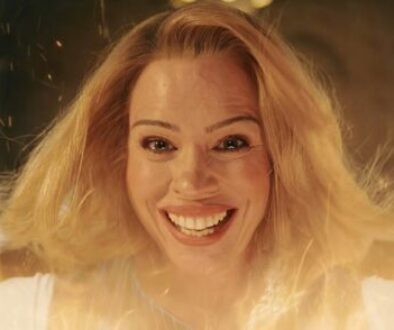
And finally, Billie Piper shows up as… yet another mystery box. The Bad Wolf? The Moment? Rose Tyler? For now, she’s just “Billie Piper”. Because clearly, RTD realised the Gatwa era isn’t landing with the general audience and decided to pull the emergency nostalgia cord (again). There was no build-up, no regeneration context. Just “Hello!” It’s not even exciting at this point, it’s just desperate. I’m not mad she’s back, but using her as a reset button cheapens both eras. It’s the most blatant “oops, let’s try again” moment since The Rise of Skywalker. At least Tennant had the 60th as an excuse.
The End?
To be honest, I could keep going. I haven’t even mentioned how Mel was sidelined, how all the teasing around Susan led absolutely nowhere, or how Rogue’s return also amounted to a shrug. Even Ruby, the episode’s (hell, the Gatwa era’s) brightest star, was left without a real ending. But I’m already over the word count, and truthfully, this episode drained the last of my patience for Doctor Who anyway.
What “The Reality War” needed was coherence, resolution, and a clear emotional throughline. What we got was a rush of half-baked ideas and wild tonal shifts, barely held together by nostalgia and spectacle. It is, without question, Russell T Davies’s messiest and most self-indulgent finale, and arguably his worst.
If this is where Doctor Who ends, it’s a sad note to go out on. But if this is just the beginning of more of the same, that might be even worse…