The War Between the Land and the Sea: Episodes 1-5 Review – From ‘Fin-tastic’ to ‘Flounder-ing’
Clint Schwalen gives his SPOILER-filled commentary on Doctor Who’s latest spin-off show.

NOTE: this review contains full SPOILERS for all five episodes.
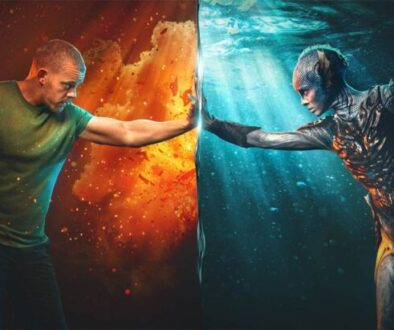
Adapted from an independent story idea by Russell T Davies, The War Between the Land and the Sea is a five-episode series set within the expanded canon of Doctor Who. Written by showrunners Davies and Pete McTighe, the spin-off can best be compared to Torchwood: Children of Earth, as both series mix a fantastical, sci-fi premise with political drama and an examination of humanity’s psychological response to traumatic events.
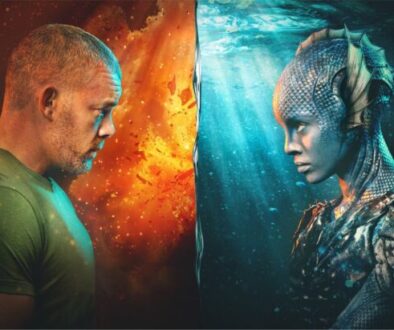
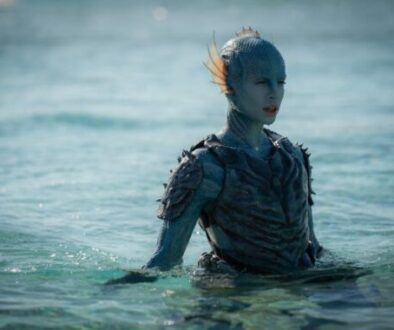
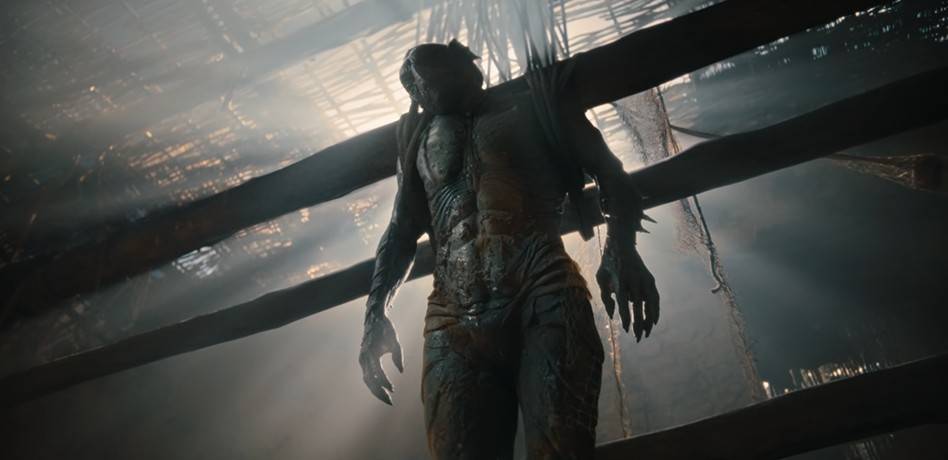
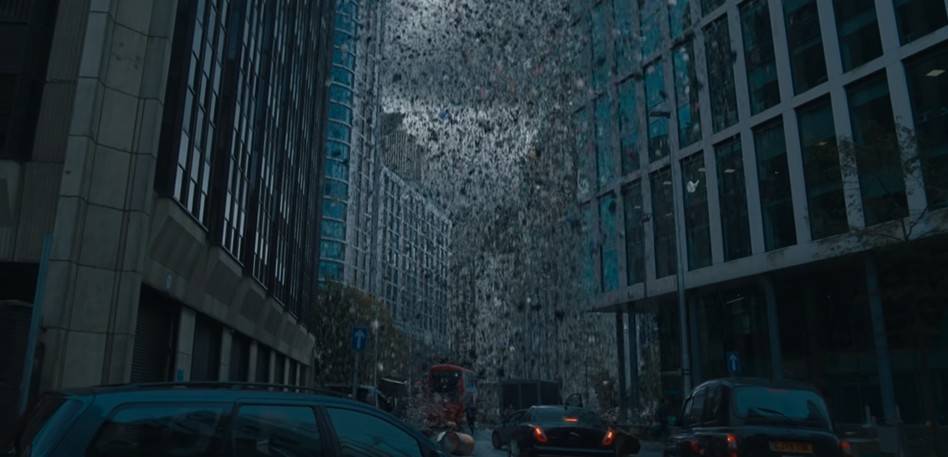
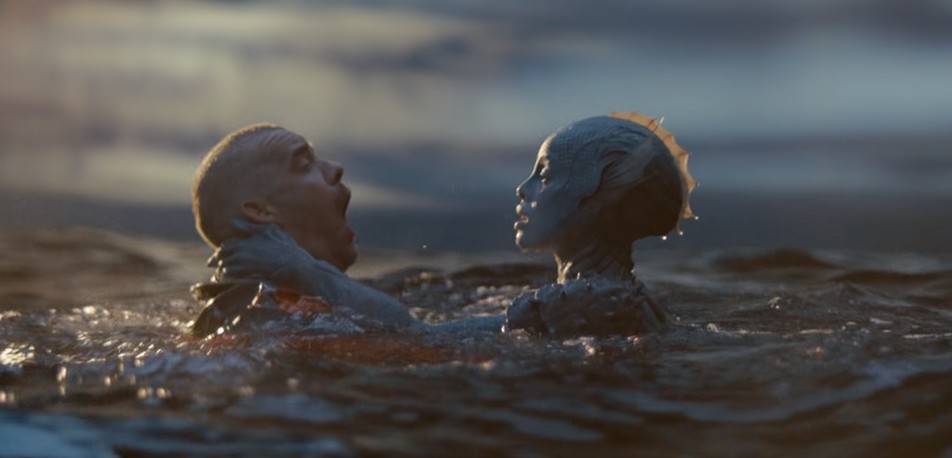
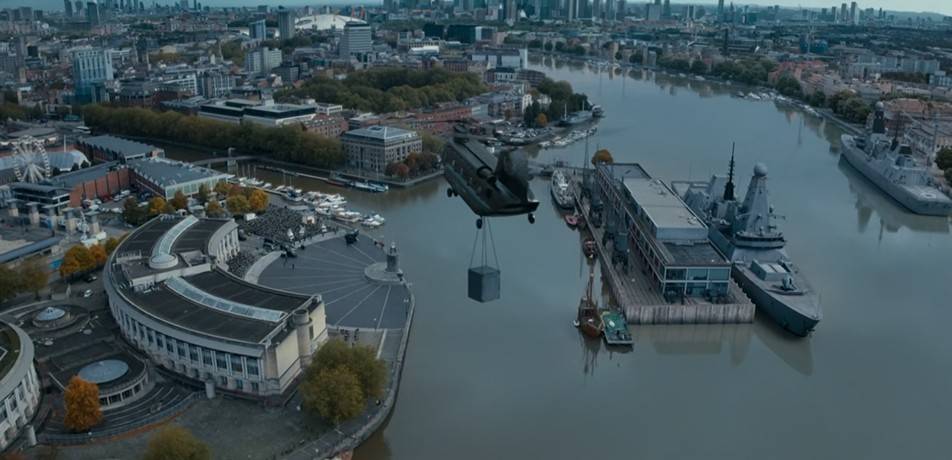
Featuring breathtaking shots of rolling ocean waves, extensive location shooting, and realistic, computer-generated creature effects, The War Between the Land and the Sea certainly benefits from the increased budget afforded by Davies’ now-lapsed partnership with Disney+. The series looks expensive, which helps raise the profile of the series beyond mere spin-off to “event television.”
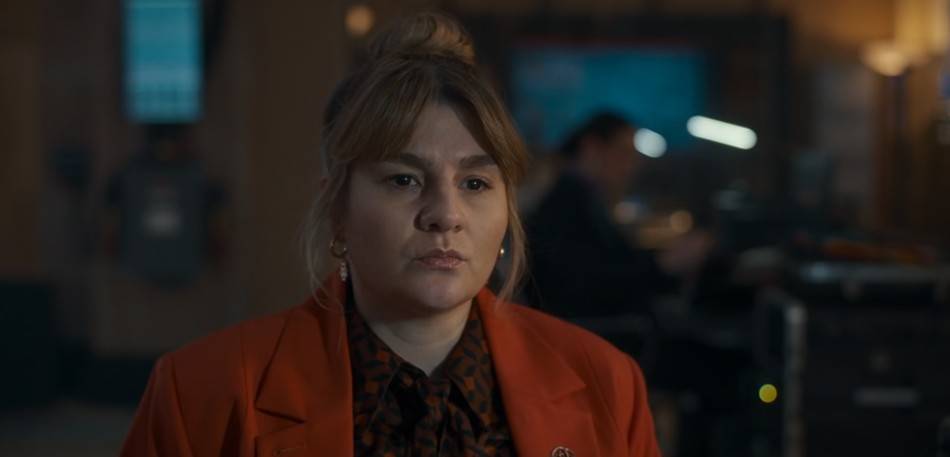
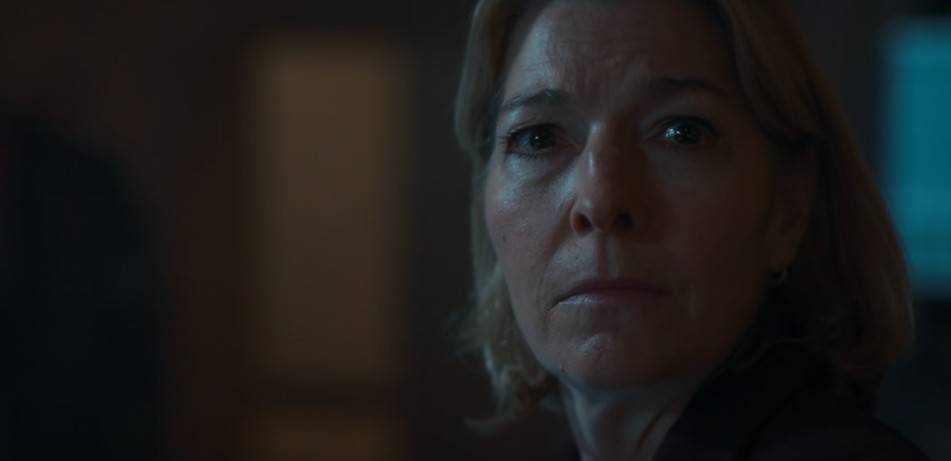
More importantly, The War Between the Land and the Sea expands on its source material. Barclay describes the Doctor as “vivid” and his encounter with the Time Lord as “this tiny little moment, but I think about it, every second of every day.” Kate Lethbridge-Stewart remarks, “I’ve seen ordinary people achieve extraordinary things, but they’re usually travelling with the Doctor.” It is evident that The War Between the Land and the Sea understands both the Doctor and his companions, and the show mines the audience’s similar familiarity to develop its characters. Colonel Ibrahim’s comment, “And Barclay has you, by his side,” casts Kate, UNIT’s commander-in-chief, as the Doctor. Note how her primary motivation—“I’ve spent my whole life fighting for this planet. Now, with your help, I get to build a better world. For everyone”—mirrors that of the Time Lord, and how she echoes his comment—“I save the human race. I don’t shape the human race. You can get that wrong all on your own”—with her dismissive statement, “Congratulations. Or shame on us all. I’m not sure which.”
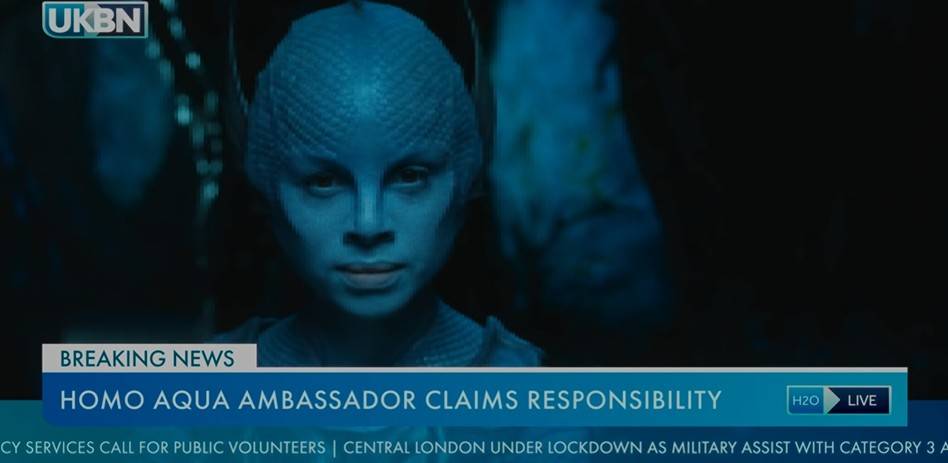
The series understands humanity, too—for better or worse—as Kate describes mankind as “a species whose intelligence is running so fast [that] it’s a thousand years ahead of our emotions, and that causes us to stumble and fall, time and time again.” The narrative is unflinching in its portrayal of its characters’ lack of concern beyond their own selfishness and greed, making the series devastatingly prescient in today’s political climate and a terrific example of how science fiction can use its fantastical premise to examine the human condition. The War Between the Land and the Sea becomes a treatise on communication, as characters posture behind “the words of a politician—vetted and craven and hollow,” protecting their own interests rather than trying to understand the opposing party. That humanity doesn’t start negotiations with Homo aqua by asking for their help in solving Earth’s pollution problems becomes mankind’s undoing.
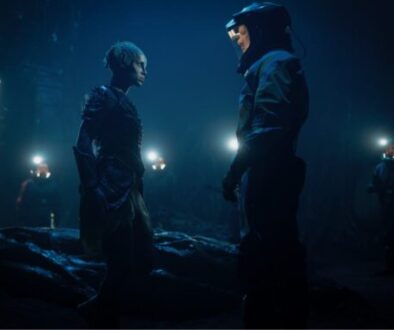
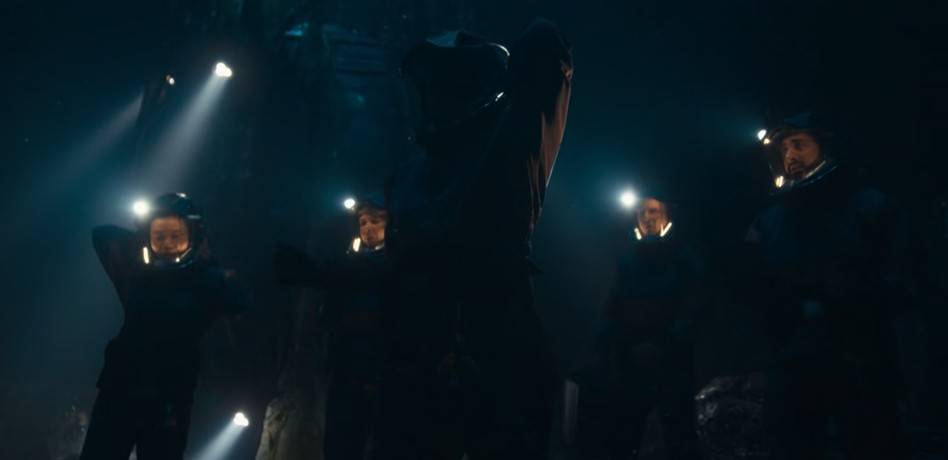
However, by far the best thing about The War Between the Land and the Sea is its rapid pace, which allows the series to touch on, if not fully develop, many interesting concepts. Though the early narrative focused on UNIT’s military efforts, as led by General Austin Pierce, the series moves quickly enough to allow UNIT scientists to ponder how Homo aqua communicates and Lethbridge-Stewart to navigate “levels and levels of politics.” In fact, the one place the series drags—the ambassadorial team’s tense descent into the Marianas Trench, in the first act of the third episode—is purposeful, the inherent claustrophobia highlighting the characters’ increasing paranoia.
Unfortunately, the series’ pace is so unrelenting that many interesting plot points and story concepts are introduced but remain underdeveloped:
- UNIT assumes that Homo aqua have “centuries of social, evolutionary, and technological advantage,” but the audience sees barely any of this. In fact, Salt reveals that humanity’s “world of steel and glass and sunlight is equally impossible” to Homo aqua as her underwater world is to mankind. For there to be a peaceful compromise, both sides must see that the other’s culture has merit, that it is worth preserving both ways of life, yet the audience sees very little of the wonder of Salt’s world.
- Homo aqua society is hierarchical and based on degrees of intellect, spanning from fish to titans, dolphins, and Homo aqua.
- What was the point of Salt being able to change her gender expression? Does Barclay, the parent of a child who uses they/them pronouns, thus have an advantage in empathizing with Salt? The series does not draw a comparison between Salt and Kirby.
- How did the suddenly introduced new character Ravi Singh pass any sort of screening process? He is seemingly present only to allow Barclay to provide the voice of reason, demonstrating his growth into his new role via an expositional shortcut.
- Salt states that she was unaware of Homo aqua’s plan to use the peace talks as a ruse to hide their true goal of melting the polar ice caps and drowning mankind. This hints at a shadowy cabal of Homo aqua that is similar to the treacherous faction aligned with the Prime Minister. The War Between the Land and the Sea could have compared the actions of both groups—evil across species, if you will—but fails. Further, the series doesn’t explain how Salt goes from public ostracization to again being the ambassador for her people.
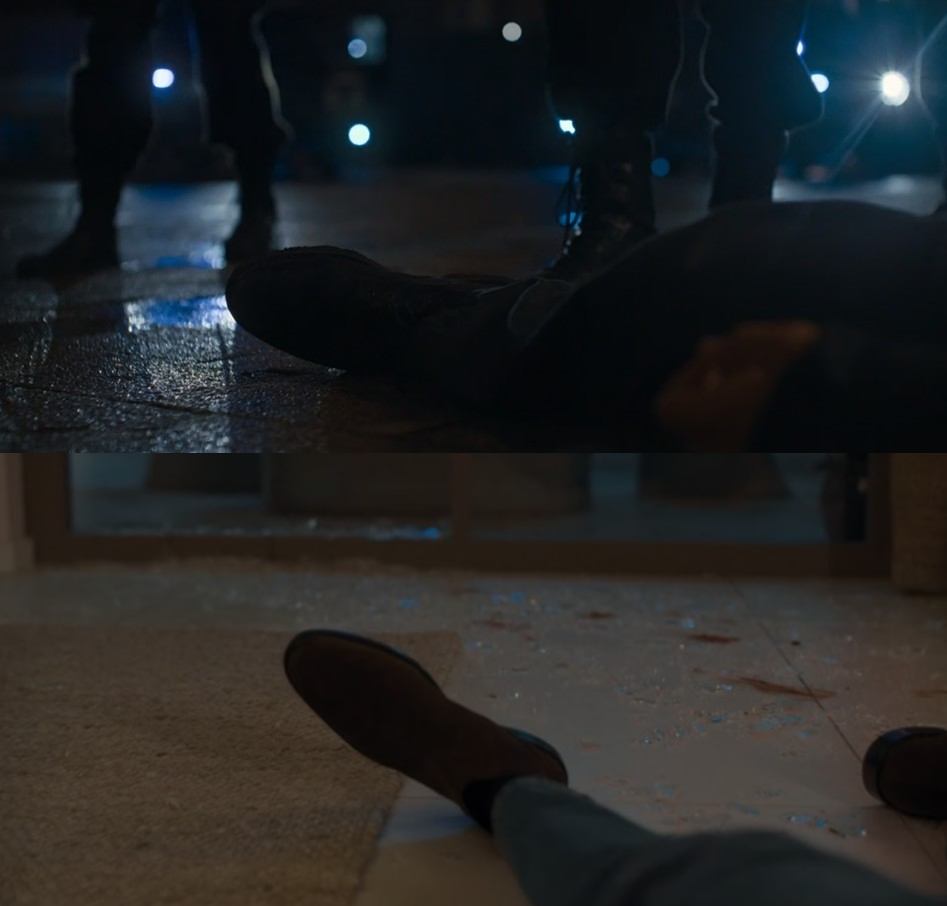
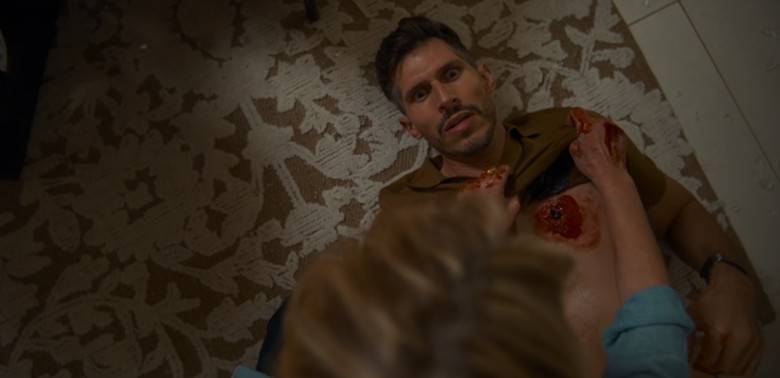
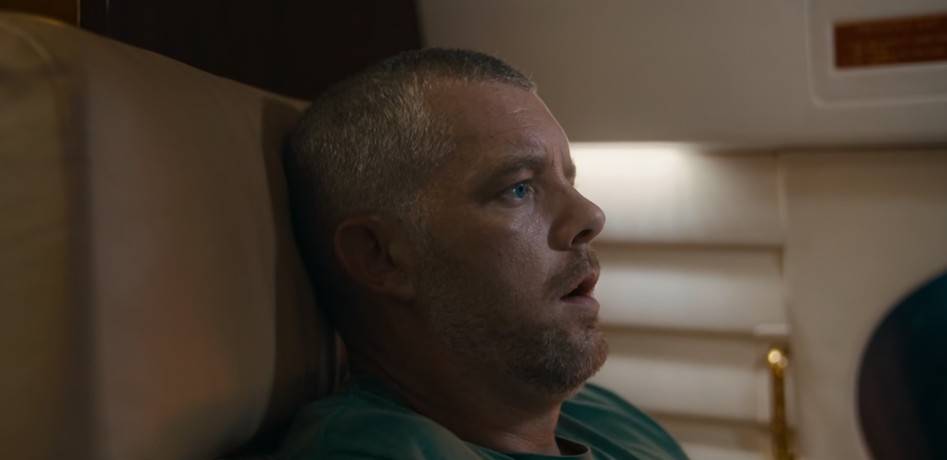
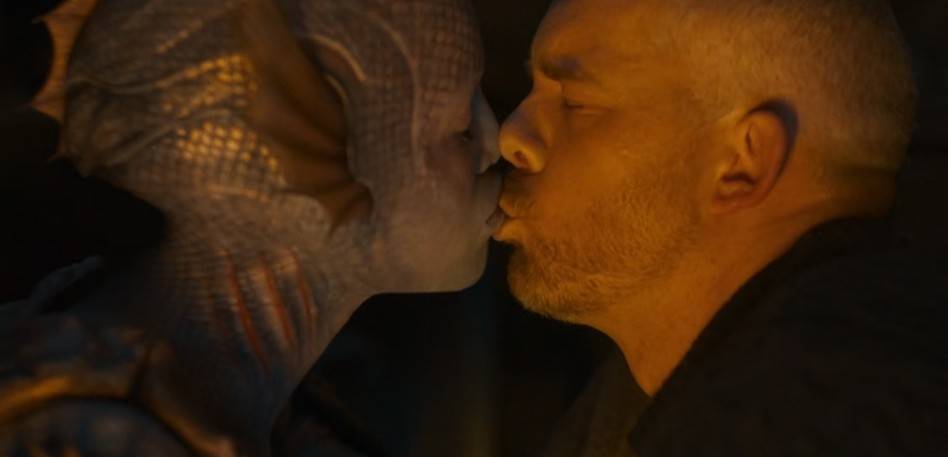
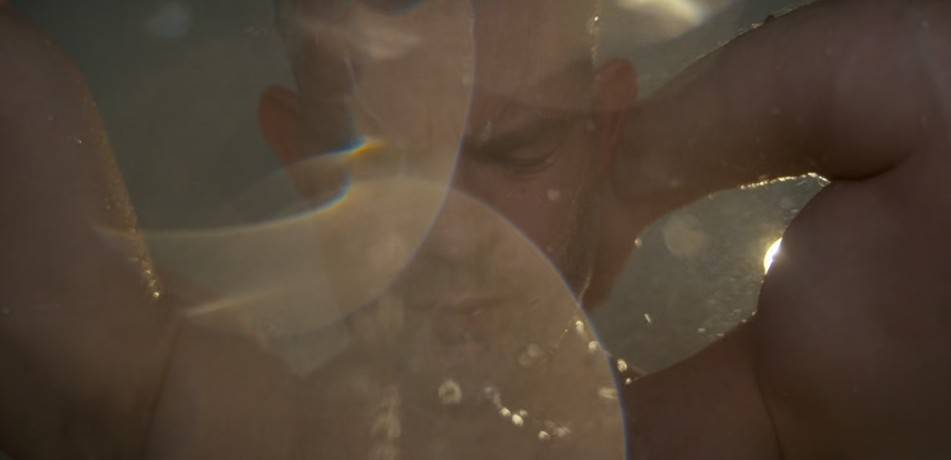
Perhaps the biggest casualty of the series’ rapid pace is the number of “surprising” plot twists that are seemingly spoiled because the narrative has little time to do more than loudly telegraph their arrival. Barclay’s first descriptor of Salt is “beautiful,” hinting at their romance. Ibrahim is murdered just after pushing Kate to deepen their relationship. Ted Campbell’s peace offering is an obvious Initiative-sponsored bomb. That Barclay’s neck rash develops into gills is so unsurprising, the episode cuts to a treacly version of “Heroes” and fails to explain fully what has happened or give resolution to Barclay’s relationship with his ex-wife or child. As novel as the first two episodes were, the finale of The War Between the Land and the Sea seems obvious by comparison.
Additionally, The War Between the Land and the Sea begins to lose focus, starting with the fourth episode. Inexplicably, Salt is considered a traitor for having protected Barclay, mankind’s ambassador, despite this being the best choice for continuing the peace talks. She could not have saved a significant number of Homo aqua, nor could she have survived the political fallout of the deaths of the entire human diplomatic party. Suddenly, Salt and Barclay are recast from protectors of their respective species from war and annihilation to star-crossed lovers who have no real plan for their future and, due to their “traitorous” actions, no say in what happens next. The tonal shift is jarring, at best. Still, one cannot watch The War Between the Land and the Sea and not consider its messages regarding humanity’s hubris and how man’s selfish squandering of Earth’s resources has created the current climate crisis, making this spin-off an important, effective addition to the Who canon.
Random Musings
(Time) Capsule Review
Featuring extensive location shooting, The War Between the Land and the Sea feels expensive, and it capitalizes on its connection to Doctor Who to develop the character of UNIT commander-in-chief Kate Lethbridge-Stewart. While the series’ rapid pace is its best feature and allows the narrative to touch on many aspects of the Homo sapiens vs. Homo aqua conflict, there is little time to fully develop some of the plot’s more interesting concepts before the story shifts focus from political drama to unlikely romance, in the fourth episode.
If you’d like to interact with the author of this article, follow him on BlueSky.