
Doctor Who – “Lucky Day” Review – Hits Too Close to Home
Clint Schwalen gives his SPOILER-filled commentary on the fourth episode of Series 15.
Note: this review contains full SPOILERS for episode 4 of Series 15.
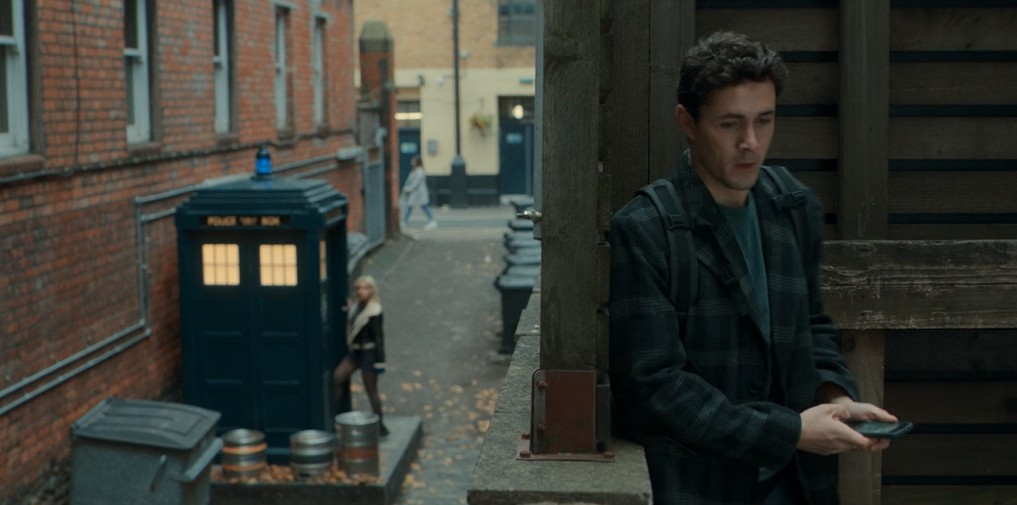
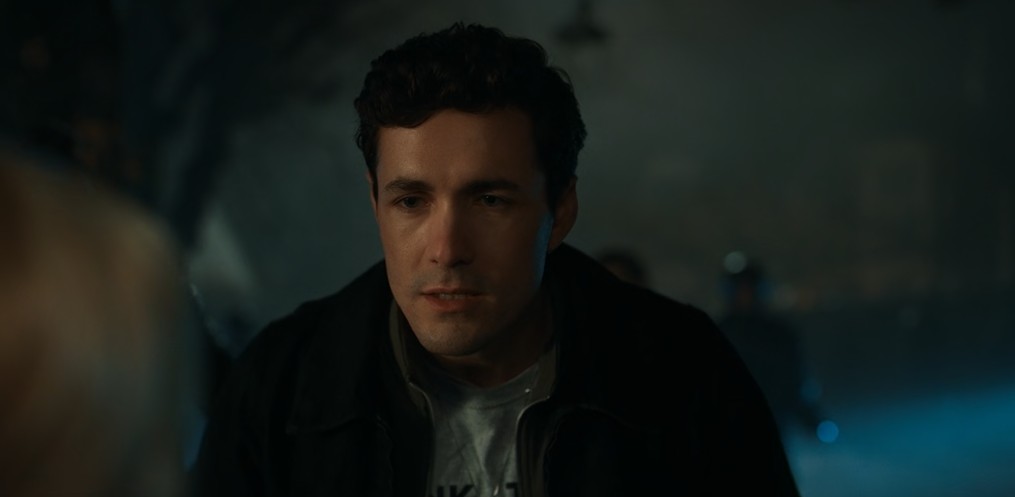
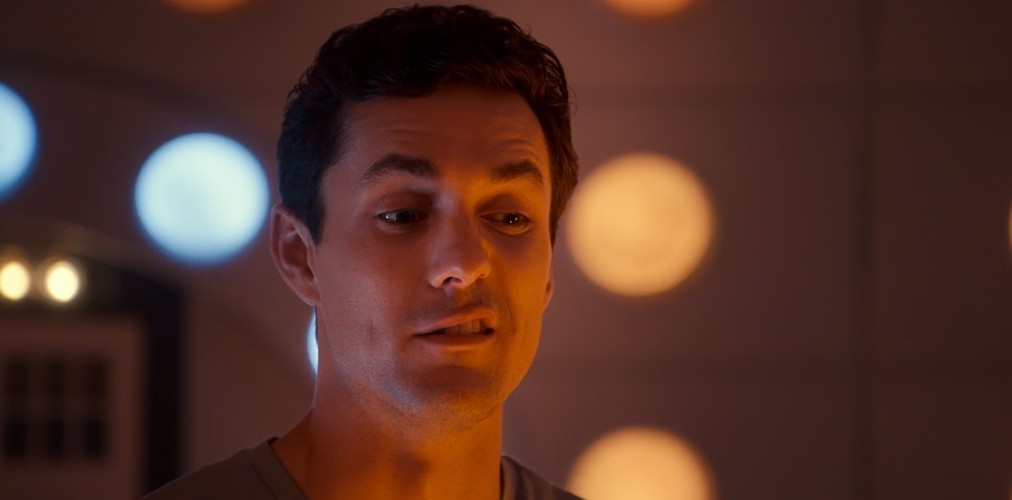
“Lucky Day,” the fourth episode of Doctor Who’s fifteenth series, starts with an interesting premise. Having only briefly encountered the enigmatic Doctor and his companion, Belinda Chandra, as a child, Conrad Clark spends his life constantly searching for answers to the mystery of the blue police box. Doctor Who has included characters like this before, with Clive from “Rose” and Elton Pope from “Love & Monsters” serving as excellent examples; however, where Elton’s search for the Doctor led to a found family and helped him to heal from the tragic death of his mother, Conrad’s obsession grew beyond reason, taking root in fear and insecurity. Doctor Who’s narrative has always portrayed the TARDIS as an icon of hope. For Conrad, though, the blue police box represents the uncontrollable aspects of his world and is a reminder of his own inadequacy and mortality—an existential crisis-cum-time machine. Though the episode introduces the Shreek as villainous creatures within the canon, it is Conrad himself that proves to be the true monster of “Lucky Day.”
Recalling Alex Jones, the real-life American podcaster and conspiracy theorist who claims that the U.S. government has faked school shootings, the 1969 Moon landing, and the September 11 attacks on the World Trade Center, Conrad spreads disinformation via social media, declaring:
“They can’t stop lying! There are no Shreek. No Cybermen, no Sycorax, no Yetis in the underground. Hey, look—LOOK! They’re stooges and actors and special effects, paid for using taxpayer’s money, to keep us scared to hide their real agenda . . . . That’s how they suppress us—with fear. Meanwhile, they are working against us.”
Through the words of Kate Lethbridge-Stewart and the Doctor, the episode labels Conrad’s radical revisionism as what it is—“an echo chamber of disinformation,” “noise,” and “weaponized lies [that take people’s] insecurity and fear, and mak[e] it currency.”
Doctor Who has commented on the American political climate before, notably with the character of corrupt businessman-turned-politician Jack Robertson, a thinly veiled parody of American President Donald Trump. However, where “Arachnids in the UK” lampoons Robertson’s vile nature, countering it with his incompetence and his cowardice, “Lucky Day” portrays Conrad’s ideology for what it is: national populism laced with theocratic, reactionary, and bigoted beliefs. While the Daleks—famously inspired by the Nazis—may send UK children scuttling “behind the sofa,” Doctor Who’s American audience must find it unsettling to see the current fascist ideology that is defunding and dismantling programs that support education, scientific and medical research, civil rights, and foreign diplomacy turned into an adversary for their favorite Time Lord.
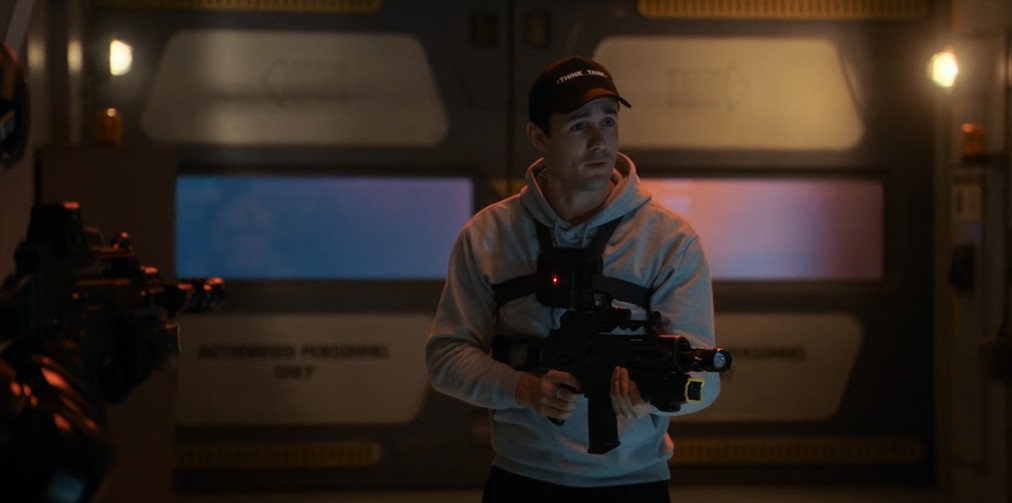
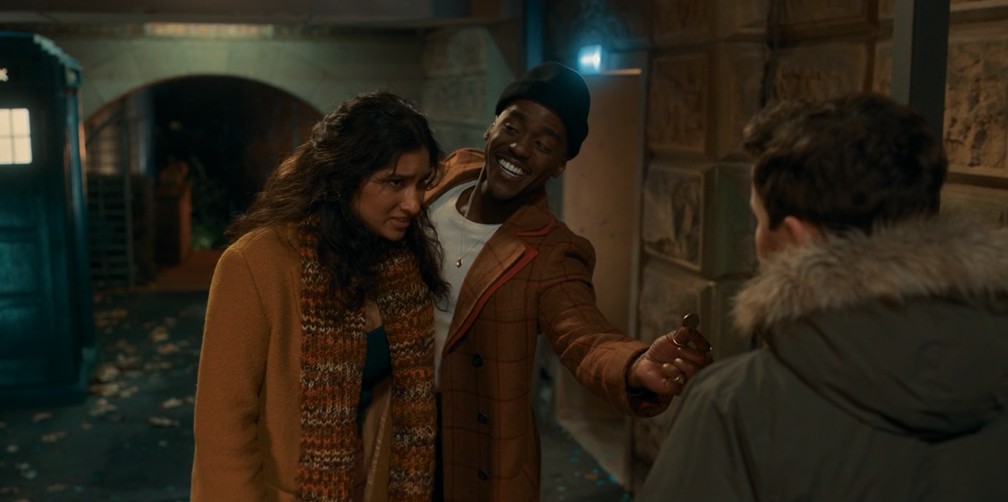
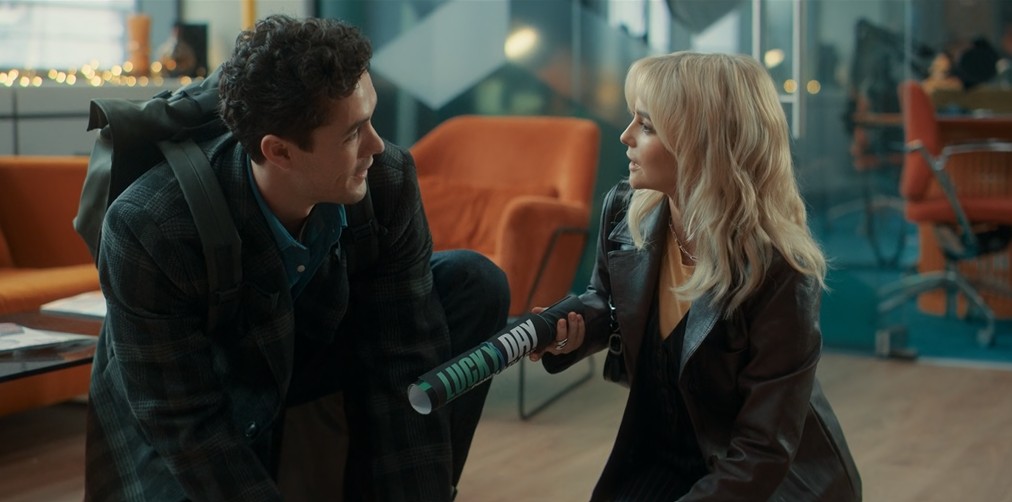
Contrast the first and final scenes featuring Conrad, which seemingly justify his beliefs before revealing his true nature. When he first encounters the Doctor and Ruby, the pair appear carefree, their jokey camaraderie on full display. They don’t seem afraid of the Shreeks, so it’s difficult to fault Conrad for mistaking their easy confidence for false bravado. Is it any wonder that Conrad refuses to vaccinate himself against the very real threat of the Shreeks’ pheromone-laced slime? However, in the episode’s epilogue, Conrad sees first-hand the Doctor’s wondrous technology, the stitches in Conrad’s left arm serving as evidence that he was wrong in his assumptions about UNIT. Yet, he still chooses his antithetical stance, proving that his ideology isn’t based on ignorance—it’s based in hatred and fear.

Beyond a script that mines current events for inspiration, “Lucky Day” notably benefits from its excellent direction. The chiaroscuro of the scene where Conrad first encounters the Shreeks is complemented by the sound mixing, which uses Conrad’s rapid heartbeat as percussion under eerie synths, monstrous wails punctuating the silence. This scene foreshadows Ruby and Conrad’s first dinner date, where she describes a Shreek hunting its prey. Here, director Peter Hoar uses all the tools at his disposal, including varied lighting, camera movement, and a match cut, to enhance the scene.
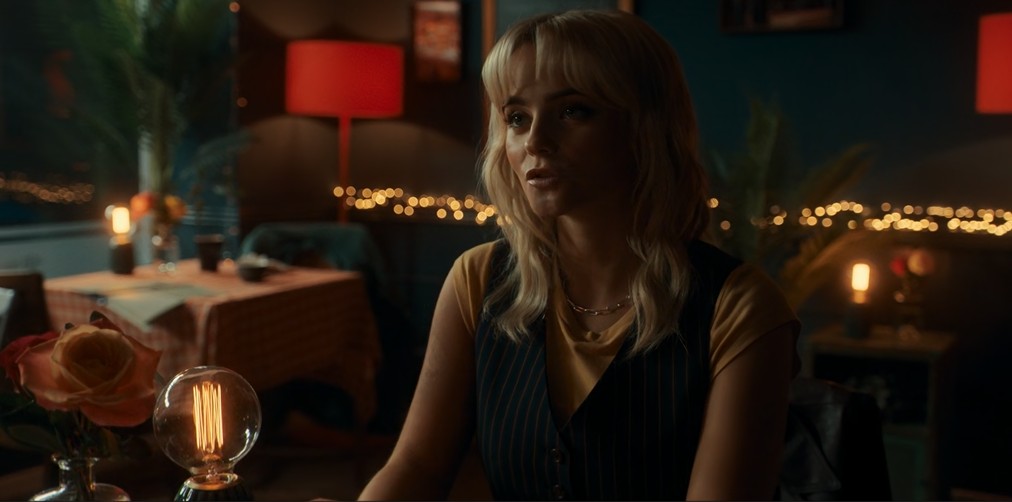
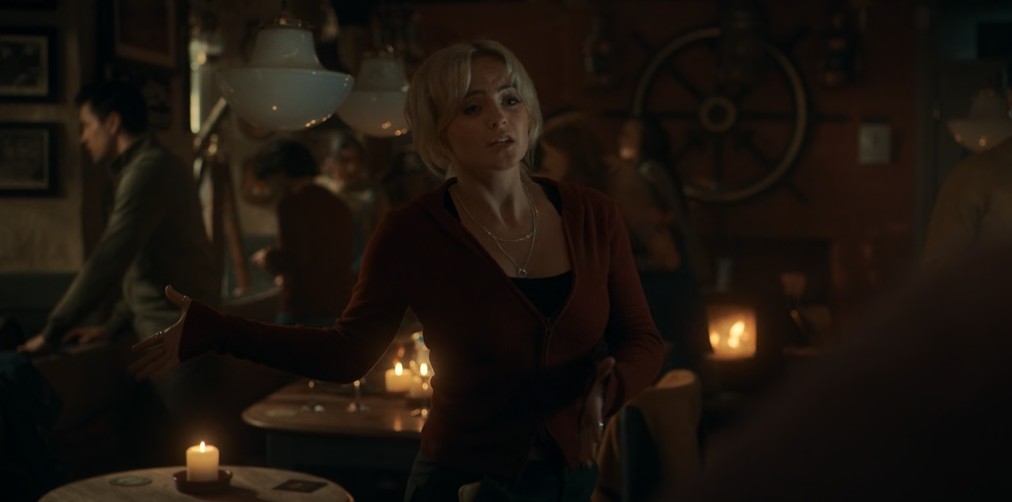
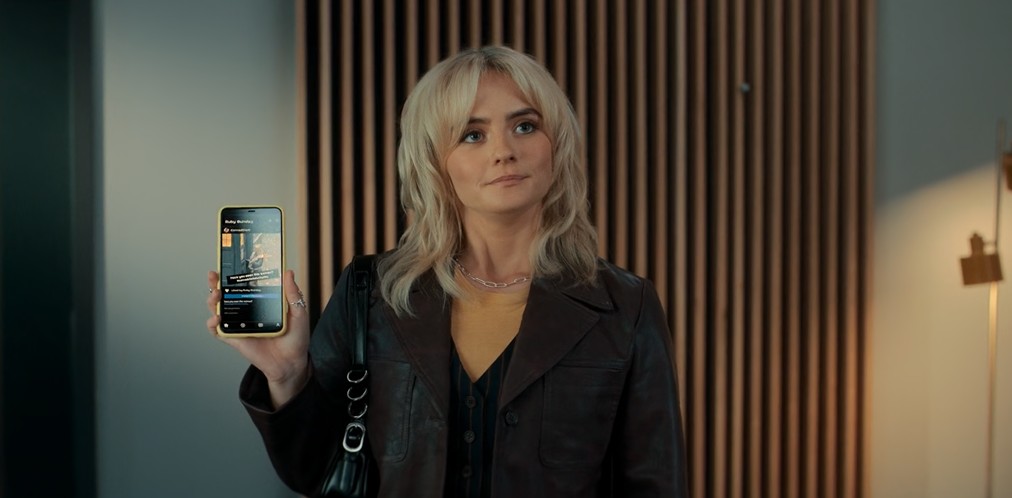
While the obvious draw of Doctor Who is that it allows its audience to live vicariously through the companions as they travel with the Doctor, the show is wise to counterbalance the wonders of space and time with the realities of post-TARDIS life. Stories like “School Reunion” and “The Power of Three” have explored these concepts before, and “Lucky Day” expands on those episodes, interweaving Ruby’s story arc with a frank portrayal of the after-effects of trauma. Note that, while Carla, Cherry, and Louise discuss that Ruby has been distracted with her budding romance and “hasn’t mentioned the Doctor in weeks,” Ruby herself seems lost when Kate states that she hasn’t communicated with the Doctor “in ages.” Her first instinct is still to turn to him. “I think I’m in shock. Like . . . PTSD,” Ruby confesses, “Because what happened last year was, like, not normal. Every day was, like, fight or flight, and I’m just waiting for something to go wrong.” Kate describes Ruby as “on alert all the time,” while Conrad dismisses Ruby’s behavior as signs of “insecurity” and “vanity.” Note how director Peter Hoar cleverly disguises Ruby and Conrad’s trauma bonding as romantic chemistry, guiding the audience to cheer for the couple, despite the pair being a terrible match.
Despite the episode’s realistic portrayal of trauma and abuse, “Lucky Day” celebrates Ruby’s character and emphasizes that she remains a capable adventurer. Though momentarily stymied by the Doctor’s absence, she is quick to take charge when a pack of Shreeks seemingly endanger tavern patrons. Ruby easily slips into the “Doctor” role, even self-narrating her adventure while also imagining how she would respond as a companion. This scene not only serves as an interesting bit of character development, it explains why Conrad is able to treat her with genuine disdain, despite their “romance”—she embodies the Doctor’s bravery and selflessness in a way that he cannot fathom, much less match, leaving him feeling inadequate.
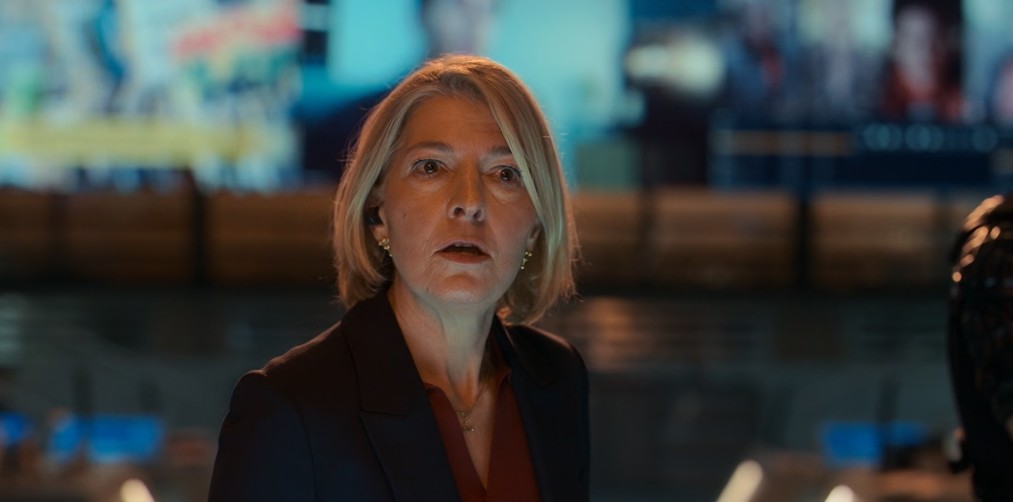
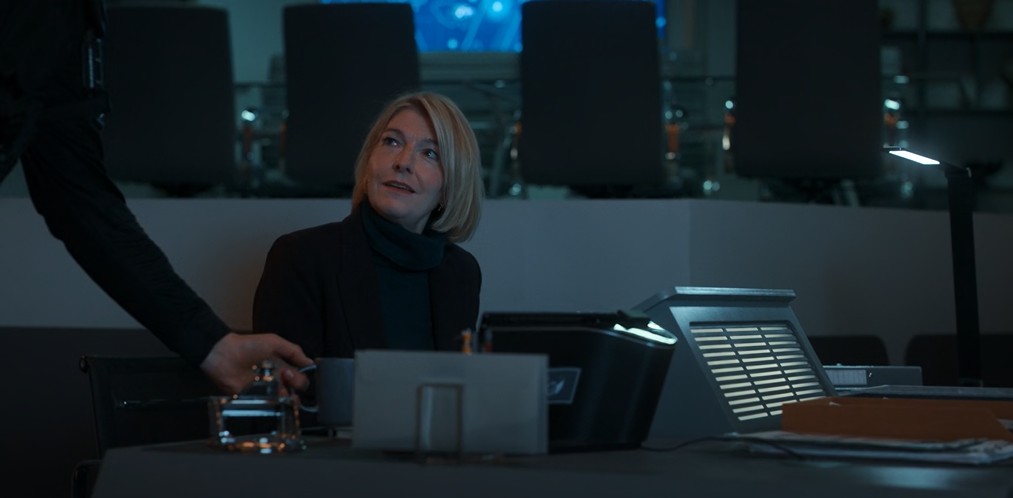
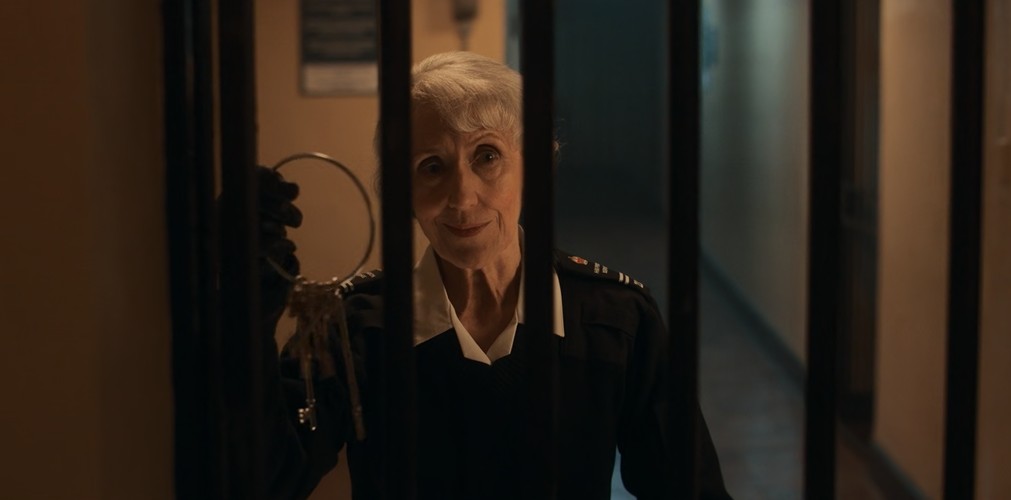
Finally, “Lucky Day” includes a great deal of worldbuilding, much of which undoubtedly establishes the upcoming spin-off, The War Between the Land and the Sea. This should be unsurprising as The War Between the Land and the Sea is written by “Lucky Day” scriptwriter Pete McTighe and current Doctor Who showrunner Russell T Davies and will feature UNIT staff members Kate Stewart, Colonel Ibrahim, and Shirley Bingham. Most notably, “Lucky Day” displays a motherly, nurturing side and a vengeful aspect to Kate Stewart’s character, both of which contrast her usual representation as an unflappable, unyieldingly professional leader. Given the chance to disable the elevator, trapping the armed Conrad inside, Kate refuses, declaring, “That man has single-handedly undermined everything we worked for! We need to finish this!” Face-to-face with Conrad, Kate baits him, citing her post-interview comments—“Don’t trust him”—before freeing the Shreek, who will undoubtedly devour Conrad. Kate seems to delight in taunting Conrad as she describes his inevitable demise, which stands in stark contrast to Ruby’s earlier first-date monologue. “How committed are you to the lies you’ve told? What do you truly believe?” Kate admonishes, as her UNIT subordinates plead for Conrad’s mercy.
Compare this scene to the episode’s epilogue. After giving Kate an update on the health conditions of Conrad and injured UNIT staff member Jordan Lang, Colonel Ibrahim leans in and softly chides, “Last night went way too far.” Kate is icily dismissive—“Like you said: he’ll live”—but her demeanor indicates that her actions were not a ruse meant to undermine Conrad’s brazen confidence, and that she recognizes the line she crossed.
Random Musings

(Time) Capsule Review
Featuring notable direction and a script that accurately portrays a person’s response to abuse and trauma, “Lucky Day” proves once again that the winsome Ruby Sunday is entirely capable of carrying a Doctor-lite episode. While the ideology spouted by the villainous Conrad Clark may hit too close to home for some American viewers, the development of Kate Stewart’s character foreshadows an exciting role for her in the upcoming spin-off, The War Between the Land and the Sea.
If you’d like to interact with the author of this article, follow him on BlueSky