Omegawd! Doctor Who Faces the End Again, But the Outcome Feels Inevitable
Feature by Tom Leland.
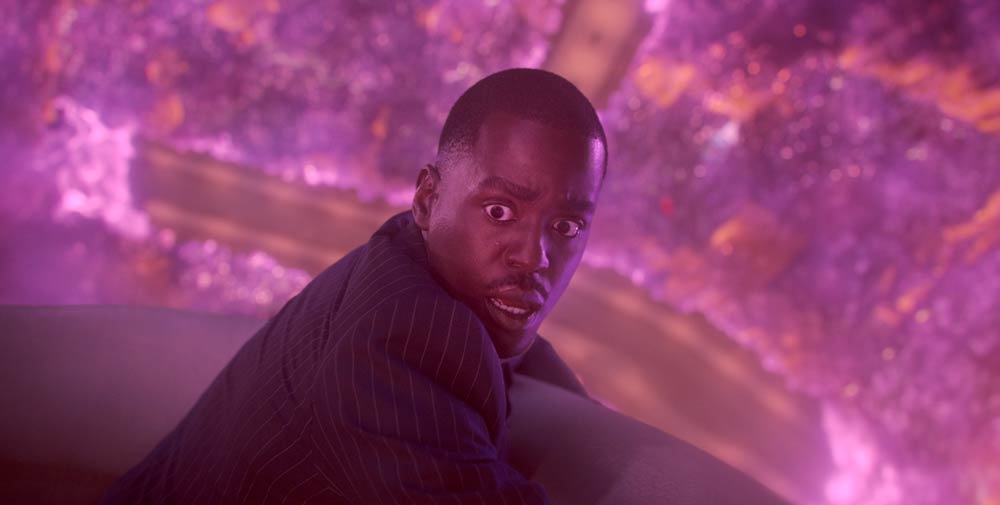
The final moments of Doctor Who‘s “Wish World” should have been spectacular. The Doctor, his memory restored, watches in horror as London collapses into hellfire. The Rani reveals her plan to break reality itself. The city trembles, and everything teeters on the edge of annihilation.
And me? I just sighed. Here we go again.
Because when Russell T Davies writes a Doctor Who finale, you can set your watch by it: the universe is ending. Reality is shattering. A cosmic force is awakening. And while the visuals are stunning and the concepts are ambitious, the formula is so familiar now that it’s lost its power.
This year, it somehow feels even more hollow.
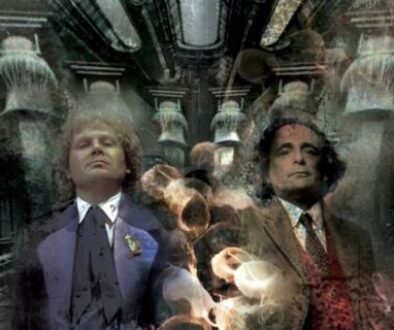
Not only does “Wish World” push the stakes beyond comprehension, it throws in a legendary name, Omega, right at the end. The first Time Lord. The creator of Gallifrey. A figure from deep Doctor Who lore who deserves presence, weight, reverence. Instead, he’s name-dropped in the final minutes, reduced to a teaser with no screen time at all.
Which only points to what’s likely next. Omega will appear, spout his evil plans, wreak more havoc, and be undone before we’ve even absorbed the moment. Another universe-breaking threat, another ancient myth rushed through like plot filler. He’s a footnote in his own story.
None of this is new. It’s a pattern that goes back to 2005:
- Series 1: “The Parting of the Ways” – The Dalek Emperor launches a full-scale assault on Earth, threatening the extinction of humanity.
- Series 2: “Doomsday” – A breach between universes allows a Dalek-Cyberman war to erupt in London. The multiverse itself is at risk.
- Series 3: “Last of the Time Lords” – The Master enslaves Earth using paradoxes and time manipulation.
- Series 4: “Journey’s End” – Davros and the Daleks build a “reality bomb” to erase all matter across every universe.
- Specials: “The End of Time” – Rassilon returns, threatening to end time itself.
- Series 14: “Empire of Death” – Sutekh, a godlike figure from ancient Time Lord myth, returns to engulf the universe in death.
Always cosmic. Always mythic. Always apocalyptic. And now, always predictable.
The other problem with finales like this is that they rarely commit to consequences. In “Wish World”, the world collapses to ash, millions presumably lost. But we already know it won’t last. It can’t. The finale will either reverse it or reveal it never really happened. If entire cities or timelines are erased without lasting impact, what are we watching? Spectacle, not stakes. We brace for the reset, not the fallout.
The second issue is scale. If every ending is the most important thing to ever happen, then none of them feel important. These finales don’t give us time to feel anything, they just leap from one impossible idea to the next until the story buckles under its own weight.
What’s most frustrating is that Doctor Who can do better. Russell T Davies has proven he can write with restraint. “Midnight” is a masterclass in tension where no cities fall and nothing explodes, but it’s still terrifying. “Turn Left” slowly unravels the world through a single altered decision. Even episodes like “The Waters of Mars” or “Boom Town” show that character drama can be just as gripping as cosmic peril.
Omega also should have been a season-long shadow, a creeping dread, not a last-minute twist. But like so many before him, he risks being another forgotten titan, summoned and erased in under an hour because the format insists on scale above substance.
Maybe this is the last time it happens, though. With viewing figures down and no official word on when Doctor Who will return, this finale might mark a pause, or something more. If that’s the case, then there’s something strangely appropriate about it. Of course, it ends like this, with a forgotten god, a collapsing universe, and reality itself coming undone. It’s the most Russell T Davies finale imaginable! It almost reads as a farewell, even if no one has officially called it one yet.
And if the show does come back in the near future, and Davies remains in charge, there’s a real opportunity here. A chance to rethink what a finale can be. Not bigger, just better. A story that resonates not because it shakes the stars, but because it speaks to something real.
Why not make the final confrontation emotional instead of existential? Imagine closing a Doctor Who series on a conversation that changes a life. A truth revealed. A companion walking away, not because the universe ended, but because it didn’t need to.
The most powerful ending in Doctor Who isn’t always the end of everything. Sometimes, it’s just the end of a story. And the beginning of something better.