Babelcolour Talks Doctor Who: The Timeless Doctors, AI Controversy and 7 Years of Bringing His Vision to Life
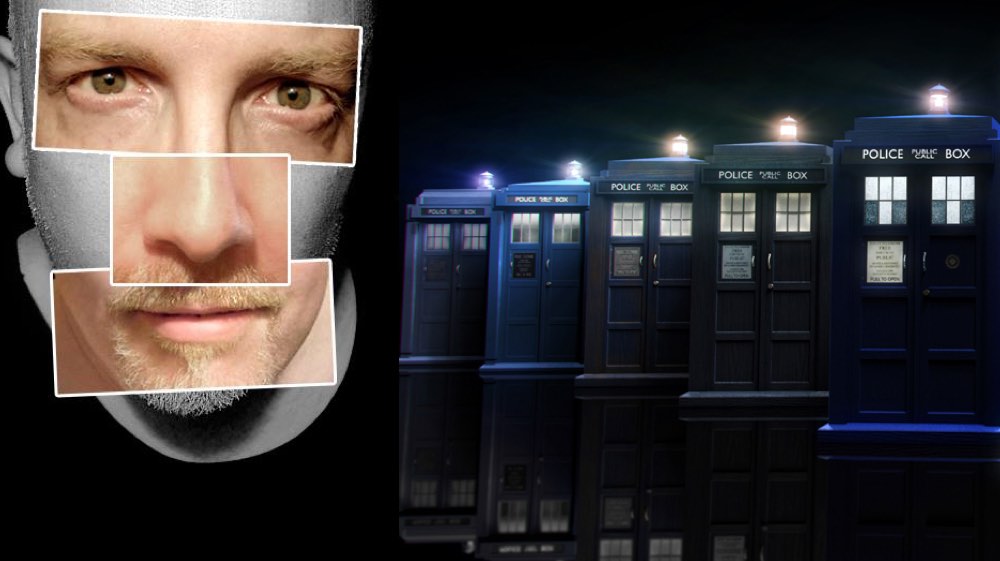
Interviewed by Gustaff Behr.
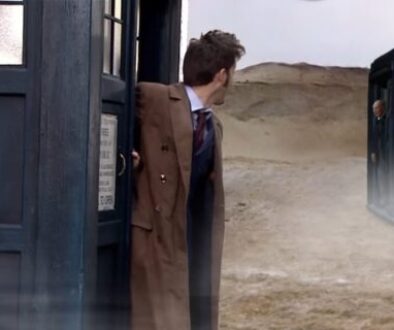
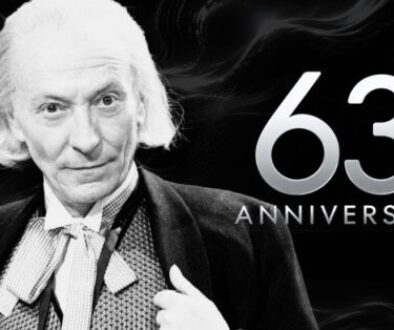
Happy Doctor Who day! The show turns 63 today. Unfortunately, there’s no special to mark the occasion, no series to celebrate the Doctor, not even a cheeky little minisode. But that isn’t to say the series is bone-dry of content. In fact, it’s a rather fitting moment to look back. Seventeen years ago, Babelcolour gave us The Ten Doctors. If the recently dropped trailer and teasers for The Timeless Doctors are anything to go by, it’s going to be a labour of love that fans are counting down the days to. Ahead of its release, I got the chance to pose a few questions to Babelcolour about the legacy of this Doctor Who film, the challenge of taking on such a mighty endeavour and what’s next for him.
For readers who only know you as a name on YouTube, how would you describe Babelcolour in one sentence?
BabelColour was one of the earliest Doctor Who YouTubers, established just over 20 years ago now – only a year after YouTube started in 2005 – and I’ve since provided colourisation work for the BBC’s DVD and Blu-ray releases and currently attract a new audience with my photographic enhancement work.
Like many others who are part of this film, you’ve been involved with Doctor Who in an official capacity, specifically working on DVD releases like The Daleks’ Master Plan and The Mind of Evil. How did that professional restoration work lead you to creating fan films?
I’d originally started posting colourised photographs online around 2003, at which time I was known in forums by the username BabelFish, and it was directly through people seeing my work that I was invited to contribute to a test project to see if a new colourisation program invented by James Russell could colourise a section of footage from The Daleks Master Plan. Back then, only expensive American colourisation studios did that sort of work, so it was a real proof of concept experiment to see if it was viable to do it in-house. But it was an unofficial private experiment, I wasn’t expecting James to donate it to the Dalek Tapes documentary on DVD, but that was a very nice surprise.
That was in 2005, a few months before I joined YouTube as BabelColour. On YouTube I was always experimenting with trying new tricks, and in 2008 I uploaded “The Five Doctors Special Edition” which spliced in David Tennant and Roger Delgado. It was just a short trailer, but it triggered the idea of making ‘The Ten Doctors’ a year later, which would splice together all the Doctors into a new adventure. I wouldn’t say it sprung out of any official work I’d done, just out of my unquenchable love for Doctor Who.
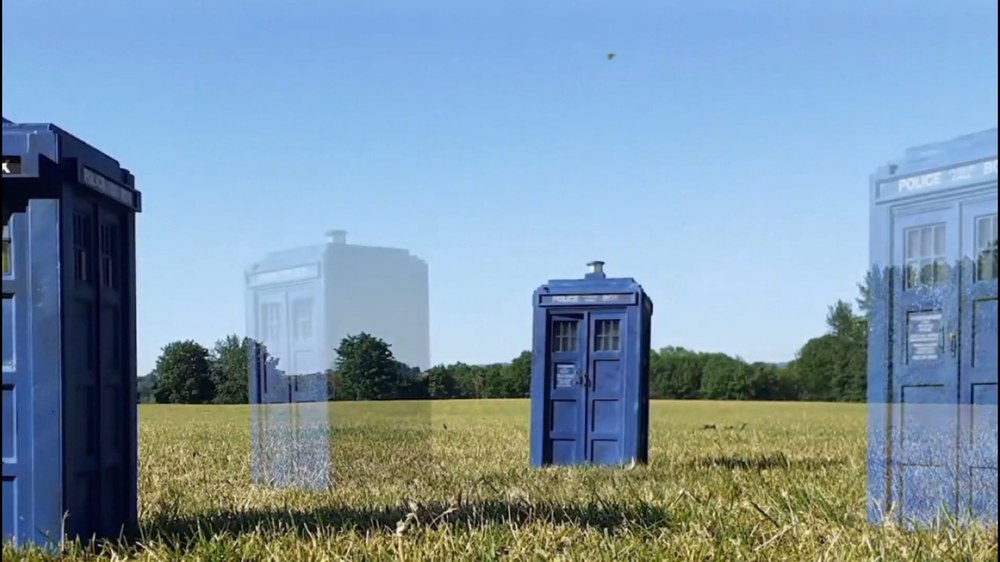
Many fans reading might not be aware of this, but your upcoming film, The Timeless Doctors, is a retelling of another creation of yours, The Ten Doctors (2009). Why do you think that first story still resonates with fans today?
Nostalgia!
People who saw The Ten Doctors back in 2009 are nearly 20 years older now and remember it fondly from the early days of fan films. Plus, it hasn’t been available since I first began remaking it as The Timeless Doctors in 2019, so it has been widely considered lost media for the last 7 years – and that simple fact in itself stokes the nostalgia and the interest.
What made you decide to return to this story and retell it after so many years, given how The Ten Doctors ended?
In a nutshell, I’d say it was naivety! It was 2019 and I thought it might be fun to do a tenth-anniversary re-imagining of The Ten Doctors Part One which I’d originally uploaded in 2009.
The original episode was only ten minutes long and I had very basic equipment which required all the FX shots to be done frame-by-frame. It was imaginative but did look pretty shonky. So I thought it would be fun to remake it in a more polished way. But history has shown how that has turned out – seven years later and a runtime of two-and-a-half hours has ballooned the project into the equivalent of nearly two full feature films.
And the man responsible for triggering that Big Bang is actually Nicholas Briggs (voice of the Daleks in the BBC TV series). It was purely because he very graciously agreed to provide the voices for the Daleks in my little remake that it dawned on me that perhaps other people could come on board and contribute as well, and it could actually be something much more special than I had ever originally considered.
Because Nick saying “yes” gave me the confidence to ask, I subsequently secured the involvement of the three surviving Morbius Doctors, the cream of fan voice artists and technical and artistic contributions from the most astounding talent in fandom. I asked quite a lot of people and only 7 declined to participate. I think that was an exceptionally good hit ratio!
You have been recommended by Doctor Who Magazine many times and even received praise from Steven Moffat himself. Does that kind of validation from the official side change how you approach your projects?
It was extraordinarily thrilling and motivating and flattering.
When Steven Moffat recorded a little vignette about my work, that really was the absolute pinnacle for me, from a man I really admired; it was the ultimate reward for all the video and colourisation work I had done but, although I found it exceptionally exciting, it did create a bit of an existential crisis: because where could I go from there?
There was nothing higher to achieve and I consequently thought the only direction after that was down. I thought it was probably the right time to retire from YouTube whilst I was still at the top of my game, and after that I only uploaded half a dozen videos and moved into photo enhancement work, where I’ve actually found even greater success, media interest and a book deal. But I never stopped being a Doctor Who fan, and in the background I’ve spent the last 8 years of my spare time creating a mega Doctor Who fan-film, principally as a hobby for myself, but one I always intended to share with fellow fans.
The runtime for The Timeless Doctors is massive (approximately 200 minutes, split into four parts). That is more than four times the length of the original. What new elements can fans expect to be added to this story?
The whole of the original Ten Doctors had a runtime of 45 minutes. By comparison, The Timeless Doctors runs to about 200 minutes. Consequently, it can explore a lot more of the magical history and lore of Gallifrey and the Whoniverse. It has contributions from the Morbius Doctors in Part Three and looks at what Rassilon got up to and why he was bound in the Dark Tower.
Here’s a sneak peek at what fans can expect (Spoiler warning):
Part One is a full re-imagining of The Ten Doctors and involves the Sontarans, the Daleks, the Cybermen and a return of the Raston Warrior Robots!
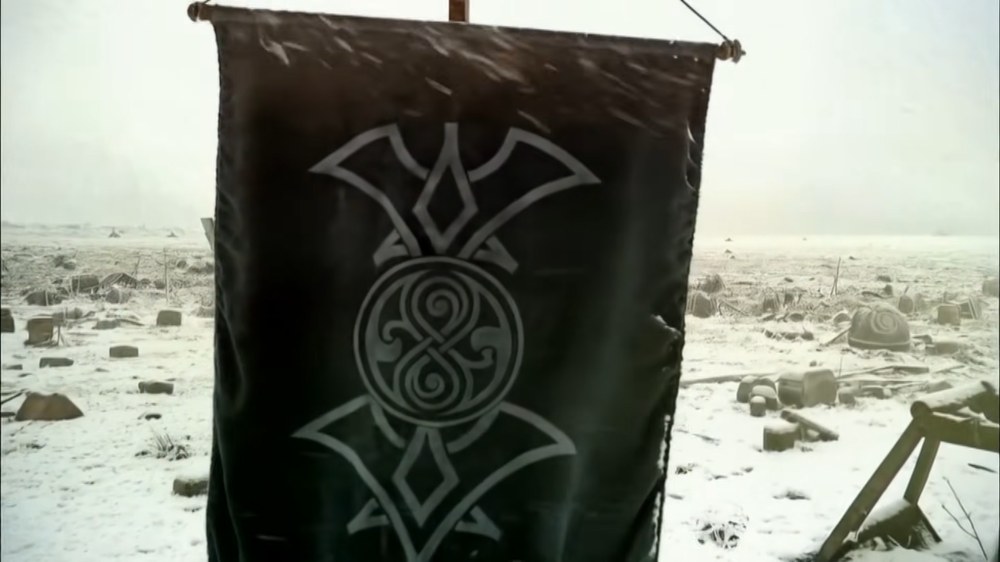
Part Two takes the Doctor back to his childhood and introduces the Cloister Wars and the Medusoids. He regains memories of his hidden former lives. There is a lot being put on screen which was only ever mentioned in the TV series, which I found very exciting to make: so you’ll get to see the creation of Validum, the De-Mat Gun, and Gallifrey’s quantum force-field, the destruction of Minyos, the time looping of the Fendahl’s home world, the use of the Hand of Omega, Rassilon’s war with the Great Vampires, Omega being thrown into a black hole, Rassilon using the Great Sash to enter the void and capture the Eye of Harmony, and so it goes on and on, all those mysterious moments drip-fed to us in the TV series are finally being seen! I think it is rather magical and enhanced by a truly magnificent musical score.
Part Three introduces the Morbius Doctors and shows us the Doctor’s time at the Academy and also revisits the day he and Susan left Gallifrey. It explores the Hybrid and deep dives into The Old Time on Gallifrey, showing the dynamics between Rassilon and Tecteun and Omega. Part Three also involves two big revelations/plot twists which cast our established understanding of Time Lord history in a brand-new light.
And Part Four wraps it all up with a few surprises and a few unexpected appearances!
A lot of folks don’t realise this, but your cast is stacked. You have people who have been involved with Doctor Who in an official capacity for decades, like Nicholas Briggs as the Daleks, among others. How did some of them become involved with this project?
Nick Briggs was the very first person I messaged, back in 2009, asking if he would deign to contribute a few lines of dialogue for my humble project. I felt very cheeky indeed, and I was completely out of my comfort zone, but what a gentleman Nick is, and so kind and generous. He was very happy to record lines, as various versions of the Daleks, and it set the ball rolling.
I then chanced my arm contacting the great Jon Culshaw, and he is also a remarkable gent and so obliging and enthusiastic, and that’s how it grew really, just me constantly hedging my bets and being cheeky and giving it a go. My gran always used to say “You don’t get if you don’t ask”, and ‘The Timeless Doctors’ is proof of that.
A lot of very kind, generous, talented people contributed to make the project work and be its best. There is a line in Part One which states “The whole is greater than the sum of its parts” and that exemplifies ‘The Timeless Doctors’, which I think has become magnificent by virtue of all the small inflows of remarkable talent along the way.
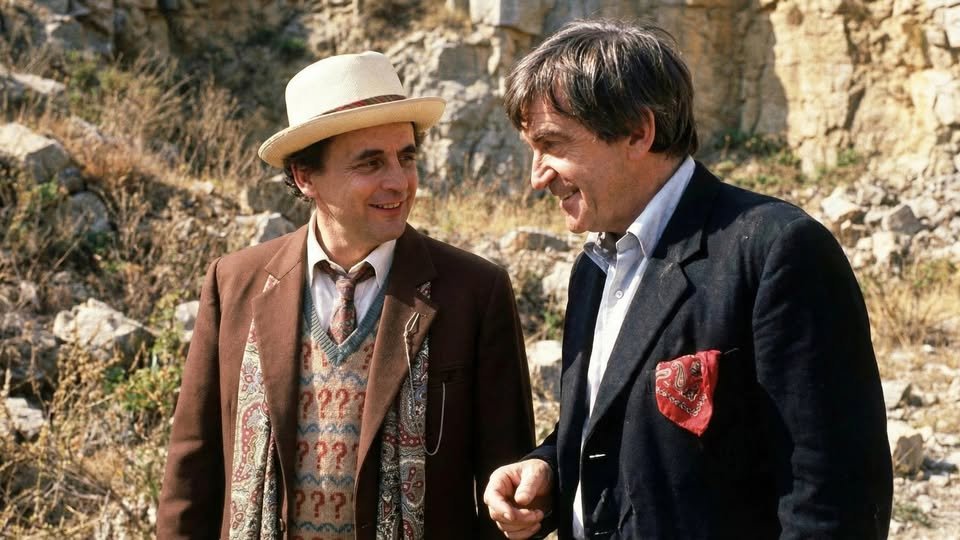
One of the biggest selling points is the return of the “Morbius Doctors”, namely Philip Hinchcliffe, Graeme Harper and George Gallaccio. How did you manage to get them to reprise their roles nearly half a century later?
Networking was key for that.
Again, I was hedging my bets and asking fandom if there was any way to get in contact with Philip Hinchcliffe, and Steve Bartle was very kind and accommodating and explained that he had engaged with Philip at certain events and I consequently owe him a huge debt of thanks for facilitating everything.
I think fans who are thrilled by the appearance of Philip and Graeme Harper should thank Steve for his role in securing their involvement. And Richard Bignell was instrumental in enabling me to ask George Gallaccio, so it was a case of fans helping one another, and of kindness and magnanimity and helpfulness which has made this whole enterprise very rewarding. There are a lot of very good people out there willing to help for no personal gain at all.
Feel free to decline to answer because of spoilers, but are the Morbius Doctors cameos or do they have a larger role?
They each have small cameos in Part Three.
I was always mindful that they are backroom production crew, not performers or actors. You cannot reasonably expect technical crew to deliver lines realistically or dramatically for an audience, that would be quite unfair to impose that on them.
What was the hardest part of the seven-year production timeline? Was there ever a moment you considered shelving it?
Oh yes, the project was nearly shelved a few times.
I’d trawled through nearly a thousand movies trying to find suitable shots to tell the story and bring the script to life and ended up incorporating clips from hundreds and hundreds of TV shows and feature films. But after about five years of FX work I’d hit a brick wall. I had no more footage to tell the story and it was all floundering.
I had a couple of options, of course. I could rewrite the script and cut out a lot of what I wanted to show, or I could refuse to compromise and shelve it until such time that suitable footage presented itself to me. I genuinely got right to the point of simply jacking it all in and moving on to something else…
But the composer Andi Warren randomly sent me half a dozen generative AI shots they’d created to animate BBC photographs and the world turned upside down in my head…it suddenly struck me that I could actually make the movie exactly the way I wanted to, to show the scenes in the script that I had always wanted to show, and to recreate the images that were in my head. It was a complete epiphany for me. The creative floodgates opened and made the whole venture viable again. I could actually bring the Morbius Doctors to life and tell the story I had wanted to tell. So, for me, the advent of affordable AI saved the project from oblivion.
There is a lot of debate in fandom about AI. You’ve been quite open that you used it to complete bits you couldn’t do. Is there any shot or sequence that comes to mind that would have been impossible without it?
AI is a tool. And like any tool, it performs the bidding of the tool operator. A chisel in the hands of a skilled sculptor can make a piece of art, but in the hands of an unskilled novice can simply knock lumps out of a stone. The same with Photoshop or any creative program. The end results are only ever as good as the craft of the user. There is a lot of AI slop online from people with very little skill or artistic acuity, and there is conversely a lot of amazing AI online from people adept at getting the best out of it.
There were very similar debates at the end of the 1980s when I was at art college studying graphic design. I learnt the old manual way of doing everything, creating fonts and hand-drawn letterforms, literally cutting and pasting typography with scalpels and cow gum…and then Microsoft Word was released, and any Tom, Dick or Harry could choose a typeface and font size and create a letterhead for their business, and secretaries across the country were churning out business cards with Algerian Typeface and no understanding of space or aesthetics, and it was all just Microsoft slop. And the wheel of time turns, and we see the same things happening again and the same debates being held, where the old manual ways of doing things are being subsumed by new tools and we have visually illiterate people churning out slop. But one cannot blame the tool. If those tools are used prudently and skillfully then they have their role and function in the production process.
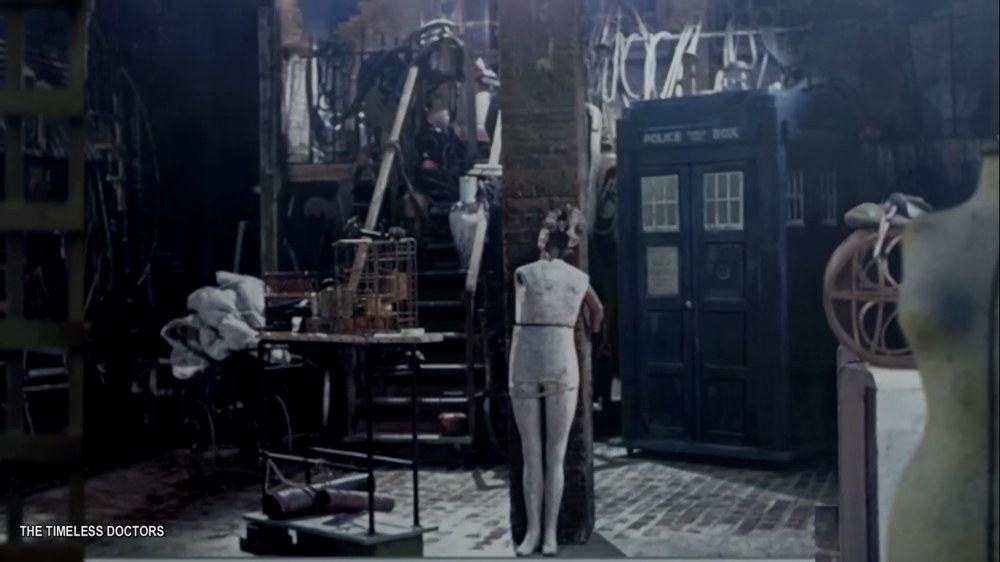
As for ‘The Timeless Doctors’, there are numerous shots which would have been completely impossible without the advent of AI, principally animating the Morbius Doctors.
Some fans on forums have expressed hesitation about the use of AI or your online comments. What would you say to a fan who is sceptical about watching the film because of those debates?
If a fan is sceptical about watching the movie because of the tools used to make it, I would certainly recommend that they don’t stress themselves by watching it. There are innumerable other things online for them to watch instead which won’t trigger their skepticism or disappointment. As I’ve discussed earlier about my issues with empathy and bluntness, I find it very difficult to sugar-coat the fact that I made my film the way I wanted to make it.
People are going to hate the fact it’s got AI, and people are going to hate the fact it embraces the Morbius Doctors, and people are going to hate the fact it accepts the Timeless Child, in fact people are going to hate it for many various reasons, some of which I can’t even guess at, but I don’t feel a need to apologise for any of it because ultimately I made it the way I wanted.
The film uses clips from over 400 movies and TV shows. That can be pretty time-consuming. What does your workflow look like and how do you source those clips?
I watch a lot of movie trailers and sometimes shots jump out at me as fitting a theme in ‘The Timeless Doctors’. Or I might be watching a movie and a single shot suddenly triggers a thought in my head about its suitability to tell part of the story in Part Four or there’s a close-up of an eye that would work well at the end of Part Two and so forth. It is all pot luck and I never really know what will be available or suitable, it’s just a case of when I see it I know it can be useful, because the whole jigsaw is mapped out in my head.
You are using voice impressionists for some of the Doctors. Are you also using archival recordings from any Big Finish productions as well?
Yes, from absolutely every source imaginable.
I think there are lines lifted from about 4 Big Finish dramas, so it’s very minimal, chiefly because the scripts aren’t available online and so I have no idea what lines might potentially be available. I also use lines by actors in other movies, like a line of dialogue I use for the third Doctor which originates in a horror film starring Jon Pertwee.
The film boasts “thousands of new FX shots.” What is one specific visual effect you are most proud of that you created practically or through CGI?
I think this is probably the hardest question to answer, not least because I have created thousands of FX shots for the film over the course of seven years, it is almost impossible to recollect them all. I might have to just give up and leave it at that as I am struggling to think of any others. I’d be interested in hearing the answer to that question from the fans who watch it!
How big is your team, and how have you managed the comings and goings over the last seven years?
The team has been quite fluid over the last 7 years, with lots of comings and goings. 95% of the movie has been created by myself, but occasionally (if the work of fan-creatives online makes me go “wow”) I would reach out and ask them if they’d like to participate in the movie, which obviously achieves a few win-wins: It significantly improves the look and quality of the end product and might also, I hope, widen the reach of those talented individuals, who definitely deserve more recognition.
That’s really why I asked artists like Anthony Lamb and Timothy K Brown et al to contribute a single shot to the movie, or asked fans like Richard Bignell and Richard Unwin et al to record a single line of dialogue for the film – it was very much my way of saying that I respect and admire them. All of them, no matter how many shots they did, appear in the credits because I think they’re great!
Having said that, there are a couple of FX artists who really went far beyond their calling and contributed a large number of FX shots for the film, principally Peter Phillips, who did an enormous amount of shots during Lockdown, and Jacob Booth, who again did so many composite creations for Episode One.
I’d say myself, Peter and Jake were the Triumvirate of FX Artists, because both created dozens and dozens of shots for the film and I am eternally grateful to them both. And then there’s the gargantuan workload of the film’s composers, and both Graeme Allan and Andi Warren have slogged away like workhorses to create a mountain of music for the film but at such consistently high quality. It boggles my mind just how good they are and how hard they’ve worked for years without reward. I hope everyone involved gets the adoration they so richly deserve, but I certainly avow that the hardest working contributors have been the two composers.
You are funding this entirely yourself with no crowdfunding or monetisation, and I imagine that’s had its unexpectedly expensive or time-consuming moments. How much of your own money and time has gone into this?
The movie was always a personal pet project for me, and even when other people agreed to contribute to it, I always viewed it as something I was making very much for myself rather than “for fandom”. Yet I always wanted the movie to be shared freely with fellow fans, and not hidden behind a paywall or Patreon or anything like that. I think it was extremely important not to crowdfund it or ask for donations because, firstly, I didn’t want to make any money out of someone else’s franchise or copyrighted material and, secondly, I didn’t want other fans feeling like I owed them anything or that they had ownership of it.
If someone had given me money for the film and didn’t like my artistic choices that creates friction, whereas if nobody has given me anything I don’t feel the slightest inclination to try to please them. I have made the film I wanted to see and made it the way I wanted to make it, and if fans don’t like it they can simply watch something else, without me needing to explain myself or apologise for anything. It is actually quite liberating as a creative!
As for the film’s budget, I estimate I’ve spent about £600 on it, which I’ve paid out for subscriptions to online tools and programs over the years which have enabled me to actually make the film. Over its seven-year production, that figure averages out to less than £100 per annum. Last year my uncle very generously contributed a couple of hundred to the project, even though he’s never even watched Doctor Who! That’s why he gets a special thanks in the end credits.
How do you stay motivated for seven years on a single project? Do you work on it every single day?
Well, I have autism, which plays a major part in the production process. Unfortunately, because I’m quite “high functioning” and have a good vocabulary and communicative skills, the more debilitating traits of the autism are frequently masked and people are consequently less aware of it. And so I face a choice: I could concentrate on all the negative issues it brings, like how I can come across as very blunt or rude or lack empathy which have plagued me over the years, or I could concentrate instead on all the positives and benefits of my condition which have brought a great deal of pleasure to so many fans over the years. Because I like to think of my autism as my super power, and it has enabled me to do all the wonderful things I have achieved.
I have Monotropism and Hyperfocus which allows me to concentrate on single tasks with intense concentration for long periods, which everyone else would find monotonous and tedious and exhausting… but by using those very traits as a positive, I could hand-colourise 7000 video frames to bring ‘The Mind of Evil’ back into colour for millions of people to enjoy. And I’ve worked almost every day for seven years making ‘The Timeless Doctors’ movie for fandom to enjoy. It’s about playing to my strengths to compensate for my failings.
The film is split into four parts. Is this because of the runtime, or because you wanted to release it in a way that mimics a classic serial format?
My decision to split it into installments was triggered entirely by the runtime and the understanding that, at two-and-a-half hours, the vast majority of viewers would watch it in installments anyway. And since there were natural cliffhangers in the narrative which lent itself to being split into digestible chunks, I thought that as the project grew and grew and became longer and longer, it was sensible to split it up. I’d originally separated it into 3 chapters and then, eventually, into 4 and as you rightly point out, that does rather mirror the format of the original ‘Ten Doctors’.
You mentioned this was originally for the 60th anniversary but is now arriving later. Do you feel the delay has hurt the film or helped it?
I feel a bit sad about the delays. It would have been my ideal to have it released to mark the 60th, but I’d rather have got it done to my satisfaction than compromised in order to release it to an arbitrary deadline. Even though the 60th Anniversary year in 2023 would have been my preference, it transpires that 2026 is no less auspicious, as it marks the 60th anniversary of the Morbius Doctors (from ‘The Brain of Morbius’ in 1976) and also the 20th anniversary of me adopting the name BabelColour on YouTube in 2006. So it does actually feel like just the right time to share it with the world.
Has anyone from the BBC approached you regarding The Timeless Doctors, either offering support or guidance, or at worst asking you to stop or not use certain elements in your story?
No, I’ve not heard from anybody at any point in the last 8 years of production. And I wouldn’t really have expected to. It is a fine tightrope one walks when dealing with fan fiction linked to an official franchise. It exists in an unofficial bubble universe and I think it would cross unspoken lines if the BBC ever interjected prior to release. They might have been sitting there, gravely shaking their heads at the news the film is coming, but I would never expect them to intervene during the pre-production stages.
If the BBC ever approached you to do an official animated reconstruction or a “Lost Episode” restoration, would you take it?
No, I don’t think I’d want to work on any more of the official releases. Maybe one day, in years to come, I will discuss why, but for the present it is time for me to turn my focus to other projects. Although, if I was ever invited to work in some capacity on the actual series proper, I would certainly consider saying yes, but not for the commercial arm of Blu-ray releases, no.
Finally, Doctor Who is currently on hiatus for the foreseeable future, with studios all pitching to make it their own. What would be your pitch and who would be your dream casting for the Doctor and one companion?
Well, in my heart and in my imagination, the Doctor Who of my childhood is the real golden age, when Philip Hinchliffe took us on a Gothic horror fest. The design aesthetics, the body horror, the plots and settings touching upon Quatermass and Victoriana and Edwardian Egyptology and the whole universe of dark perverse evils and master villains, I’d gear-shift it back to that vibe. I’d want newspapers discussing whether Doctor Who was a bit too frightening for kids whilst kids themselves were totally hooked on it.
My dream Doctor would probably be Bill Nighy, though in real life I understand he was approached some years ago about the role and declined the opportunity, so that’s never going to happen, unfortunately. I also think Olivia Colman would be very good. I am less attuned to who would be a good companion but loved Catherine Tate and that would probably inform my choices for any future companions.
Babelcolour, thank you very much.
The Timeless Doctors Part One is set to release in December 2026.